
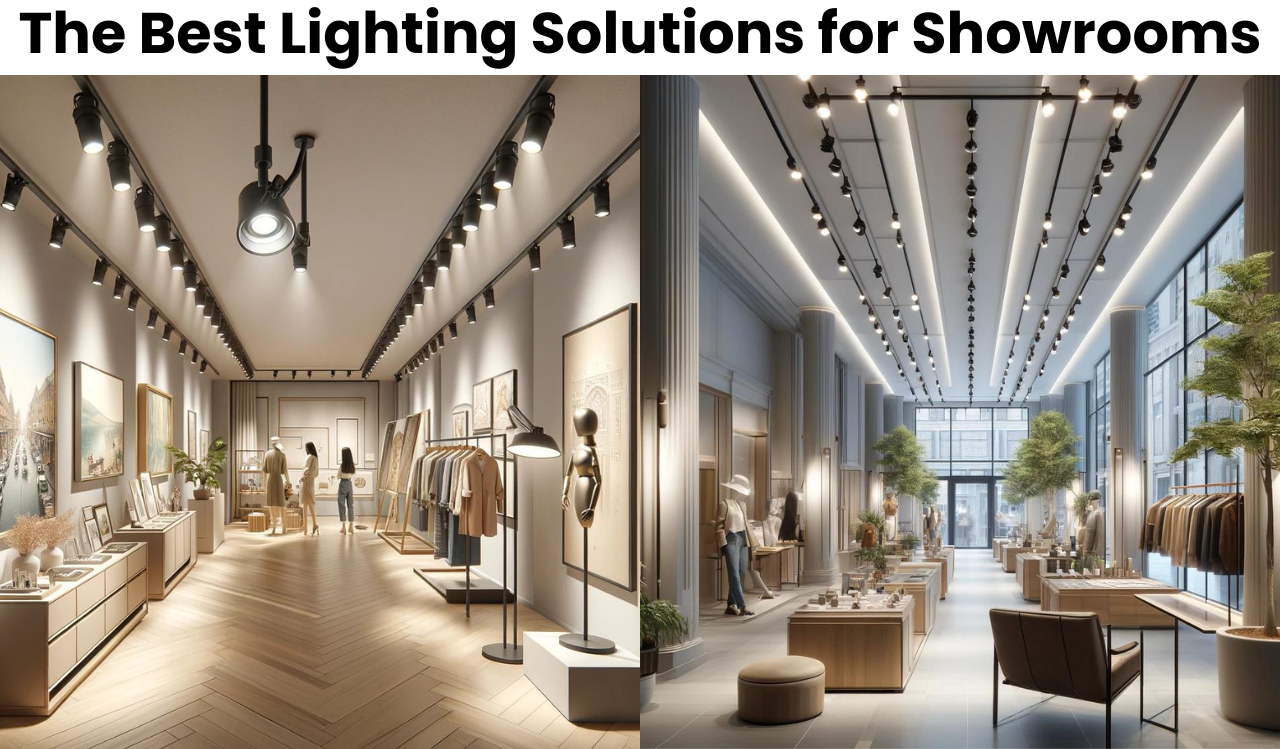
The Best Lighting Solutions for Showrooms
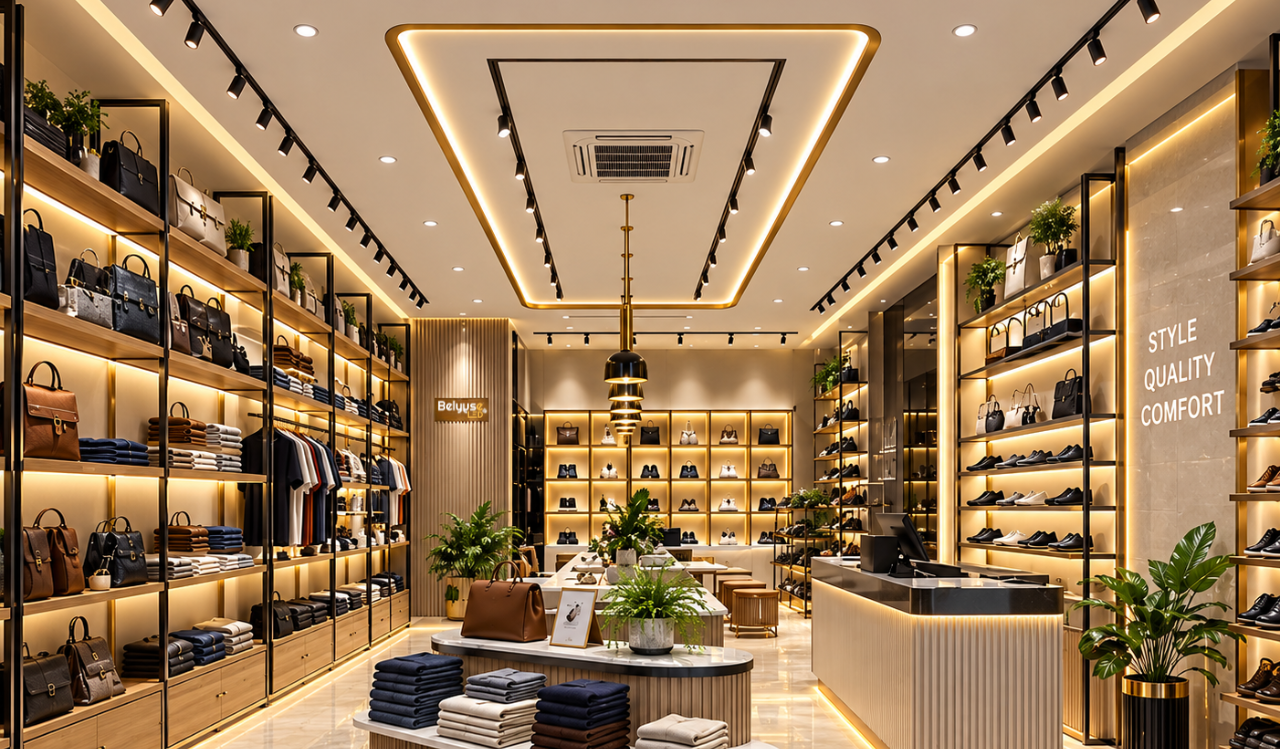
A showroom is more than a place where products are displayed. It is a space where customers see, compare, experience, and decide what they want to buy. That is why showroom lighting plays an important role in the overall customer experience. The right lighting can make products look more attractive, improve product visibility, create a premium atmosphere, and guide customers toward important displays.
On the other hand, poor lighting can make even a high-quality product look dull.
Modern showroom lighting is not simply about installing brighter lights. It is about choosing the right combination of LED lights, track lights, spotlights, downlights, accent lighting, display lighting, colour temperature, CRI, beam angle, and lighting controls. In this guide, we will explain the best lighting solutions for showrooms and how to create a professional, attractive, and energy-efficient showroom lighting design.
Why Is Showroom Lighting Important?
Lighting is one of the first things customers notice when they enter a showroom.
A well-designed lighting system creates a visual hierarchy. It tells customers where to look, which products are important, and how they should move through the space.
Research and current retail-lighting guidance commonly recommend combining ambient lighting with accent and display lighting rather than making the entire showroom equally bright.
Good showroom lighting can help you:
- Highlight your best products
- Improve product visibility
- Make colours look more accurate
- Create a premium environment
- Improve customer comfort
- Guide customer movement
- Highlight brand elements
- Reduce unwanted shadows
- Control glare
- Improve the appearance of displays
- Save energy with efficient LED lighting
- Adapt the lighting when the showroom layout changes
Do not just light the showroom. Light the products that matter.
What Is the Best Lighting for a Showroom?
There is no single light that is perfect for every showroom. The best showroom lighting design normally uses several layers of lighting. The most useful combination includes:
- Ambient lighting
- Accent lighting
- Display lighting
- Architectural lighting
- Decorative lighting
- Task lighting
Each type has a different purpose.
1. Ambient Lighting for Overall Illumination
Ambient lighting provides the general light in the showroom. It allows customers to walk comfortably, see the space clearly, and understand the overall layout. Common options include:
- LED downlights
- LED panels
- Linear LED lights
- Recessed lights
- Surface-mounted LED lights
- Magnetic track systems
However, ambient lighting should not be the only layer.
If every part of the showroom has exactly the same brightness, important products may not stand out.
A better showroom lighting design creates a comfortable general brightness and then uses accent lighting to create focus.
2. LED Track Lights for Showrooms
LED track lighting is one of the most flexible solutions for modern showrooms.
Track lights are installed on a track, allowing individual fixtures to be positioned and directed toward products.
This is particularly useful when the showroom display changes regularly.
For example, a fashion showroom may change its product displays every few weeks. Instead of changing the complete lighting system, the track lights can be adjusted toward the new displays.
Modern showroom track-lighting systems are commonly used because they allow directional lighting for products, walls, shelves, and architectural features.
Benefits of LED track lighting:
- Flexible positioning
- Adjustable direction
- Excellent for product highlighting
- Suitable for changing displays
- Available in different wattages
- Available with different beam angles
- Can create strong visual contrast
- Works well with modern interiors
Track lighting is particularly useful for:
- Fashion showrooms
- Jewellery showrooms
- Furniture showrooms
- Automobile showrooms
- Electronics showrooms
- Home décor showrooms
- Bathroom showrooms
- Kitchen showrooms
- Luxury product stores
3. COB Spotlights for Product Highlighting
COB LED spotlights are another excellent option for showroom lighting.
COB stands for Chip on Board. COB LED technology places multiple LED chips closely together, allowing the light source to produce a strong and focused beam. COB spotlights are useful when you want to highlight a particular product or display. For example:
- A sofa
- A jewellery counter
- A painting
- A watch
- A furniture piece
- A decorative object
- A premium product
- A brand display
The concentrated beam creates contrast between the highlighted product and the surrounding area. This makes the product visually important. For showrooms where product presentation is the priority, high-CRI directional lighting can be especially useful.
4. High-CRI Lighting for Better Product Colours
One of the most important factors in showroom lighting is CRI.
CRI means Colour Rendering Index.
It indicates how accurately a light source shows the colours of objects compared with a reference light source.
CRI is especially important in showrooms because customers need to see the actual colour and finish of products.
A low-quality light can make:
- Fabric look dull
- Paint colours look different
- Furniture finishes look flat
- Jewellery lose visual appeal
- Skin tones look unnatural
- Cosmetics appear different
- Wood textures look less attractive
For colour-sensitive retail applications, CRI 90+ is widely recommended.
High CRI is especially important for:
Fashion showrooms:
Customers need to see the actual colour of clothes.
Jewellery showrooms:
Gold, diamonds, gemstones, and other materials need accurate colour and sparkle.
Furniture showrooms:
Wood grains, fabrics, leather, and surface finishes should appear natural.
Paint showrooms:
Customers need to compare subtle differences between colours.
Automobile showrooms:
Paint finishes and vehicle colours should look premium and accurate.
Beauty and cosmetic showrooms:
Skin tones and cosmetic colours need good colour rendering.
A simple rule is:
Do not choose showroom lighting only by wattage. Check CRI too.
5. Choose the Right Colour Temperature
Colour temperature is measured in Kelvin (K).
It affects how warm or cool the light appears.
Common showroom lighting options include:
- 3000K – Warm White
- 3500K – Warm Neutral
- 4000K – Neutral White
- 5000K – Cool White
- 6500K – Daylight/Cool White
There is no universal colour temperature for every showroom. The right choice depends on the products, brand identity, interior design, and customer experience.
7. Wall-Washing Lighting
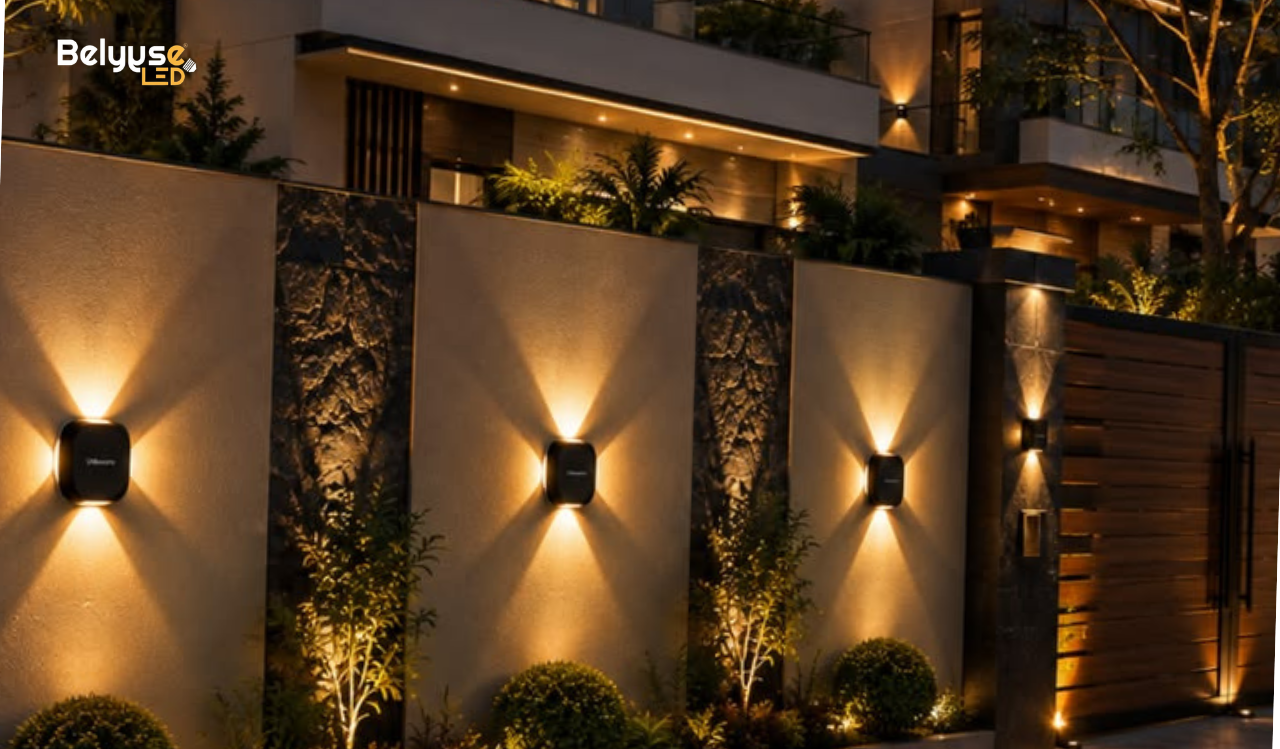
Wall-washing is an effective technique for showroom interiors.
Instead of focusing light only on products, wall-washing spreads light across a wall.
It can be used to highlight:
- Textured walls
- Brand logos
- Graphics
- Product displays
- Architectural surfaces
- Decorative panels
Wall-washing can make a showroom feel larger and more visually balanced.
It also helps create depth in the interior.
For premium showrooms, combining wall-washing with focused product lighting can create a strong visual effect.
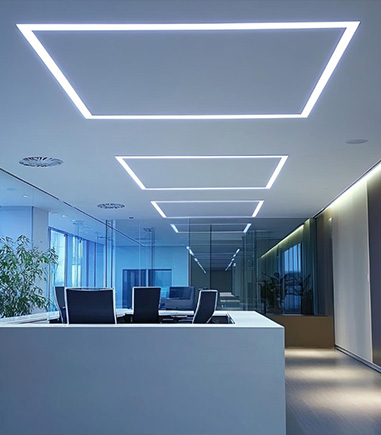
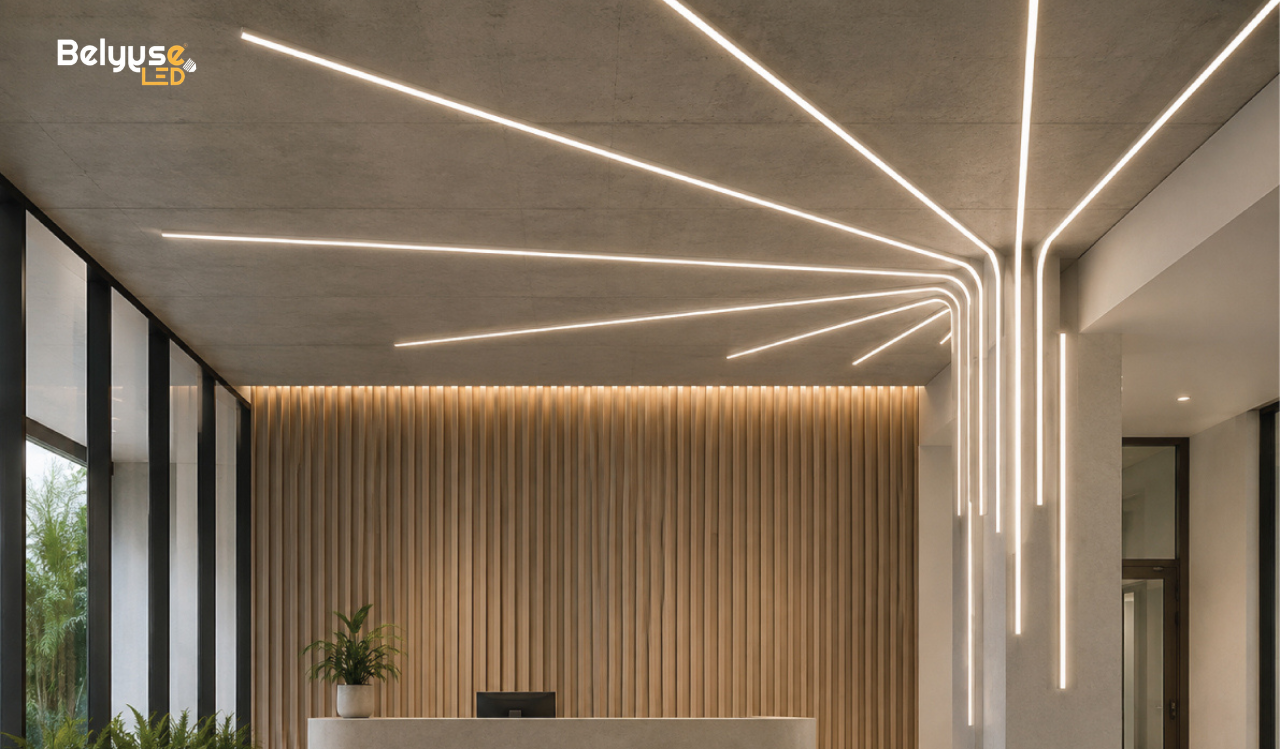
8. Linear LED Lighting
Linear LED lighting is becoming increasingly popular in modern commercial interiors.
Linear lights can be installed:
- In ceilings
- In walls
- Along display units
- Inside shelves
- Around architectural features
- In continuous lines
They provide a clean and modern appearance. Linear LED lighting works particularly well in:
- Furniture showrooms
- Kitchen showrooms
- Bathroom showrooms
- Office furniture showrooms
- Architectural material showrooms
- Modern retail spaces
Linear lighting can also help create visual direction and guide customers through different sections.
9. LED Shelf and Display Lighting
Small details can have a big effect on product presentation.
LED shelf lighting can be installed inside display cabinets, shelves, counters, and product units. It is useful for highlighting:
- Watches
- Jewellery
- Cosmetics
- Accessories
- Small electronics
- Decorative products
- Premium objects
For glass cabinets and shelves, proper LED positioning is important.
The light should illuminate the product without creating distracting reflections.
10. Magnetic Track Lighting
Magnetic track lighting is a modern lighting solution for flexible showroom interiors.
A magnetic lighting system can allow different lighting modules to be installed on the same track system.
Depending on the design, the system can include:
- Spotlights
- Linear modules
- Pendant modules
- Wall-washing modules
- Different beam options
This flexibility can be useful for showrooms where the display layout changes regularly.
Instead of designing the ceiling around fixed lights, the lighting system can become part of the overall design.
Magnetic track lighting can also create a clean, minimal ceiling appearance.
11. Glare Control Is Essential
A showroom can have plenty of light and still feel uncomfortable. The reason is often glare. Glare happens when a bright light source enters the customer's field of view or creates strong reflections. This can happen on:
- Glass
- Mirrors
- Glossy furniture
- Screens
- Jewellery
- Polished surfaces
- Vehicle paint
- Shiny packaging
- Good showroom lighting should control glare rather than simply increase brightness.
Current retail lighting guidance highlights glare reduction as an important part of comfortable product presentation.
How to reduce glare:
- Select suitable beam angles
- Use proper fixture positioning
- Avoid aiming lights directly toward customers' eyes
- Use anti-glare accessories where appropriate
- Consider recessed or well-shielded fixtures
- Test lighting against reflective surfaces
- Use dimming when required
Remember:
More brightness does not always mean better lighting.
12. Create Contrast Between Products and Background
A showroom should not look equally bright everywhere.
Contrast helps customers understand where to look.
For example:
Background → comfortable brightness
Product display → higher brightness
Hero product → strongest visual focus
This creates a visual hierarchy.
The eye naturally moves toward the brighter or more visually important areas.
Retail lighting guidance also recommends using contrast rather than simply making the entire space extremely bright.
13. Lighting for Different Types of Showrooms
Different products need different lighting solutions. Let's look at some common showroom types.
Jewellery Showroom Lighting
Jewellery requires careful lighting because customers judge products based on sparkle, colour, material, and finish. A jewellery showroom may benefit from:
- High-CRI LED lighting
- Focused spotlights
- Accent lighting
- Display cabinet lighting
- Controlled beam angles
- Glare control
- Carefully selected colour temperature
The lighting should make jewellery attractive without creating uncomfortable reflections.
For premium jewellery displays, lighting quality can be just as important as the interior design.
Furniture Showroom Lighting
Furniture showrooms need to show:
- Fabric
- Leather
- Wood
- Colours
- Textures
- Shapes
- Finishes
A layered lighting design works well.
Use ambient lighting for general visibility and directional spotlights to highlight individual furniture collections.
Wall-washing can also be used to highlight furniture backgrounds and architectural finishes.
Automobile Showroom Lighting
Automobile showrooms need lighting that makes vehicles look clean, premium, and attractive.
Important factors include:
- High colour accuracy
- Controlled reflections
- Good vertical illumination
- Accent lighting
- Ceiling lighting
- Feature lighting
- Glare control
Vehicle paint is highly reflective, so fixture positioning needs careful planning.
Too much direct light can create unwanted reflections on the car body.
Fashion Showroom Lighting
Fashion stores depend heavily on colour and appearance. High-CRI lighting helps customers see clothing colours more accurately. Recommended solutions can include:
- Track spotlights
- Recessed downlights
- Display lighting
- Shelf lighting
- Mirror lighting
- Accent lighting
Changing rooms also need special attention because customers judge how clothing looks on them.
Electronics Showroom Lighting
Electronics showrooms often need a clean and modern environment.
Suitable solutions can include:
- Linear LED lights
- LED panels
- Track lights
- Display shelf lighting
- Accent lighting
- Neutral white lighting
Glare control is particularly important because screens can reflect overhead lights.
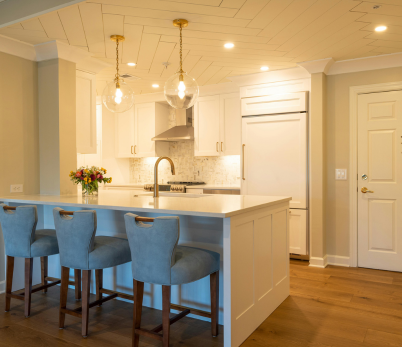
Kitchen and Bathroom Showrooms
These showrooms need lighting that reveals material quality.
Lighting should highlight:
- Tiles
- Countertops
- Cabinets
- Faucets
- Sanitaryware
- Wood finishes
- Textures
Linear lighting inside cabinets and under shelves can add depth to the display.
Track spotlights can then highlight the main products.
Final Thoughts
The best showroom lighting solution is not simply the brightest lighting system.
It is the system that makes the right products stand out, shows colours accurately, creates customer comfort, supports the brand, and uses energy efficiently.
A successful showroom lighting design combines several elements:
Ambient lighting for overall visibility.
Track and spot lighting for product focus.
High-CRI LED lighting for accurate colours.
Linear and display lighting for modern product presentation.
Wall-washing for architectural depth.
Proper beam angles for controlled illumination.
Glare control for customer comfort.
Smart controls for flexibility and energy management.
3D lighting simulation for better planning before installation.
Most importantly, showroom lighting should be designed around the customer journey and the products, not simply around the ceiling. When the right lighting meets the right product at the right location, the showroom becomes more than a display space. It becomes an experience that customers remember.
Ready to Design Your Showroom Lighting?
If you are planning a new showroom or renovating an existing one, start with the lighting design before installation.
A professional lighting solution can help you select the right fixtures, colour temperature, CRI, beam angles, lighting levels, and layout for your space.
Design the lighting first. Install with confidence. Make every product stand out.