

Staircase Lighting Ideas That Wow Every Guest
A staircase is more than a connection between two floors. With the right lighting, it can become one of the most attractive features of your home.
Modern staircase lighting design combines beauty, safety, comfort, and architectural style. From hidden LED strip lights to elegant step lights, there are many ways to make your staircase look premium without making it feel over-lit.
If you are planning a new home, villa, apartment, or renovation, these staircase lighting ideas can help you create a staircase that catches every guest's attention.
Why Is Staircase Lighting Important?
Staircases often become dark areas, especially at night. Poor lighting can create shadows and make individual steps difficult to see.
A well-planned staircase lighting design provides enough light to see each step clearly while adding a beautiful visual effect. Modern lighting can also highlight materials such as wood, marble, glass, stone, and metal.
The best approach is to use light where it is actually needed instead of simply making the entire staircase brighter.
1. LED Strip Lights Under Each Step
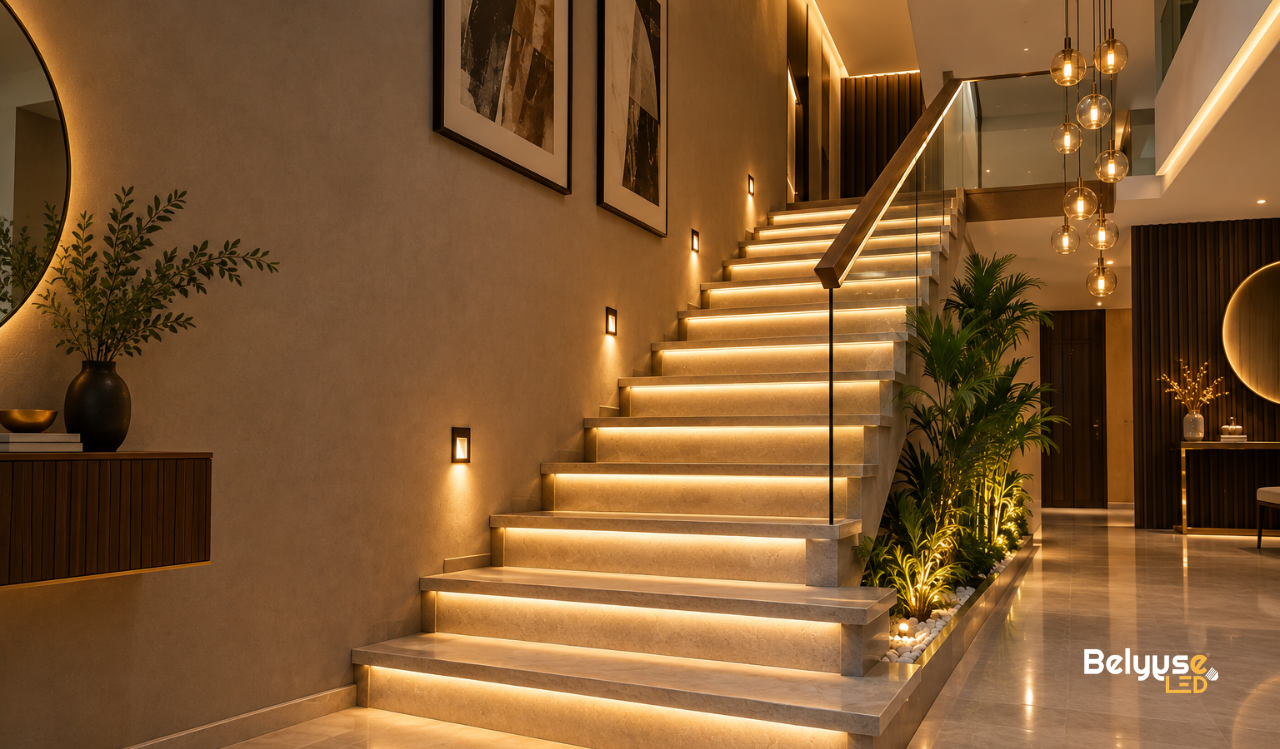
One of the most popular LED stair lighting ideas is installing LED strip lights underneath each tread.
The hidden light creates a soft glow on every step and can make the staircase appear to float. It works especially well with modern, floating, wooden, marble, and open-riser staircases.
For a luxury appearance, keep the light source concealed so that guests see the effect rather than the LED itself.
Best for: Modern homes, villas, luxury interiors, floating stairs.
2. Recessed Step Lights
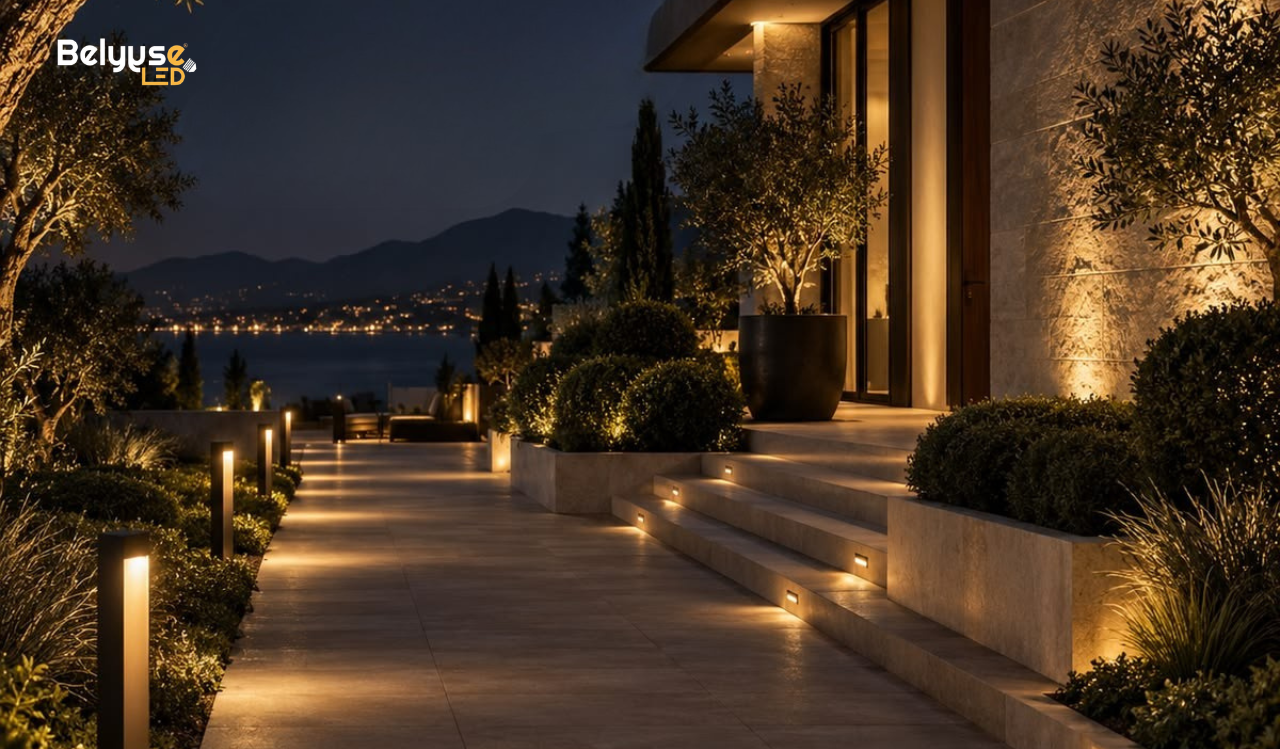
Recessed step lights are installed into the wall beside the staircase or directly into the stair structure.
They provide focused illumination close to the floor and create a clean, minimal appearance. Because the fixture can remain subtle, the staircase gets a sophisticated look without unnecessary visual clutter.
This is a great option when you want your staircase lighting to look elegant during the day and impressive at night.
3. Hidden LED Profile Lighting
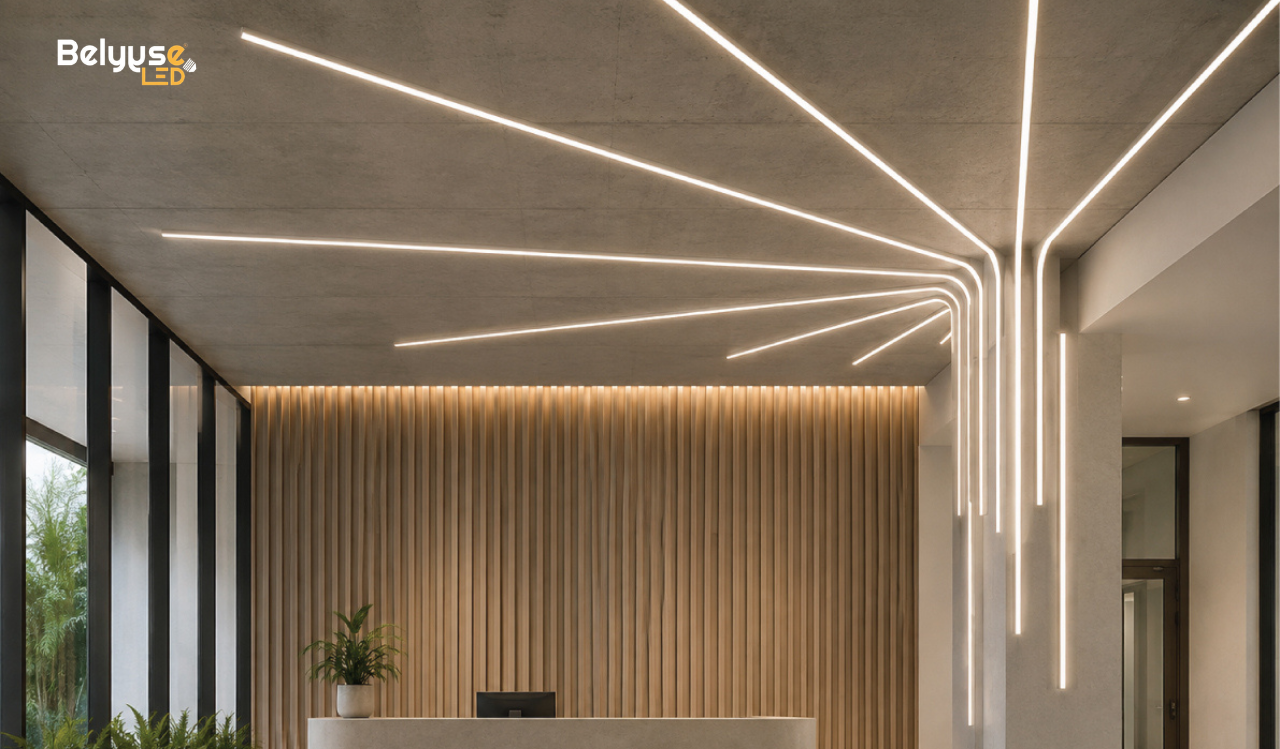
For a seamless architectural look, consider LED profile lighting.
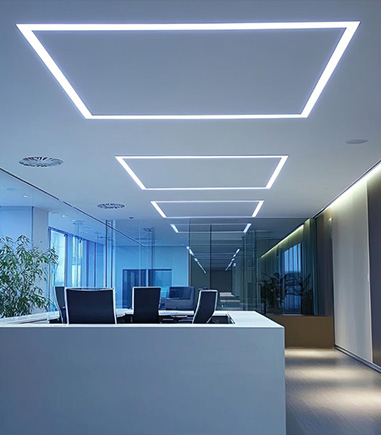
A concealed profile can create a continuous line of light along the staircase, handrail, wall, or other architectural elements. This technique works particularly well in contemporary interiors where clean lines are important.
Instead of seeing individual fixtures, you see a controlled line of light that follows the architecture.
4. Under-Handrail Lighting
Want a staircase that looks premium but not overly bright?
Install an LED strip underneath the handrail.
The light softly washes the steps while creating a beautiful glowing line along the staircase. It can also make the handrail easier to locate at night.
This modern staircase lighting idea is especially effective in narrow staircases where there may not be enough wall space for decorative fixtures.
5. Motion Sensor Staircase Lights
Why switch on the lights when technology can do it for you?
Motion sensor staircase lighting automatically turns the lights on when someone approaches the stairs. This can improve convenience while avoiding unnecessary lighting when the staircase is not being used.
For a more dramatic effect, individual steps can illuminate progressively as someone walks up or down the staircase.
Smart and sensor-based staircase lighting is becoming an increasingly popular option for modern homes.
6. Warm Light That Makes Stairs Feel Luxurious
The colour temperature of your staircase lighting can completely change its appearance.
For residential interiors, warm white LED lighting can create a comfortable and welcoming atmosphere. Around 3000K is commonly used when designers want a warm, premium residential feel.
For a luxury staircase, avoid making the light unnecessarily harsh. A soft, controlled glow can often create a much more expensive-looking result.
7. Wall Lighting Along the Staircase
If your staircase has a large wall beside it, use that surface as part of the lighting design.
Slim wall lights, recessed fixtures, or carefully positioned sconces can create rhythm along the staircase. They can also highlight artwork, textured walls, stone finishes, or architectural details.
The key is to avoid placing too many fixtures. A few well-positioned lights can create more impact than a wall full of bright fittings.
8. Pendant Lights for Double-Height Staircases
Have a double-height staircase or large stairwell?
This is where decorative pendant lighting can create a real wow factor.
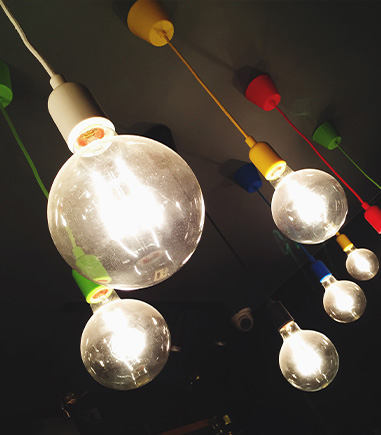
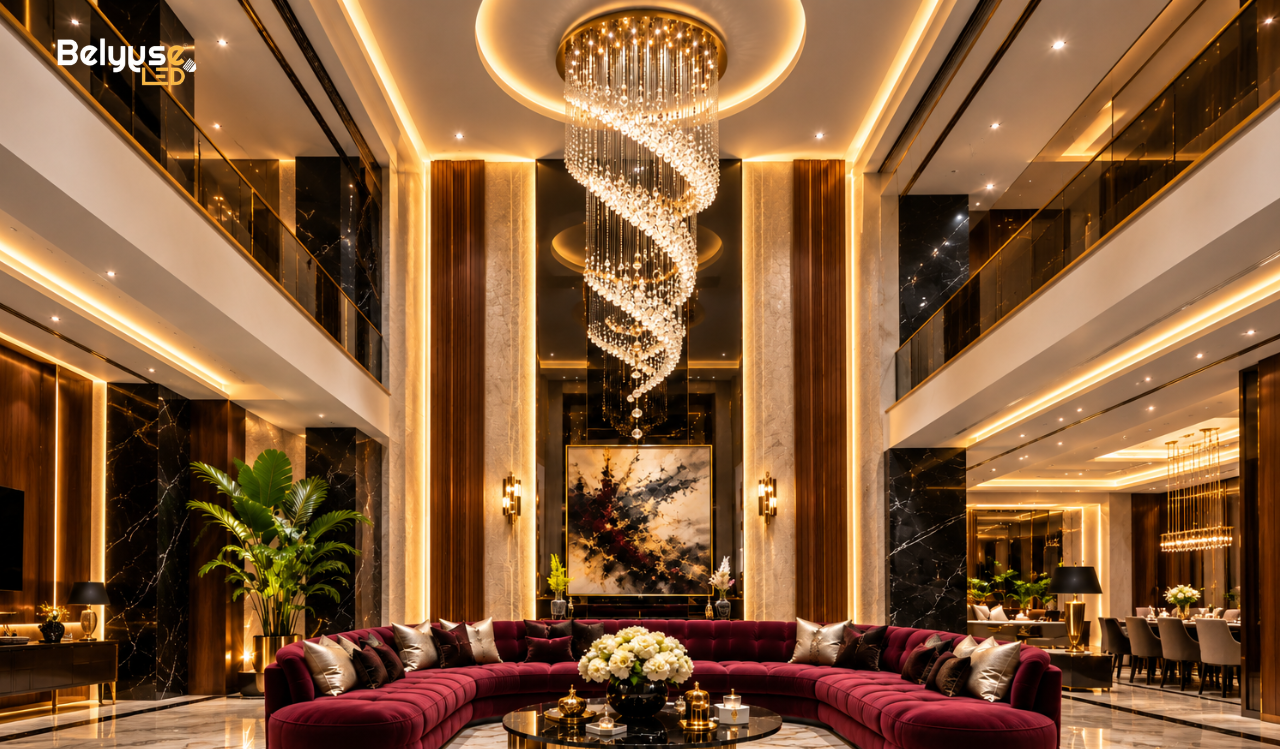
A cluster of pendant lights hanging at different heights can fill the vertical space and become a strong design statement. This works particularly well in villas, luxury homes, and large entrance areas.
Choose the size and number of pendants according to the height and width of the staircase so the installation feels balanced.
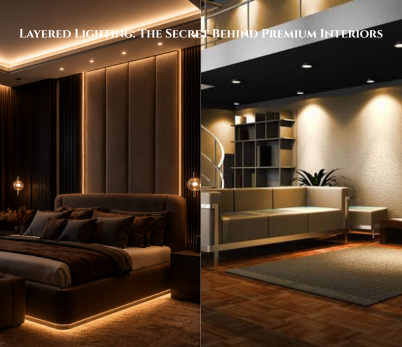
9. Combine Different Layers of Light
The most impressive staircase lighting designs do not depend on one light source.
Instead, combine different layers:
- Step lights for visibility
- Hidden LED strips for architectural glow
- Handrail lighting for a continuous light line
- Wall lights for soft illumination
- Pendant lights for a statement feature
Layered lighting can make the staircase functional during the day and visually dramatic at night.
10. Don't Forget Glare Control
A beautiful staircase can quickly become uncomfortable if the light source is directly visible.
Avoid placing very bright LEDs where they shine directly into the eyes of people walking up or down the stairs.
Use concealed fixtures, suitable profiles, recessed fittings, and controlled beam angles wherever possible.
Good staircase lighting should guide the eye—not hurt it.
How to Choose the Right Staircase Lighting
Before finalising your home staircase lighting, consider:
Staircase Design: Is it straight, curved, floating, spiral, open-riser, or enclosed?
Material: Wood, marble, glass, concrete, and metal react differently to light.
Wall Space: Large walls offer opportunities for recessed lights, sconces, or accent lighting.
Ceiling Height: Double-height spaces can accommodate statement pendants or chandeliers.
Safety: Make sure each step is clearly visible and avoid strong glare or deep shadows.
Lighting Control: Dimmers, sensors, and smart controls can make the lighting more convenient.
Colour Temperature: Select a colour temperature that complements the surrounding interior.
Final Thoughts
The right staircase lighting ideas can turn an ordinary staircase into a major architectural feature.
Whether you choose LED strip lights for stairs, recessed step lights, hidden LED profiles, handrail lighting, motion sensor lights, or statement pendant lights, the goal should always be the same: create a staircase that is safe, comfortable, elegant, and visually memorable.
Because great lighting does more than illuminate a staircase.
It makes every step part of the design.