
Smart Lighting Systems for Modern Buildings: Savings, Features & Buying Guide
Why Lights Are No Longer Just Lights
Step inside a modern office tower, a busy hospital or a large shopping mall, and watch the walls for light switches. You will hardly find anyone using one, yet every corridor, desk and counter seems to be lit just right. Corridors dim when empty, desks near windows get less artificial light, and meeting rooms brighten the moment a presentation starts.
That is the quiet work of smart lighting systems. As cities grow denser and energy costs climb, these systems have moved from a luxury feature to a core part of smart building technology. Lighting is one of the largest electricity loads in most commercial properties, so even small efficiency gains add up.
What Is a Smart Lighting System?
Smart lighting links LED luminaires, sensors, controllers and management software into one connected network. Together they raise or lower brightness on their own, based on who is in the room, how much daylight is coming in, the time of day and what occupants prefer. Instead of every fixture running at full power all day, each light responds to what is actually happening in the space.
Most systems have four layers:
- Intelligent fixtures and drivers: Belyyseled supplies dimmable, energy-efficient LED luminaires that can be managed one by one or grouped into zones, so each area gets exactly the lighting it needs.
- Smart sensing devices: Belyyseled solutions detect movement, room occupancy and daylight levels, and can also track temperature or air quality where a project calls for it.
- Connectivity: wired or wireless links that let devices communicate.
- Control software: a dashboard or app for scheduling, scenes, analytics and remote management.
Key Benefits for Modern Buildings
1. Lower Energy Consumption and Operating Costs
Pairing LEDs with intelligent controls typically delivers far greater savings than LED retrofits alone. Occupancy sensing, scheduling and dimming stop energy being wasted on empty rooms.
2. Support for Sustainability and Green Certifications
Smart controls help buildings work toward targets under frameworks such as LEED, WELL and local energy codes. Lower consumption also reduces a building’s carbon footprint, a growing priority for tenants and investors.
3. Better Comfort and Productivity
Human-centric lighting adjusts brightness and colour temperature through the day, with cooler, brighter light in the morning and warmer tones toward evening. This can support alertness, mood and visual comfort for the people inside.
4. Reduced Maintenance
Software can flag failing fixtures, track burn hours and report faults, so facility teams fix problems before occupants complain instead of walking floors to find dead lamps.
5. Data and Space Insights
Sensors in connected fixtures can show how rooms are really used. Property managers can use that data to right-size floor plans, plan cleaning schedules and decide on desk-sharing.
Core Technologies Explained
Occupancy and vacancy sensors switch or dim lights based on presence. They suit offices, restrooms, stairwells, car parks and storage areas.
Daylight harvesting uses photosensors to reduce artificial light when natural light is plentiful, which is especially valuable in buildings with large glazing and atriums.
Wireless lighting control (Zigbee, Bluetooth Mesh, Thread and similar protocols) makes retrofits easier because there is little new cabling. It is a strong fit for older buildings.
Wired protocols such as DALI offer robust, addressable control for large new-build projects where reliability and fine-grained zoning matter.
PoE (Power over Ethernet) lighting carries both power and data over network cable. It allows low-voltage installation and tight integration with IT infrastructure.
IoT lighting and building automation integration connects lighting with HVAC, access control and security, so the whole building responds as a system. A room that empties can cut both lights and cooling load.
Open standards such as Matter and BACnet help avoid vendor lock-in, so check compatibility before you buy.
Smart Lighting Use Cases by Building Type
- Offices: personal control, task tuning, automatic after-hours shutdown.
- Hospitals and care homes: circadian-friendly lighting, quiet night-time wayfinding.
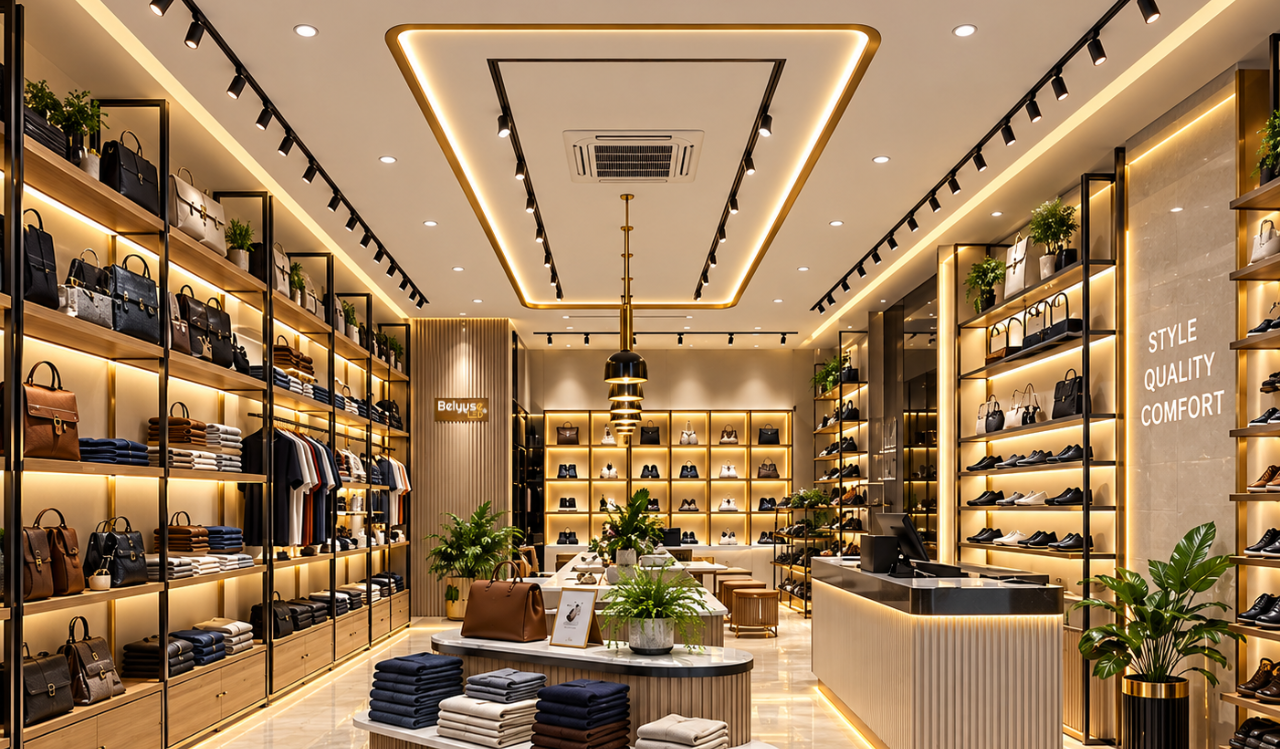
- Retail: dynamic scenes to highlight products and adapt to opening hours.
- Schools and universities: daylight-linked classrooms and automatic scheduling.
- Hotels: guest-room scenes, energy-saving when rooms are vacant.
- Warehouses and factories: high-bay sensors that light only active aisles.
- Residential towers and mixed-use developments: smart common areas and façade lighting.
How to Calculate the ROI of Smart Lighting
A basic payback estimate looks like this:
Payback period = Net installation cost ÷ Annual savings
Include these in your annual savings:
- Reduced electricity use
- Lower maintenance and lamp-replacement labour
- Utility rebates and tax incentives, where available
- Cooling load reductions, since efficient LEDs produce less heat
Many projects find that retrofits with strong controls pay back within a few years, though results depend on current fixtures, operating hours and local energy prices. Ask any vendor for a site-specific estimate rather than relying on generic numbers.
Choosing the Right System: A Practical Checklist
- Audit your current lighting: hours of use, fixture types, problem areas.
- Define goals: cost savings, certification, comfort, data or all four.
- Pick the architecture: wireless for retrofits, wired or PoE for new builds.
- Prioritise interoperability: open protocols make future upgrades easier.
- Plan for cybersecurity: connected devices need encryption, update policies and network segmentation.
- Think about people: simple manual overrides keep occupants happy.
- Start with a pilot: test one floor, measure results, then scale.
- Check support and warranties: software updates matter as much as hardware.
Common Mistakes to Avoid
- Buying on fixture price alone and ignoring software and integration costs
- Over-engineering controls that occupants cannot understand
- Skipping commissioning, so sensors are badly placed or poorly tuned
- Ignoring data privacy when sensors collect occupancy information
- Choosing proprietary systems that cannot talk to other building services
Trends Shaping the Future
- AI-driven optimisation that learns occupancy patterns and adjusts automatically
- Li-Fi and visible-light communication that turns fixtures into data carriers
- Deeper integration with energy management and solar systems
- Wellness-focused lighting tied to health-building standards
- Lighting as a sensor platform for space analytics and asset tracking
Final Thoughts
Smart lighting systems are one of the most practical upgrades a modern building can make. They cut energy waste, create better spaces for people and give facility teams the data to run buildings more intelligently. Whether you are retrofitting an existing property or designing a new one, start with clear goals, choose open and secure technology and pilot before scaling.
Ready to upgrade? Begin with a lighting audit. It will show where energy is being wasted and where smart controls will deliver the fastest return.
Frequently Asked Questions
What is the difference between LED lighting and smart lighting?
LEDs are an efficient light source. Smart lighting adds sensors, connectivity and software, so those LEDs respond automatically to occupancy, daylight and schedules.
Are smart lighting systems worth it for small commercial buildings?
Often yes, particularly where lights run long hours. Simple wireless sensors and dimmers can give a quick payback without a major rewiring project.
Can smart lighting be installed in an existing building?
Yes. Wireless systems are designed for retrofits and avoid major construction work.
Is smart lighting secure?
It can be, if the system uses encryption, regular firmware updates and a properly segmented network.
Does smart lighting work during a power or network outage?
Well-designed systems keep basic local control and sensor logic running even if the network goes down, and emergency lighting should always be installed separately to code.