
A beautiful villa is not complete with good architecture and interiors alone. Lighting design plays a major role in how a villa looks, feels, and functions.
Today, homeowners, architects, builders, constructors, and interior designers are choosing smart lighting for villas to create comfortable, energy-efficient, and luxurious spaces. Smart lighting allows you to control brightness, scenes, timing, and sometimes colour using switches, smartphones, sensors, or voice control.
For a modern villa, the goal should not be to simply add more lights. The right approach is to use architectural lighting, layered lighting, LED lighting, and smart automation to highlight the beauty of the space.
Here are some smart lighting ideas for villas that can transform a residential project.
1. Use Layered Lighting for a Luxury Look
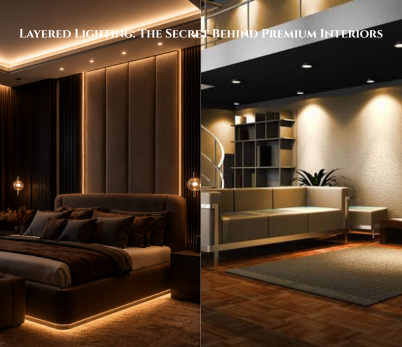
One of the best villa lighting design ideas is layered lighting.
Instead of depending on one bright ceiling light, combine different types of lighting:
- Ambient lighting for overall illumination
- Task lighting for specific activities
- Accent lighting to highlight walls, artwork, furniture, or architectural features
- Decorative lighting to add style and personality
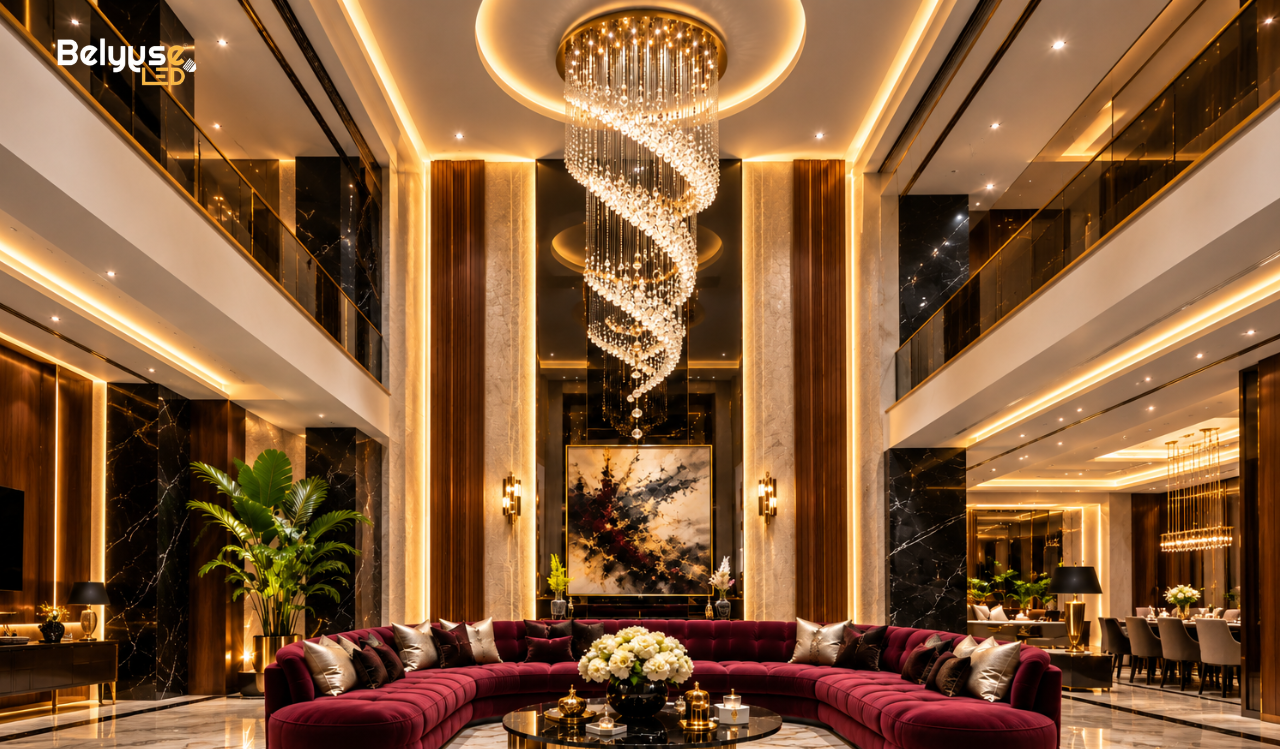
This creates depth and makes the villa feel more premium without making it unnecessarily bright. Layered lighting is increasingly being used in modern Indian residential interiors to create softer and more comfortable spaces.
2. Add Smart Cove Lighting
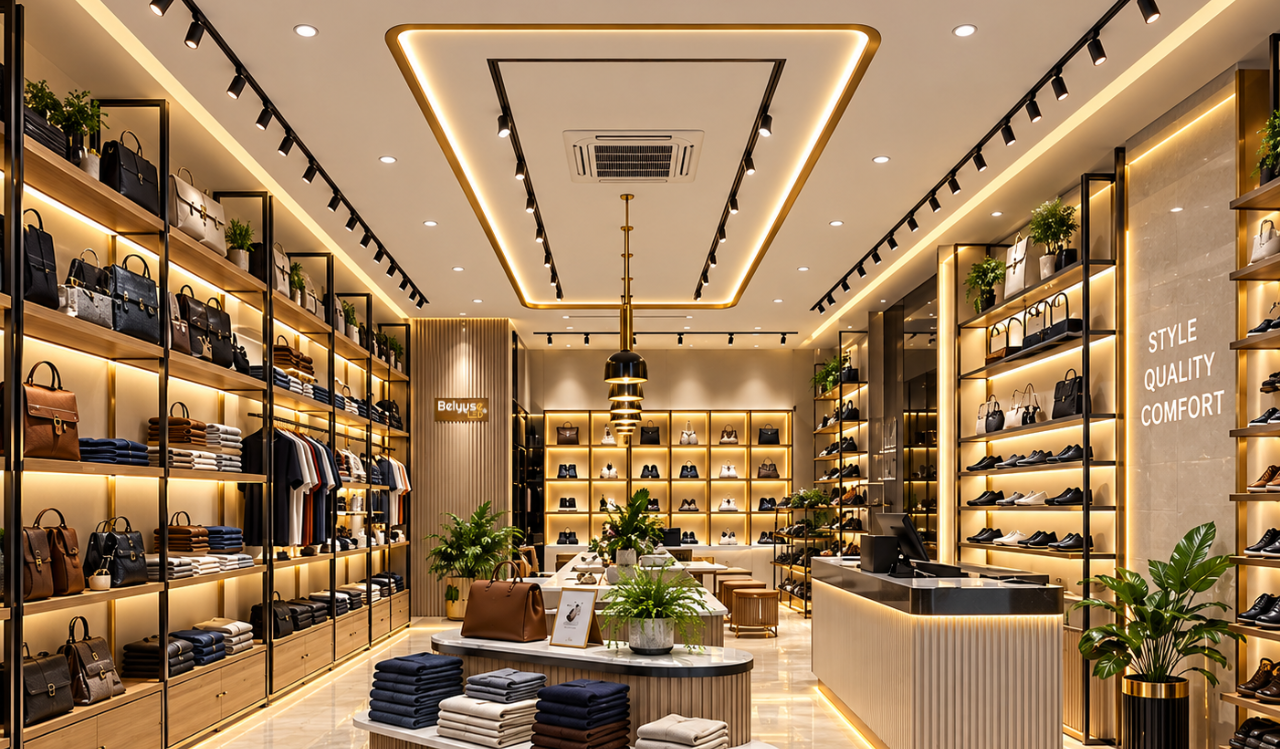
Smart LED cove lighting is ideal for modern false ceilings, living rooms, bedrooms, and dining areas.
A concealed LED profile can create a soft glow around the ceiling without showing the light source directly.
With smart control, homeowners can adjust the brightness according to the time of day or activity.
For example:
Morning: brighter neutral light
Evening: soft warm light
Movie time: low-level ambient lighting
Party: brighter decorative lighting
This simple change can completely transform the mood of a room.
3. Highlight Villa Architecture with Linear Lighting
Modern villas often have interesting architectural elements such as:
- Floating ceilings
- Staircases
- Wall niches
- Columns
- Wooden panels
- Double-height spaces
- Curved walls
- Large facade elements
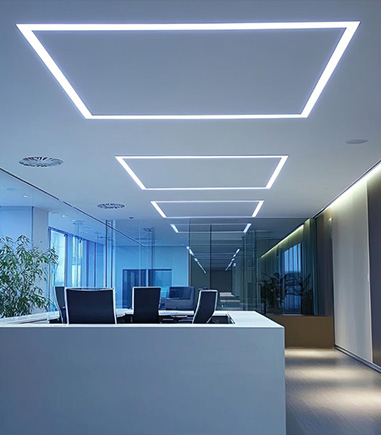
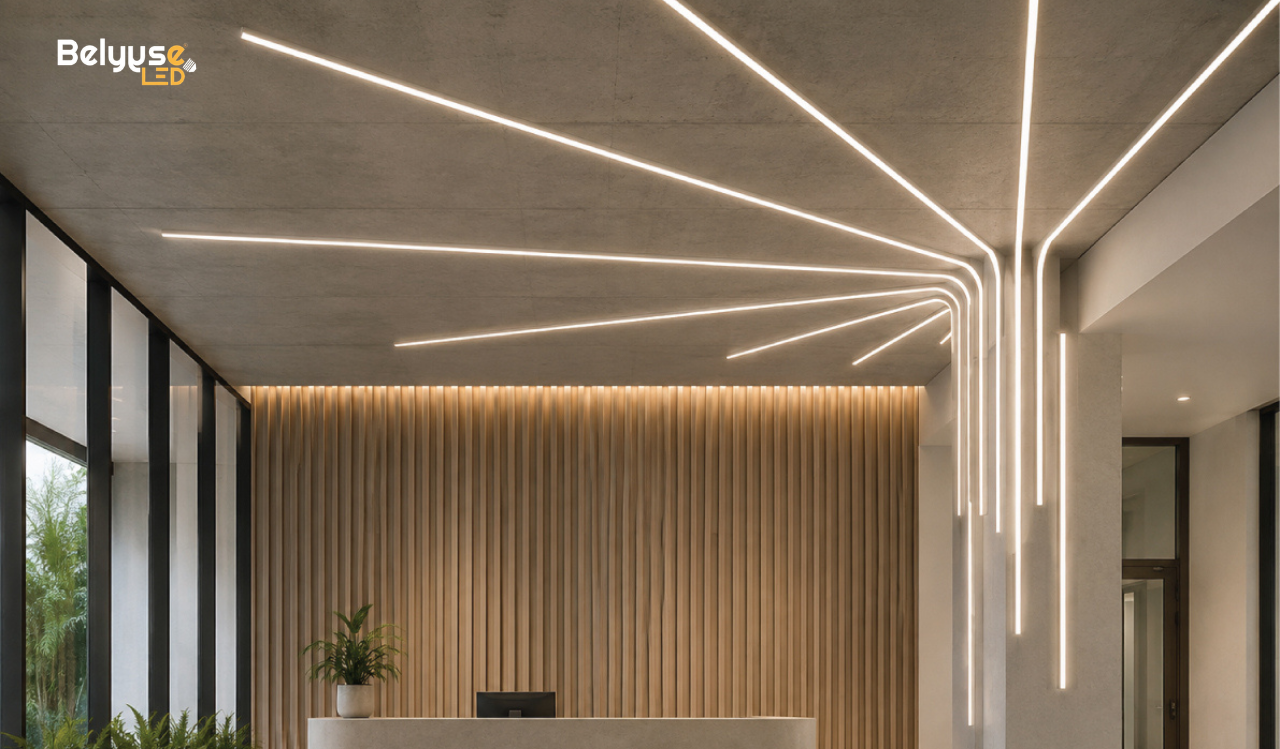
Linear LED lighting can highlight these features beautifully.
Concealed linear profiles can be integrated into ceilings, walls, furniture, staircases, and architectural details to create a clean and modern appearance.
For architects and interior designers, this is an excellent way to make lighting part of the architecture rather than treating it as an additional fixture.
4. Create Smart Lighting Scenes
One of the biggest advantages of smart home lighting is scene control.
Instead of switching every light individually, multiple lights can work together with one command.
For example:
Welcome Scene
Entrance, living room, staircase, and decorative lights turn on automatically.
Movie Scene
Main lights dim while cove and accent lighting remain softly illuminated.
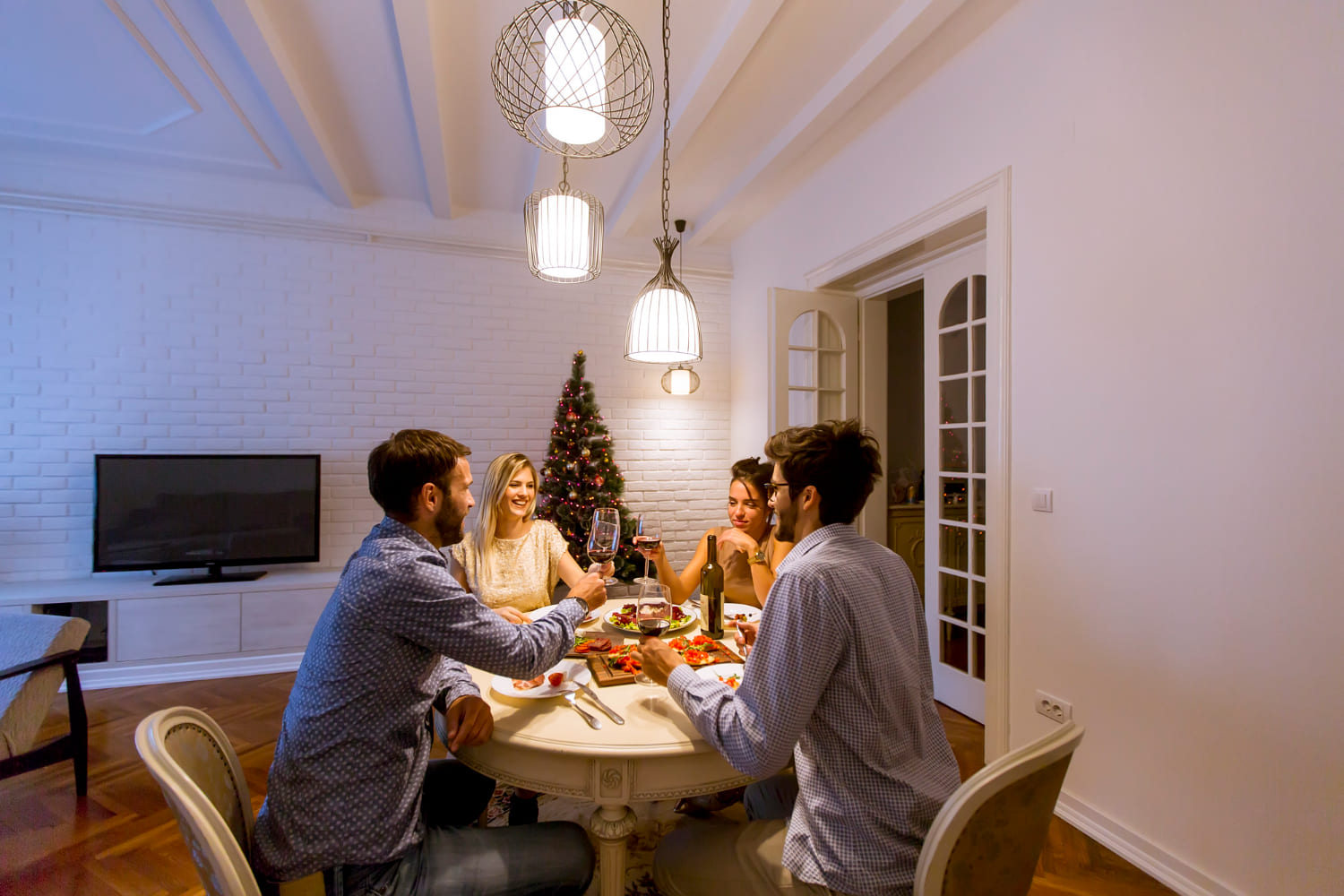
Dinner Scene
Dining lights become brighter while surrounding lights stay warm and subtle.
Goodnight Scene
Most lights switch off while selected staircase, passage, and security lights remain on.
Scene-based lighting can make a large villa easier to operate and can connect lighting with other home automation systems.
5. Use Motion Sensors for Stairs and Corridors
Staircases and corridors do not always need to remain fully illuminated.
Motion sensor lighting can automatically turn lights on when someone enters an area and switch them off after a selected period.
This works especially well for:
- Staircases
- Passageways
- Walk-in wardrobes
- Bathrooms
- Parking areas
- Storage spaces
- Outdoor pathways
It improves convenience while helping avoid unnecessary lighting when spaces are not being used.
6. Make Your Villa Facade Stand Out
The exterior of a villa deserves as much attention as the interiors.
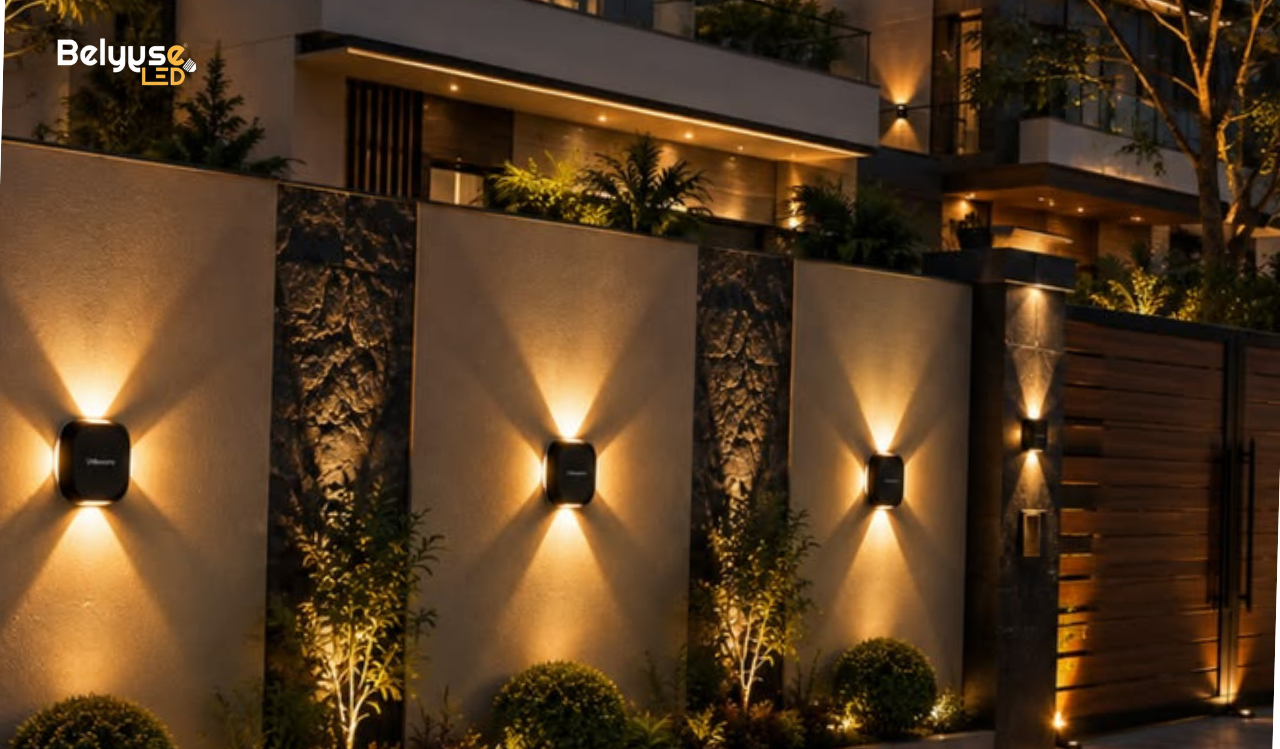
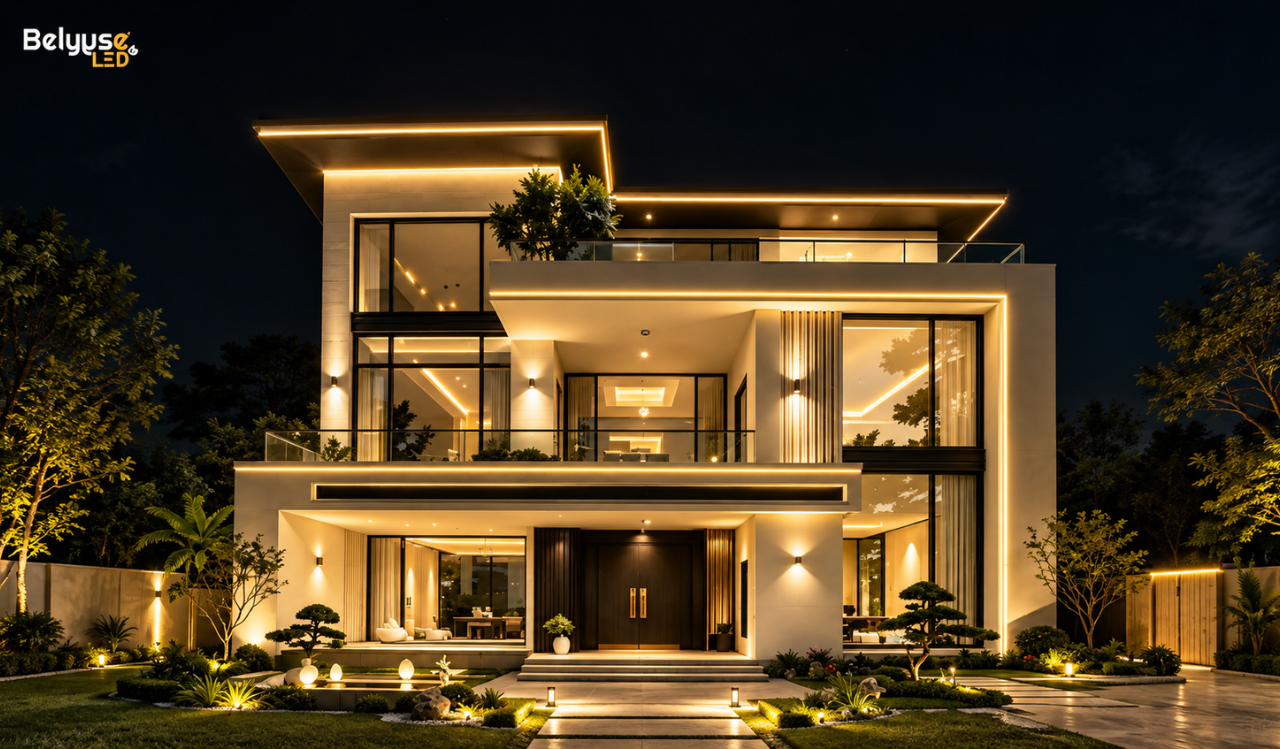
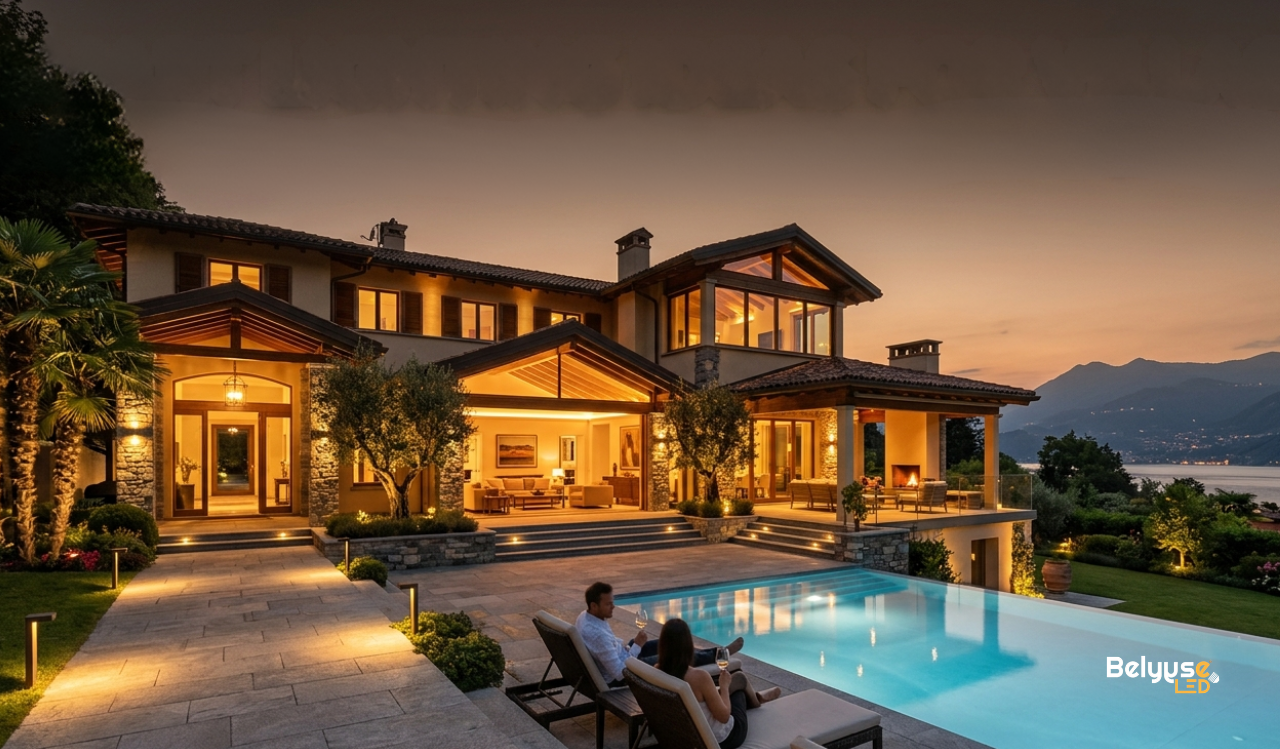
Facade lighting can highlight architectural lines, textures, columns, balconies, entrances, and landscaping.
You can combine:
- Wall washers
- Linear facade lights
- Up-down lights
- Spotlights
- In-ground lights
- Architectural LED lighting
Smart control can allow facade lighting to follow schedules, such as switching on automatically after sunset and turning off at a selected time.
The result is a villa that looks impressive not only during the day but also at night.
7. Smart Outdoor and Landscape Lighting
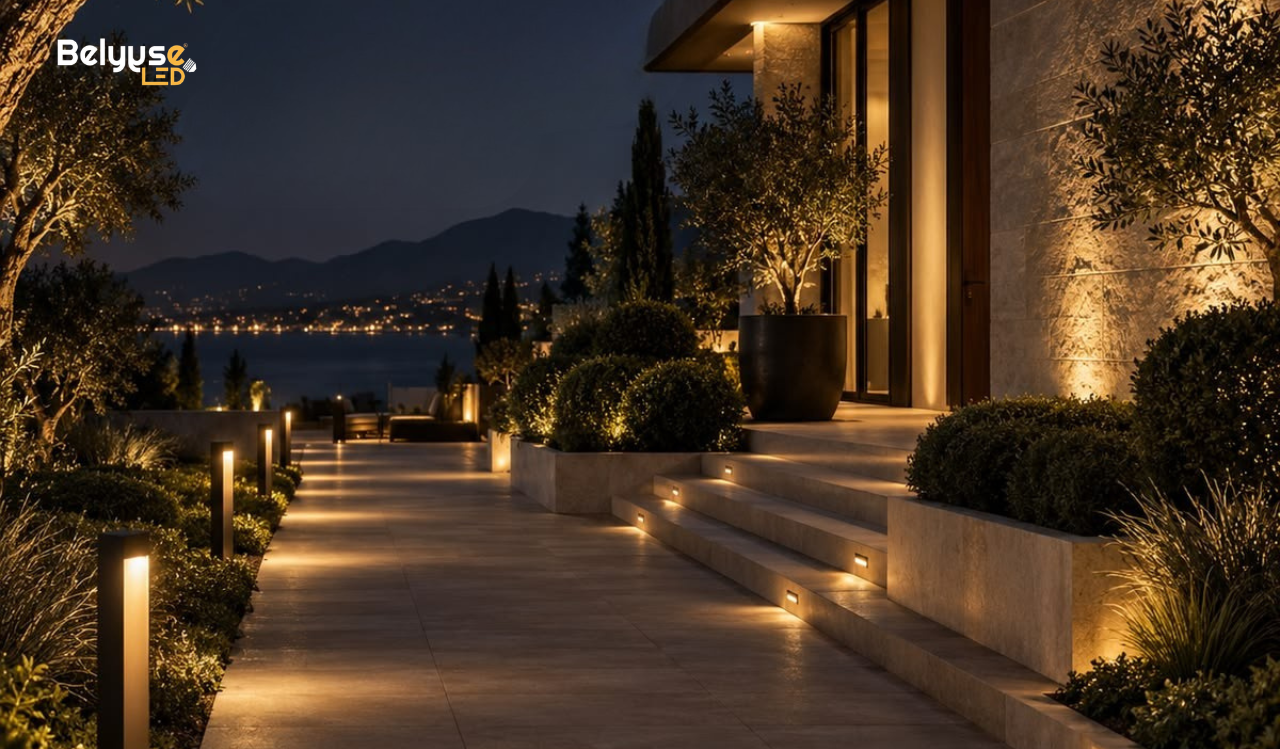
A villa usually has more outdoor space than an apartment, making landscape lighting an important part of the lighting design.
Use lighting to highlight:
- Trees
- Plants
- Pathways
- Garden walls
- Water features
- Driveways
- Outdoor seating
- Pool areas
- Entrance gates
The key is to avoid excessive brightness. Good outdoor lighting should guide movement and highlight important features while maintaining a comfortable atmosphere.
8. Choose the Right Colour Temperature
The colour temperature of light can dramatically change the appearance of a villa.
For relaxing residential areas, warm white lighting can create a comfortable and luxurious atmosphere.
For functional areas such as kitchens, studies, and workspaces, a slightly cooler light may provide better visual clarity.
The right CCT (Correlated Colour Temperature) should be selected according to the room, materials, furniture, daylight, and purpose of the space.
Don't choose every light in the villa with the same colour temperature simply for convenience.
9. Use High-CRI LED Lighting
For luxury villa interiors, brightness is not the only important factor.
CRI (Colour Rendering Index) affects how naturally colours appear under artificial light.
High-CRI LED lighting can help materials, fabrics, artwork, wood, skin tones, and interior finishes appear more natural.
This is particularly important for:
- Luxury living rooms
- Bedrooms
- Dressing rooms
- Dining areas
- Art displays
- Premium interiors
Good lighting should reveal the real beauty of the materials selected by the architect and interior designer.
10. Combine Smart Lighting with Home Automation
The real potential of smart lighting for villas comes when lighting works together with other smart-home systems.
Lighting can be integrated with:
- Home automation
- Motorized curtains
- Security systems
- Sensors
- Climate control
- Voice assistants
- Mobile applications
- Timers and schedules
For large villas, lighting can also be divided into zones such as ground floor, first floor, bedrooms, garden, facade, and parking.
This makes the entire lighting system easier to control and manage. Whole-home zoning is particularly useful in multi-floor villas because they have many lighting circuits and outdoor areas.
11. Don't Forget the Entrance
The entrance creates the first impression of a villa.
Use a combination of architectural lighting and decorative lighting to make the entrance welcoming.
You can highlight:
- Main door
- Entrance wall
- Name plate
- Columns
- Landscape
- Pathway
- Porch ceiling
Avoid excessive brightness. A well-positioned light can create a much stronger effect than several randomly placed fixtures.
12. Plan Lighting Before Construction
One of the biggest mistakes in villa projects is planning lighting after the construction and false ceiling work is complete.
Smart lighting design should be planned during the architectural and interior design stage.
The lighting plan should consider:
- Ceiling design
- Furniture layout
- Electrical points
- Light positions
- Beam angles
- Driver locations
- Control zones
- Automation requirements
- Facade lighting
- Landscape lighting
- Maintenance access
Early coordination between the architect, interior designer, constructor, electrical contractor, and lighting designer can prevent costly changes during execution.
Smart Lighting Is About More Than Technology
The best smart lighting design for a villa does not make the home look like a technology showroom.
Technology should remain simple and mostly invisible.
The focus should be on creating the right atmosphere, improving comfort, highlighting architecture, and making everyday life easier.
A well-designed villa can use smart lighting to automatically create the right environment for living, relaxing, working, entertaining, and sleeping.
Final Thoughts
Modern villa lighting is moving beyond basic switches and bright ceiling lights.
The future of residential lighting design is about combining smart lighting, LED technology, architectural lighting, automation, sensors, and layered lighting into one well-planned solution.
Whether you are an architect, constructor, builder, interior designer, or homeowner, planning the lighting early can make a major difference to the final appearance and experience of the villa.
A luxury villa deserves more than good lights. It deserves a lighting design that understands the architecture.