
Retail Lighting Psychology: Increase Sales Through Better Lighting
Retail lighting is not only about making a store look bright. It can influence how customers feel, where they look, what they notice, and how long they stay inside a space.
A well-planned lighting design can make products look more attractive, create a comfortable shopping environment, and guide customers through different areas of a store.
For constructors, architects, residential clients, and interior designers, understanding retail lighting psychology can help create spaces that look better and also support business goals.
What Is Retail Lighting Psychology?
Retail lighting psychology is the use of light to influence customer attention, mood, movement, and buying decisions.
Different lighting levels, colors, beam angles, and lighting positions can create different experiences.
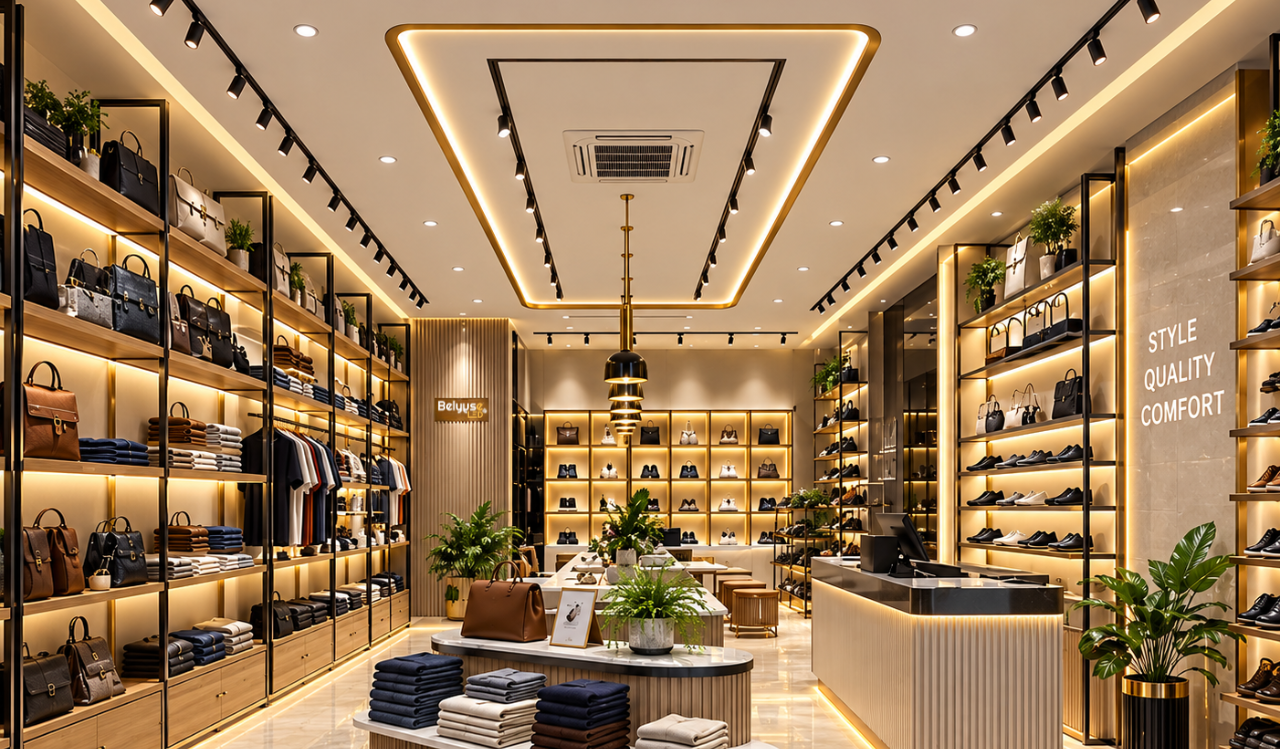
For example, bright and uniform lighting may work well in a supermarket, while a fashion store may use focused lighting to make selected products stand out.
How Lighting Can Influence Customer Behavior
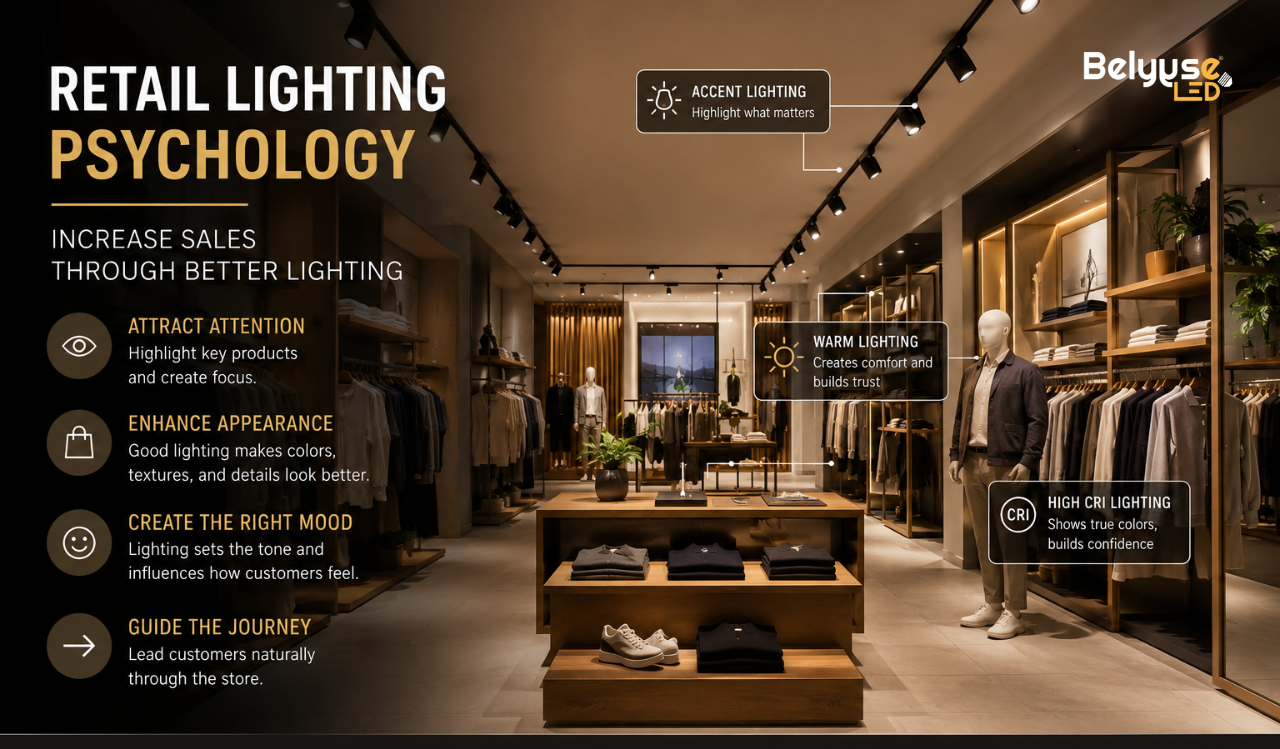
1. Lighting Attracts Attention
Customers naturally notice areas that are visually brighter or more focused.
Accent lighting can be used to highlight:
- New product launches
- Premium collections
- Promotional displays
- Mannequins
- Jewellery counters
- Brand elements
- Featured products
A carefully positioned spotlight can make a product become the visual focus of a display.
This helps retailers direct customer attention without using excessive signage.
2. Good Lighting Makes Products Look Better
Poor-quality lighting can make colors look dull or inaccurate. High-quality lighting with good CRI (Color Rendering Index) helps products appear closer to their natural colors.
This is especially important for:
- Fashion stores
- Jewellery shops
- Furniture showrooms
- Beauty stores
- Electronics stores
- Home décor stores
For example, in a fashion store, accurate lighting can help customers see the actual color and texture of clothing before making a purchase.
3. Lighting Creates the Right Mood
Lighting affects the overall feeling of a retail environment.
Warm lighting can create a comfortable and premium atmosphere. Cooler lighting can create a clean, fresh, and energetic feeling.
The right choice depends on the brand and the type of products being displayed.
A luxury showroom may benefit from a sophisticated warm-white lighting scheme, while a modern electronics store may use a cleaner and brighter lighting environment.
The important point is consistency between lighting and brand identity.
4. Lighting Can Guide Customer Movement
Lighting can also help control how customers move through a space.
A retail store can use brighter displays, illuminated pathways, and accent lighting to create a natural visual journey.
For example:
Entrance → Featured Display → Main Product Area → Premium Section → Checkout
Instead of lighting every area equally, designers can create visual priorities.
This makes the store easier to explore and gives important products more attention.
The Power of Accent Lighting
One of the most effective techniques in retail lighting is accent lighting.
Accent lights create contrast between the product and its surroundings.
A focused beam directed at a display can immediately separate it from the background.
However, beam angle matters.
- Narrow beams: Better for highlighting small products or specific objects.
- Medium beams: Useful for shelves, mannequins, and display areas.
- Wide beams: Suitable for larger displays and general feature areas.
The beam angle should be selected according to the size, distance, and position of the product.
Avoid Overlighting Your Store
More light does not always mean better lighting. An excessively bright store can create glare, visual discomfort, and a flat appearance. When every surface has the same brightness, products may lose their visual importance.
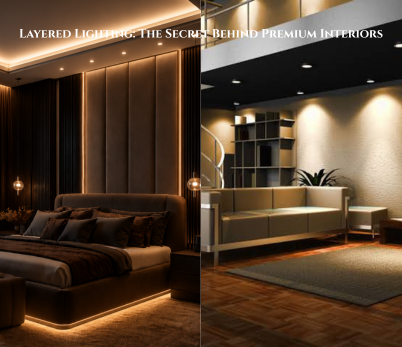
Ambient Lighting
Provides general visibility throughout the store.
Accent Lighting
Highlights products and displays.
Decorative Lighting
Adds style and supports the brand atmosphere.
Task Lighting
Provides focused illumination where specific activities take place. Combining these layers creates depth and makes the retail environment more engaging.
Why Glare Control Matters
Glare is one of the common problems in retail lighting. A poorly positioned light can shine directly into a customer's eyes or create unwanted reflections on glass, mirrors, screens, and glossy products. For architects and interior designers, glare control should be considered during the design stage. The position of the fixture, beam angle, mounting height, brightness, and optical design all influence the final result.
Comfortable lighting keeps customers focused on the products—not on the light source.
Use High-CRI Lighting Where Color Matters
CRI is particularly important when customers need to judge product colors accurately.
For example, a lipstick may appear different under poor-quality lighting than it does in natural daylight. The same problem can occur with clothing, paint, furniture finishes, jewellery, and other products.
Using appropriate high-CRI LED lighting can improve color visibility and create a more reliable shopping experience.
Lighting Different Retail Areas Correctly
Every part of a store has a different purpose.
Entrance
The entrance should feel welcoming and visually clear. Lighting can help establish the brand experience from the moment customers enter.
Product Displays
Use accent lighting to create attention and highlight important products.
Shelves
Vertical and well-distributed lighting can help customers see products clearly without creating strong shadows.
Trial Rooms
Balanced, high-quality lighting is important because customers need to see how clothing looks on them.
Cash Counter
The checkout area should have comfortable and functional illumination while remaining visually connected to the rest of the store.
Premium Display Areas
Use controlled accent lighting and contrast to create a more exclusive feeling around high-value products.
Lighting Can Support Premium Brand Perception
Customers often connect the appearance of a store with the perceived quality of its products.
A well-designed lighting system can make a retail space feel:
- Premium
- Modern
- Comfortable
- Professional
- Exclusive
- Welcoming
This does not mean using expensive decorative fixtures everywhere.
Often, the difference comes from proper planning, accurate positioning, good optics, color quality, and controlled brightness.
Common Retail Lighting Mistakes
Avoid these common problems during retail lighting design:
Using the same brightness everywhere
This creates a flat environment and reduces visual hierarchy.
Choosing lights only by wattage
Wattage tells you about power consumption, not the complete lighting performance.
Ignoring CRI
Low color quality can change how products appear.
Creating excessive glare
Uncontrolled glare can make customers uncomfortable.
Using the wrong color temperature
The lighting color should match the products, interiors, and brand identity.
Installing lights without testing the final display
A lighting design may look good on paper but perform differently after installation.
Plan Lighting Before Installation
For constructors, architects, and interior designers, lighting should be considered during the early design stage rather than treated as the final step.
A proper lighting plan should consider:
- Store layout
- Ceiling height
- Product placement
- Display design
- Customer movement
- Beam angles
- Color temperature
- CRI
- Glare control
- Energy efficiency
- Maintenance requirements
A 3D lighting simulation can also help visualize how the lighting will look before installation. This allows design teams to identify dark areas, excessive brightness, unwanted shadows, and visual problems earlier in the project.
Final Thoughts
Retail lighting is a powerful part of store design.
The right lighting can attract attention, improve product appearance, create the desired mood, guide customers, and strengthen the overall brand experience.
For constructors, architects, residential clients, and interior designers, the key is to stop thinking of lighting as simply a way to make a space bright.
Think of it as a design and business tool.
When every light has a purpose, the store becomes more comfortable, products become more visible, and the customer experience becomes stronger.
Better lighting does not just illuminate a retail space. It helps the space sell.