
How We Designed Lighting for a Luxury Villa
A luxury villa is not defined only by its architecture, marble, furniture, or interiors. Lighting plays a major role in how the entire property looks and feels after sunset.
For this reason, luxury villa lighting needs to be planned from the beginning-not added as an afterthought.
In this project, our goal was simple: create a lighting design that makes the villa look luxurious, comfortable, architectural, and functional without making it look over-lit.
As a lighting solution provider, we approached the project by combining architectural lighting, interior lighting, facade lighting, decorative lighting, and functional LED lighting into one complete lighting concept.
Understanding the Villa Before Designing the Lighting
Every villa is different.
Before selecting any light fixture, we studied the architecture, room sizes, ceiling design, furniture placement, wall finishes, outdoor areas, and important architectural features.
We also considered how the villa would look during different times of the day.
The lighting design had to work with:
- Natural daylight
- Interior architecture
- False ceiling design
- Furniture placement
- Wall textures
- Marble and stone finishes
- Staircases
- Landscape areas
- Outdoor facade
- Entrance and pathways
This planning helped us decide where light was actually needed and where it was better to keep the space visually quiet.
Step 1: Creating the Lighting Concept in 3D
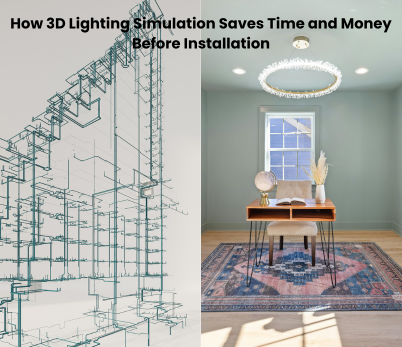
One of the most important parts of our process was creating a 3D lighting design before final execution.
A 3D lighting simulation allows the architect, constructor, interior designer, and villa owner to understand how the proposed lighting will look before installation.
We studied:
- Light positions
- Beam angles
- Light intensity
- Ceiling details
- Wall-washing effects
- Cove lighting
- Spotlight locations
- Decorative fixtures
- Facade lighting
- Colour temperature
- Shadows and glare
This reduced guesswork and helped us coordinate the lighting design with the overall architecture.
For a luxury residential project, this is especially important because even a small change in light position can change the appearance of a wall, artwork, ceiling, or architectural feature.
Step 2: Using Layered Lighting Instead of Just More Lights
Luxury does not mean putting more lights everywhere.
It means using the right light in the right place.
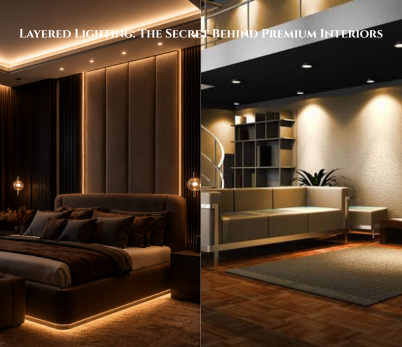
We designed the villa using a layered lighting approach. This generally combines ambient, task, accent, and decorative lighting to give a room different levels of illumination and atmosphere.
Ambient Lighting
Ambient lighting provides the basic illumination of the room.
For this, we considered options such as:
- Recessed downlights
- Cove lighting
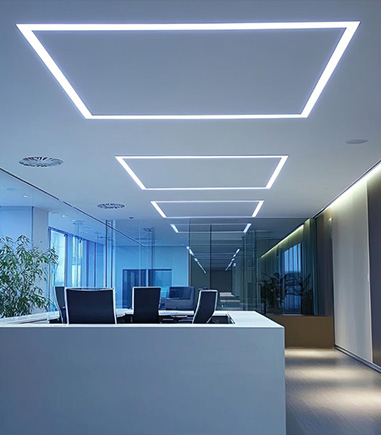
- LED profiles
- Linear lighting
- Soft ceiling illumination
The purpose was to create comfortable general lighting without making the room harsh.
Accent Lighting
Accent lighting was used to highlight important design elements.
We used focused lighting to bring attention to:
- Feature walls
- Artwork
- Stone surfaces
- Textured walls
- Decorative objects
- Architectural details
This creates depth and makes the interior more visually interesting.
Task Lighting
Certain areas require focused light for specific activities.
Examples include:
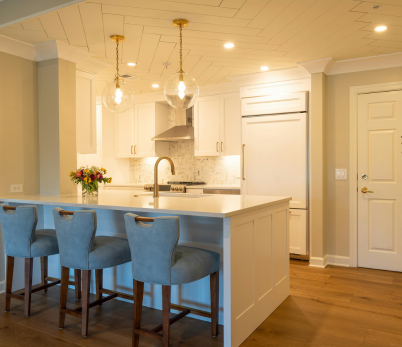
- Kitchen counters
- Study areas
- Dressing areas
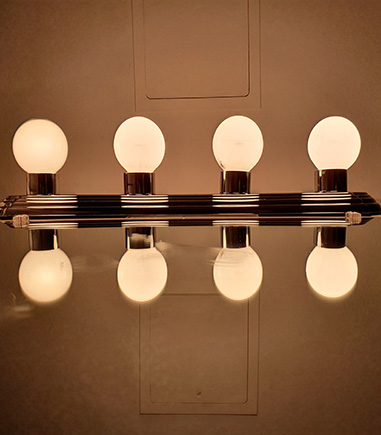
- Bathroom mirrors
- Reading corners
Here, lighting needs to be practical as well as attractive.
Decorative Lighting
Decorative lights were selected to become part of the interior design.
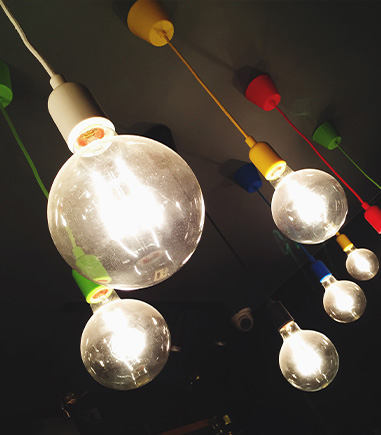
Chandeliers, pendants, wall lights, and statement fixtures can act as visual focal points while adding character to luxury interiors.
The important part is to make sure decorative lighting works together with the architectural lighting instead of competing with it.
Step 3: Choosing the Right Colour Temperature
Colour temperature can completely change the mood of a luxury home.
For residential spaces, warm lighting is often preferred because it creates a comfortable and welcoming atmosphere. Many current residential lighting guides recommend warm-white ranges around 2700K–3000K for living spaces, while more neutral lighting can be considered for functional areas depending on the design.
For this villa, we carefully considered the colour temperature according to the room, materials, furniture, and purpose.
The objective was to avoid a situation where:
Beautiful materials + wrong lighting = poor visual appearance.
The right colour temperature helps marble, wood, fabrics, artwork, and wall finishes appear closer to their intended appearance.
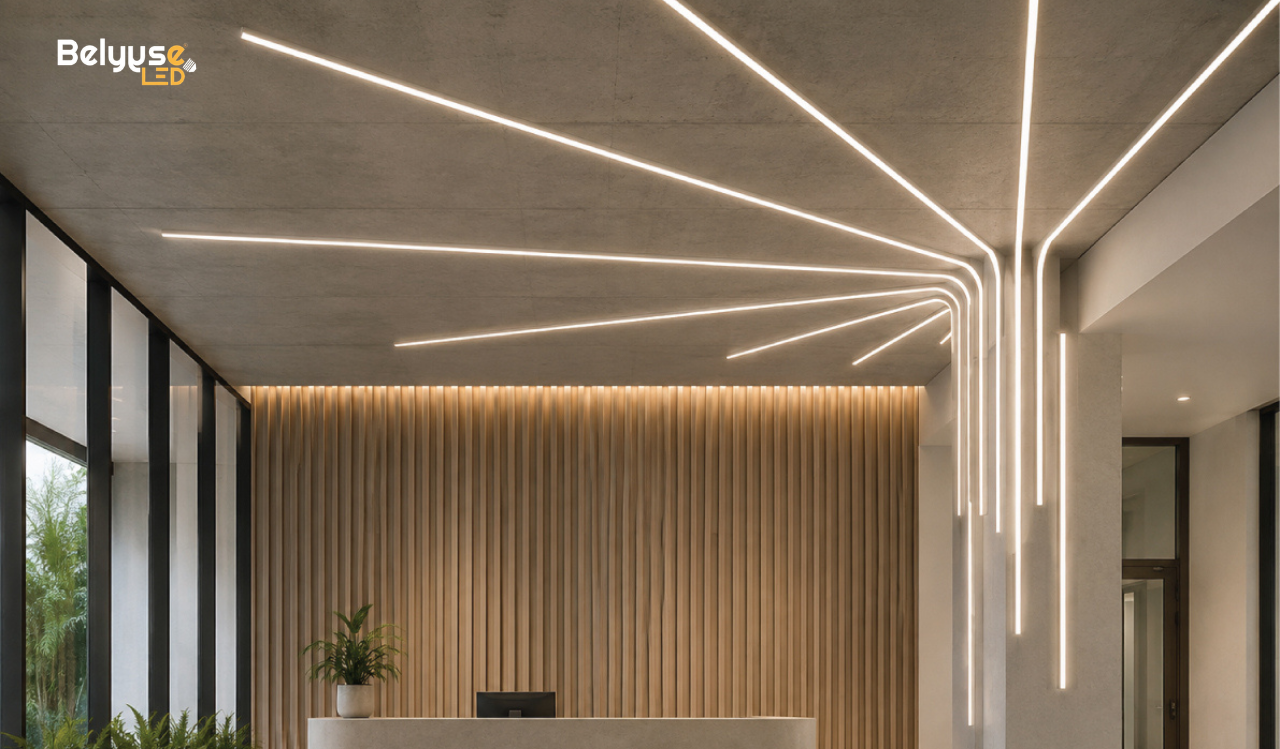
Step 4: Creating Concealed and Cove Lighting
Luxury lighting does not always have to be visible.
Sometimes the best lighting is the lighting you cannot see.
We used concealed lighting techniques where appropriate to create a soft architectural glow.
LED profile lighting and cove lighting can be used to highlight:
- False ceiling details
- Wall edges
- Architectural lines
- Niches
- Curtains
- Furniture
- Feature walls
Instead of seeing the LED source directly, the viewer mainly sees the effect of the light.
This creates a clean and modern appearance.
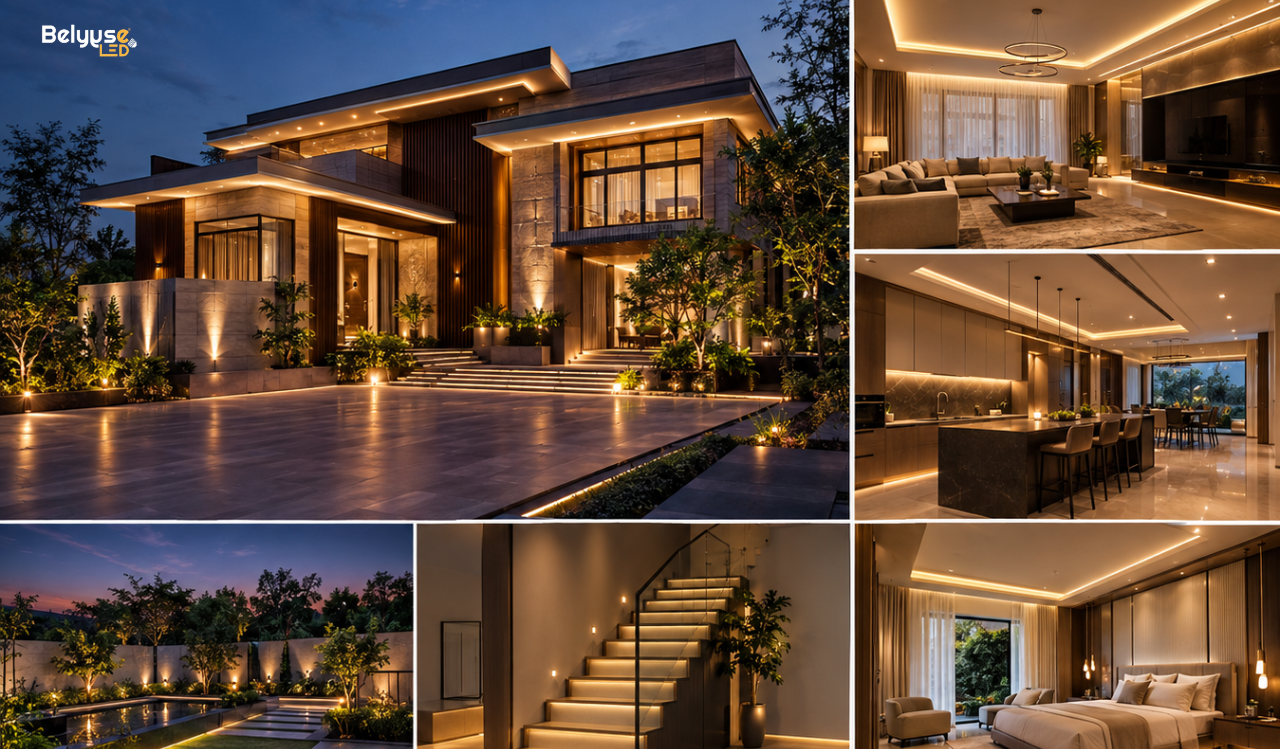
Step 5: Designing the Villa Facade Lighting
The exterior of a luxury villa deserves the same attention as the interiors.
During the day, the architecture speaks for itself.
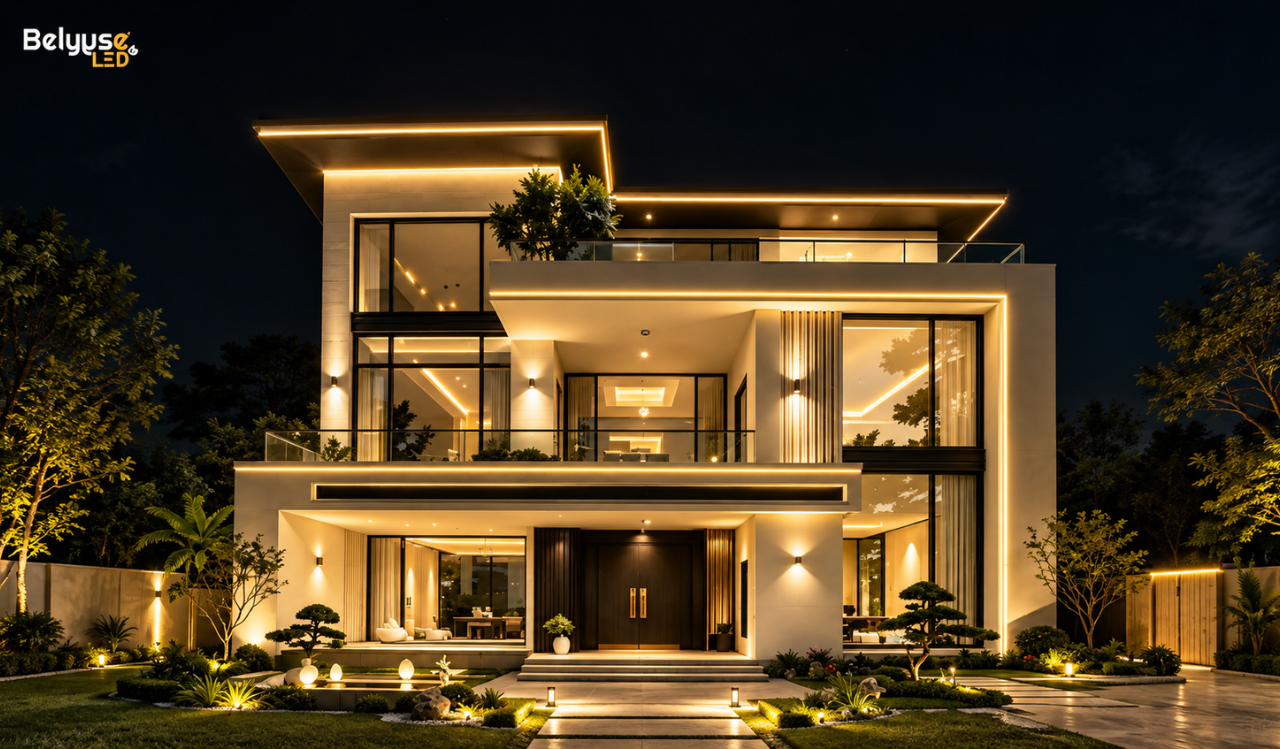
At night, facade lighting brings that architecture to life.
For the exterior, we considered the architectural shape of the villa and identified important areas that could be highlighted.
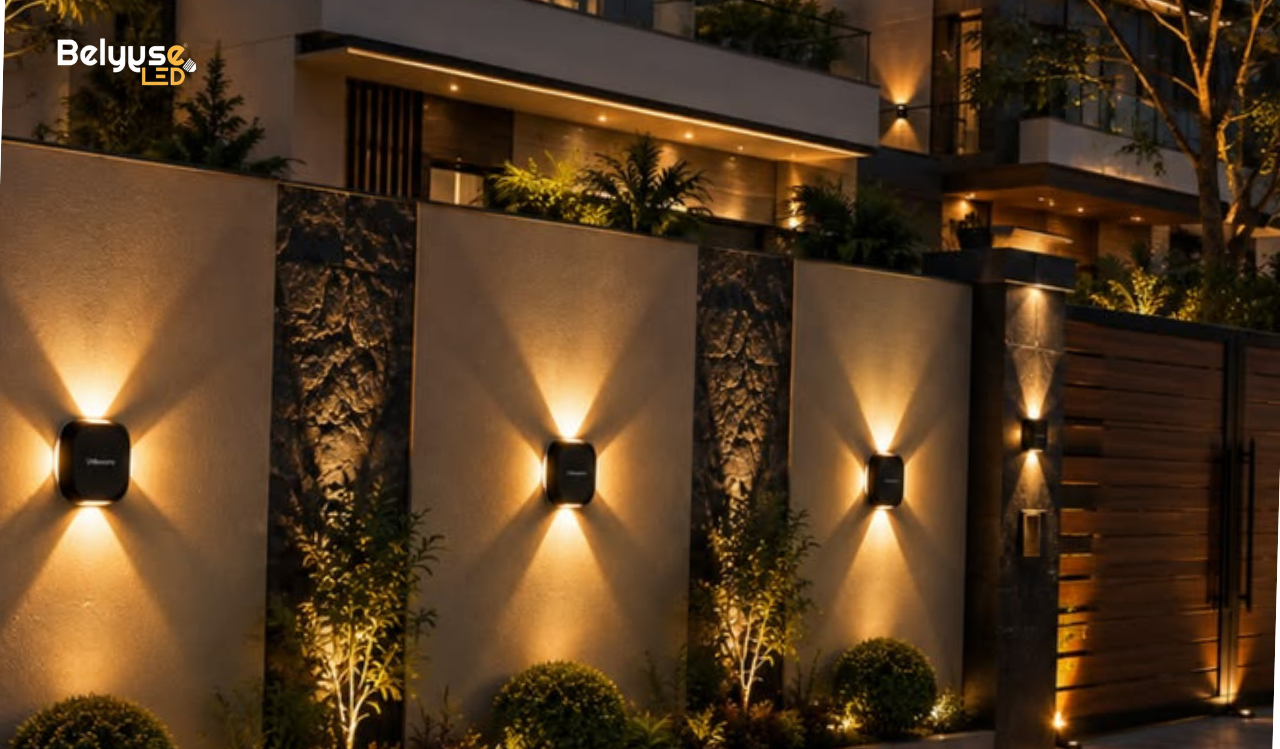
Facade lighting can be used to emphasize:
- Columns
- Textured walls
- Vertical architectural lines
- Entrances
- Balconies
- Rooflines
- Landscape elements
- Boundary walls
Instead of covering the entire building with bright lights, the idea was to create controlled highlights and shadows.
This gives the villa a more sophisticated appearance at night.
Step 6: Lighting the Staircase
Staircase lighting is another important part of residential lighting design.
Apart from improving visibility, staircase lighting can become an architectural feature.
Depending on the design, we considered concealed lighting options such as:
- Step lights
- Wall lights
- Under-step lighting
- LED profiles
- Handrail lighting
The objective was to provide enough illumination for safe movement while avoiding direct glare.
Step 7: Lighting the Landscape and Outdoor Areas
A luxury villa does not end at the main entrance.
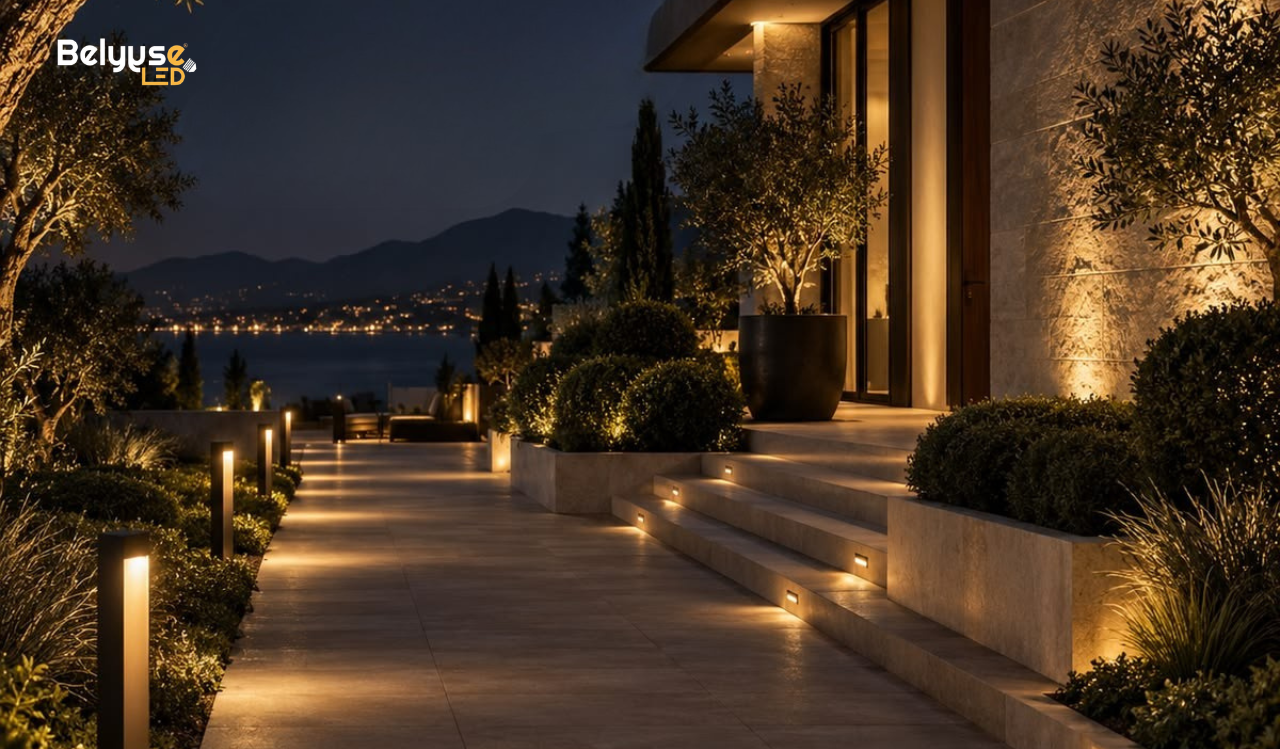
Gardens, pathways, outdoor seating, trees, water features, and landscape elements also contribute to the nighttime experience.
Landscape lighting was therefore planned as part of the complete lighting design.
We focused on creating soft visual layers instead of simply making every outdoor area bright.
The result is a more balanced connection between:
Architecture + Landscape + Light.
Step 8: Planning Lighting Controls
A good lighting design should provide flexibility.
A villa may need bright lighting during cleaning or daily activities, but the same space may require a softer atmosphere during dinner or relaxation.
Therefore, lighting controls and separate circuits can make a major difference.
Different lighting layers can be controlled independently so homeowners can create different lighting moods.
For example:
Day Mode: Functional and brighter lighting
Evening Mode: Soft ambient lighting with selected accent lights
Dinner Mode: Decorative lighting with reduced ambient lighting
Relax Mode: Low-level warm lighting for a calm atmosphere
Smart lighting and dimming systems can take this further by allowing multiple lighting scenes to be controlled easily.
Why Lighting Planning Should Start With the Architecture
One common mistake in residential projects is finalizing the architecture first and thinking about lighting later.
This can create problems such as:
- Incorrect light positions
- Too many downlights
- Visible glare
- Poor beam angles
- Difficult wiring
- Insufficient ceiling space
- Limited access for drivers
- Uneven wall washing
Lighting should be coordinated with the architectural and interior design drawings from an early stage.
When lighting is considered early, the architect, interior designer, electrical contractor, and lighting team can work together more efficiently.
The Final Result: Luxury Through Light
The purpose of this villa lighting project was not simply to install LED lights.
It was to create an environment.
During the day, the villa has its own architectural identity.
At night, carefully planned lighting reveals another side of the property.
The combination of ambient lighting, accent lighting, decorative lighting, concealed LED profiles, facade lighting, landscape lighting, and carefully selected colour temperatures creates depth and visual comfort.
This is what we believe luxury residential lighting should achieve.
Not more lights. Better lighting.
Why Professional Lighting Design Matters for a Luxury Villa
A luxury home is a long-term investment.
The right lighting design can improve the way the architecture, interiors, materials, artwork, furniture, and landscape are experienced.
Professional lighting design helps you plan:
- Light placement
- Beam angles
- Colour temperature
- CRI
- Lumens
- Glare control
- Architectural highlights
- LED profiles
- Cove lighting
- Facade lighting
- Landscape lighting
- Lighting controls
- Energy efficiency
Most importantly, it allows the entire villa to be treated as one connected lighting experience instead of a collection of individual light fixtures.
Final Thoughts
Designing lighting for a luxury villa requires more than choosing beautiful fixtures.
It requires understanding the architecture, studying the space, creating a lighting concept, testing the design, selecting suitable LED lighting, and coordinating the complete installation.
At BelyyseLED, we approach residential projects as complete lighting solutions.
From 3D lighting design and architectural lighting to interior lighting, facade lighting, LED profiles, decorative lighting, and project execution, our focus is to create lighting that works with the architecture—not against it.
Because when lighting is designed correctly, you don't just see the villa.
You experience it.