
In commercial spaces, lighting is more than just a way to brighten a room. The right commercial lighting design can improve the appearance of a space, increase comfort, reduce maintenance, and most importantly, lower energy consumption.
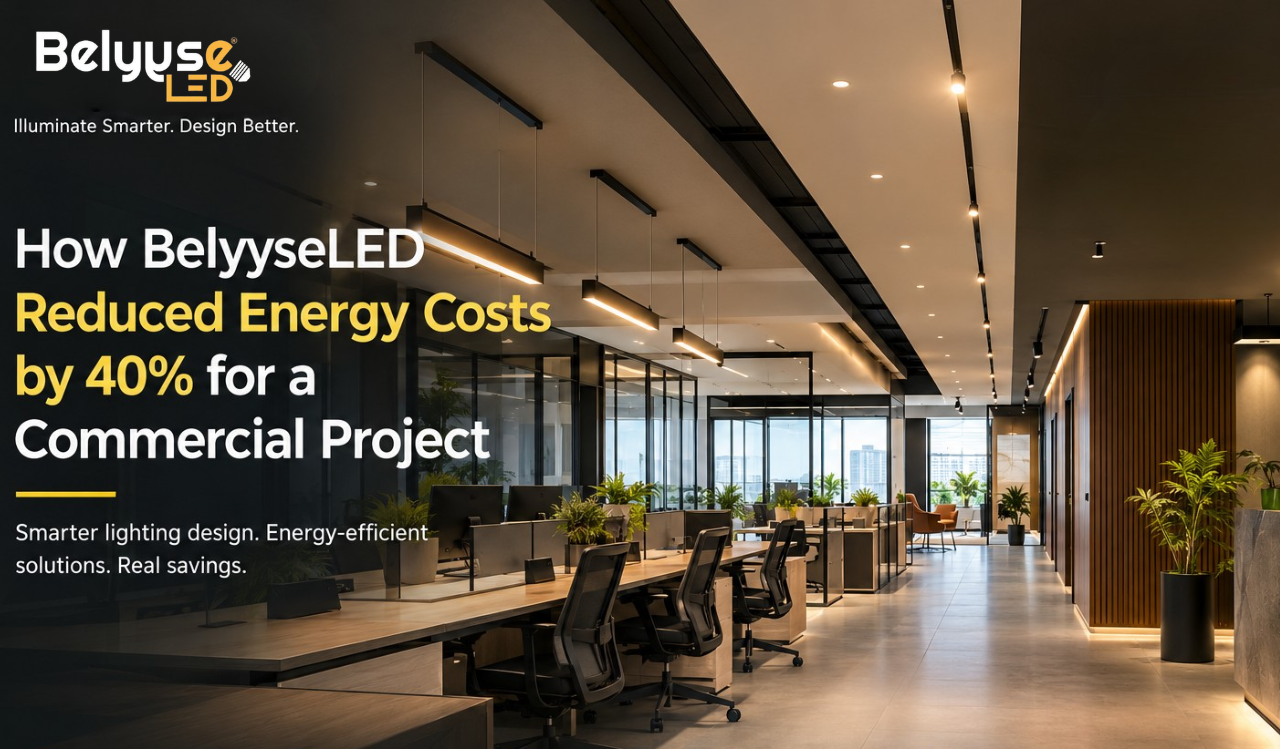
For one of our commercial projects, BelyyseLED used a complete lighting design and planning approach to reduce the project's lighting energy costs by approximately 40%.
This result was not achieved simply by replacing conventional lights with LED lights. It came from combining energy-efficient LED lighting, proper lighting calculations, smart fixture selection, optimized layouts, and professional lighting design.
The Challenge: High Energy Consumption
The commercial project required lighting for multiple areas, including workspaces, common areas, decorative zones, and architectural features.
The initial lighting plan had several common problems:
- High power consumption
- Too many lighting points
- Uneven illumination
- Unnecessary over-lighting
- Higher operating costs
- Frequent maintenance requirements
- Poor utilization of available light
In a commercial building, lights can operate for many hours every day. Even a small improvement in energy efficiency can create significant savings over time.
This is why commercial LED lighting needs to be planned carefully instead of selecting lights only according to wattage or appearance.
Step 1: Understanding the Lighting Requirement
At BelyyseLED, we first studied the requirements of the commercial space.
We considered:
- Room size
- Ceiling height
- Surface finishes
- Required illumination levels
- Working areas
- Decorative requirements
- Natural daylight
- Light distribution
- Fixture efficiency
- Operating hours
This helped us create a more efficient commercial lighting design.
Step 2: Creating a Lighting Design and 3D Simulation
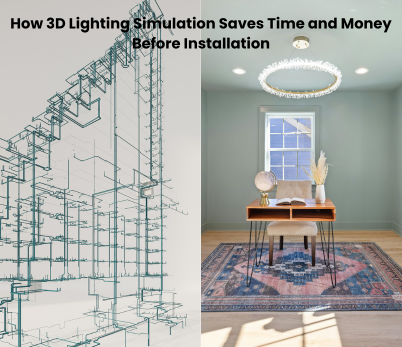
We created a 3D lighting simulation to understand how different fixtures would perform in the space.
The simulation helped us identify:
- Dark areas
- Over-lit areas
- Incorrect beam angles
- Light distribution
- Glare issues
- Required number of fixtures
- Decorative lighting requirements
This approach reduces unnecessary lighting points and helps create a balanced lighting layout.
A good lighting design can therefore reduce energy consumption without making the space feel dark.
Step 3: Replacing Inefficient Lighting with LED Technology
The next step was selecting suitable energy-efficient LED lights.
LED lighting uses less electricity compared with many traditional lighting technologies and can provide a longer service life.
However, not every LED light provides the same performance.
BelyyseLED considered factors such as:
- Lumens
- Wattage
- Efficacy
- CRI
- Beam angle
- CCT
- Driver efficiency
- Light distribution
- Application requirements
This helped us select the right LED lighting solutions for different areas of the commercial project.
Step 4: Using Lumens Instead of Only Watts
A common mistake in lighting projects is selecting lights only by wattage.
For example, a 20W light is not automatically better than a 25W light. What matters is how much useful light the fixture produces.
This is why BelyyseLED focuses on lumens and lighting performance, rather than simply choosing the lowest wattage.
The objective was to achieve the required illumination with fewer and more efficient fixtures.
This helped reduce unnecessary power consumption while maintaining the required brightness.
Step 5: Optimizing the Number and Position of Lights
Another important part of the project was optimizing the lighting layout.
Installing more lights does not always create better lighting.
Too many fixtures can result in:
- Higher electricity consumption
- Glare
- Uneven lighting
- Higher installation costs
- Increased maintenance
BelyyseLED carefully positioned fixtures according to the function of each area.
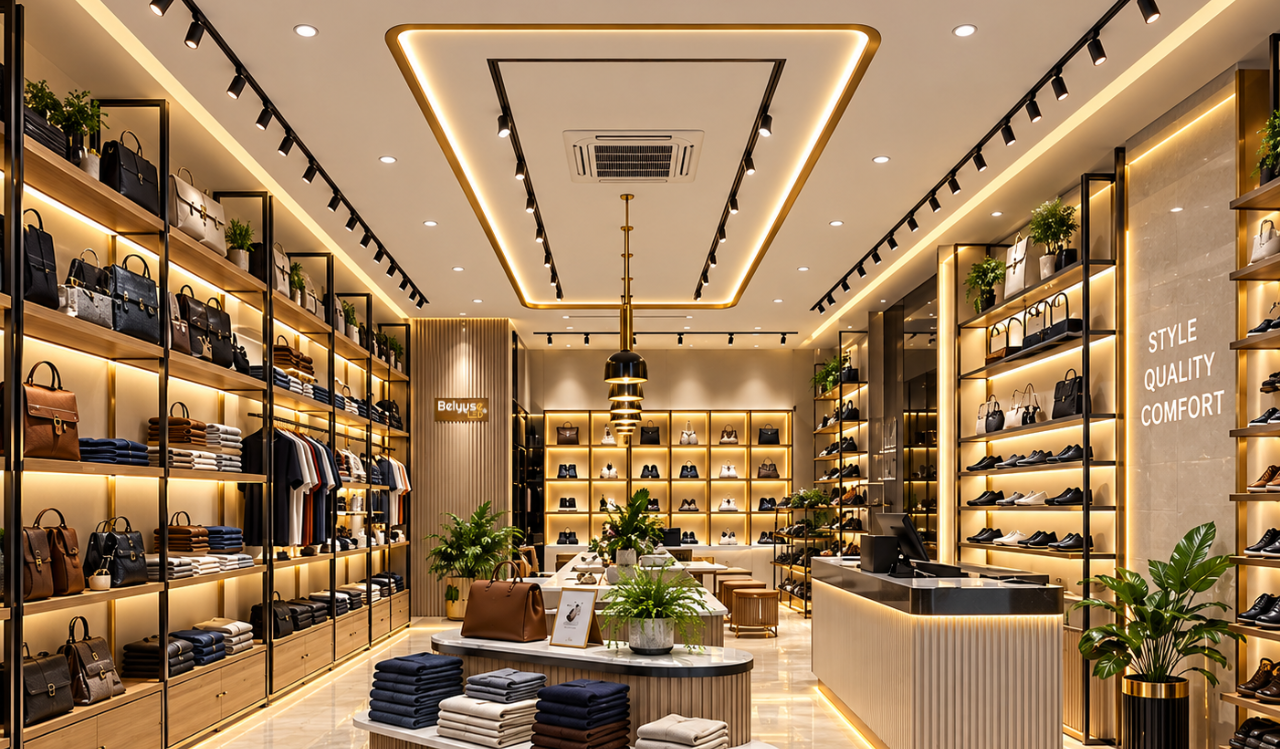
Downlights, spotlights, linear lights, decorative lighting, and other fixtures were used where they were actually required.
This created a more efficient commercial lighting solution.
Step 6: Using Lighting for Different Applications
Different areas of a commercial building have different lighting requirements.
For example:
Work areas need comfortable and uniform illumination.
Display areas may require focused accent lighting.
Corridors need efficient general illumination.
Reception areas may require a combination of functional and decorative lighting.
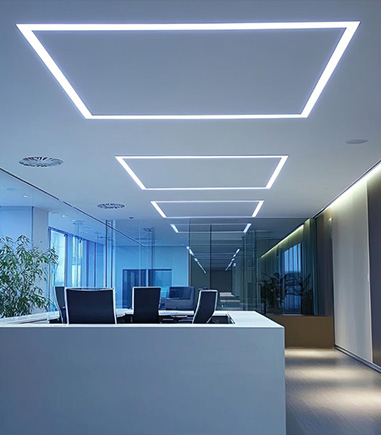
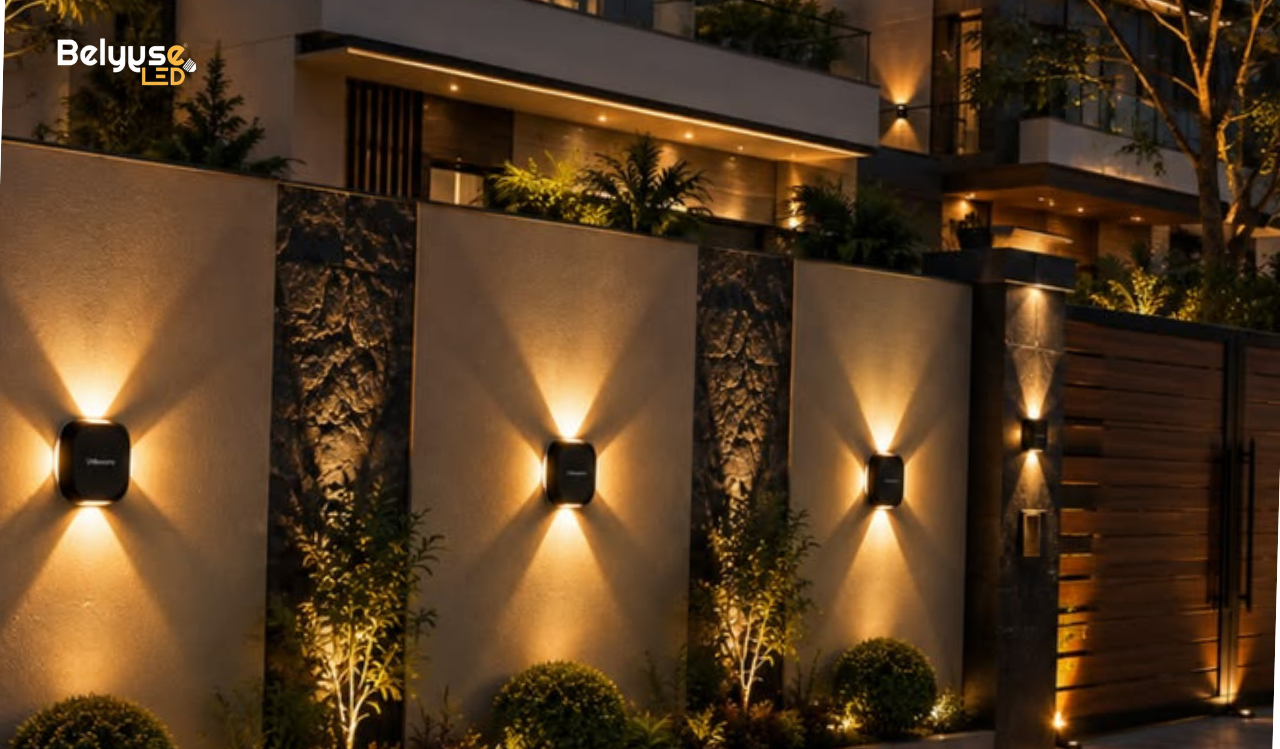
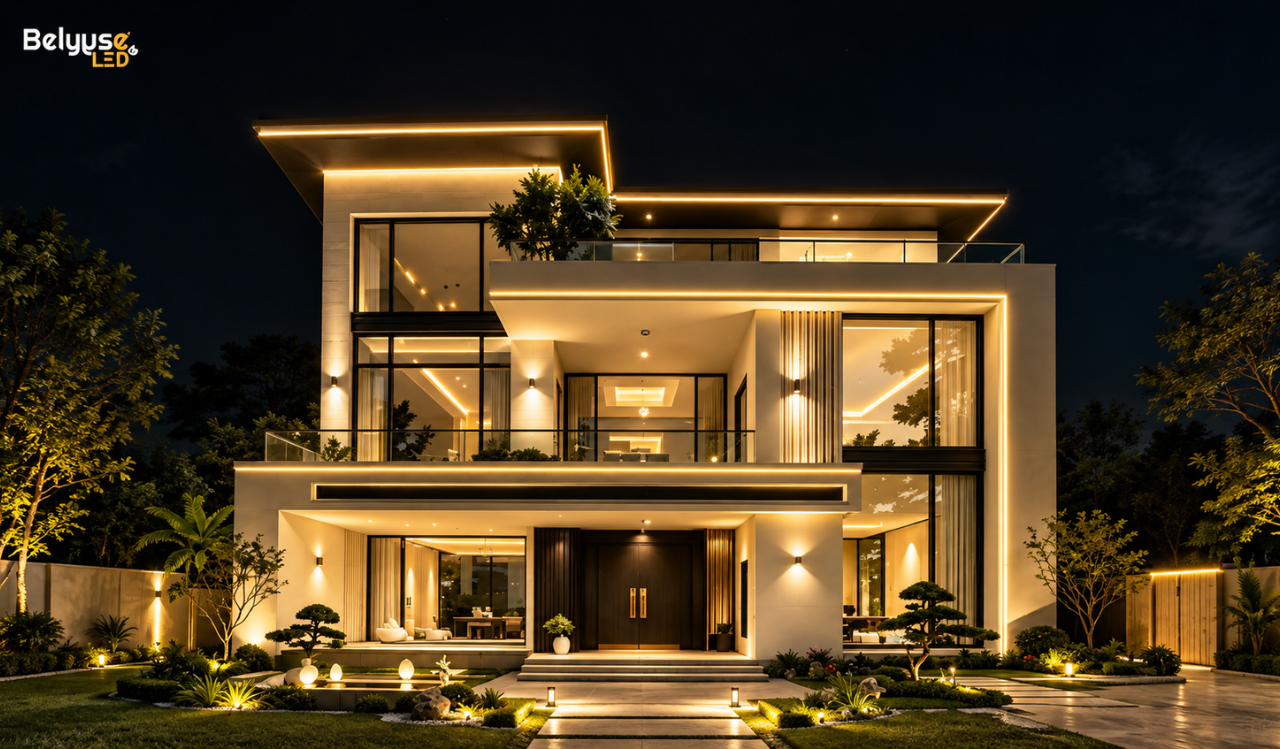
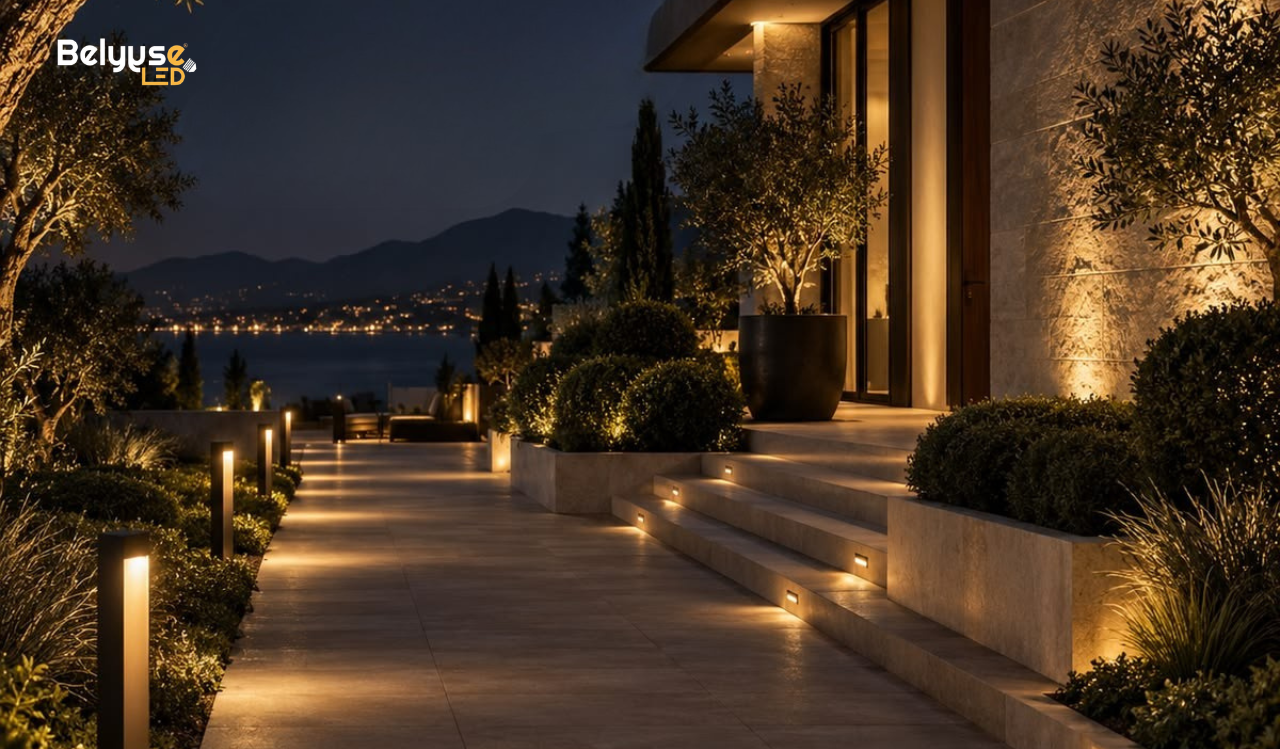
Architectural areas may require linear or facade lighting.
Instead of using one type of fixture throughout the building, BelyyseLED created an application-based lighting plan.
This helped avoid unnecessary energy consumption.
The Result: Around 40% Lower Energy Costs
After optimizing the lighting design and implementing energy-efficient LED lighting solutions, the commercial project achieved approximately 40% reduction in lighting energy costs compared with the previous/initial lighting approach.
The improvement came from a combination of:
- Energy-efficient LED fixtures
- Optimized lighting layouts
- Correct lumen requirements
- Reduced unnecessary lighting points
- Better fixture selection
- Improved light distribution
- Professional lighting calculations
- Application-based lighting design
The goal was not simply to use fewer lights.
The goal was to use the right light in the right place.
Energy Efficiency Without Compromising Design
Energy saving does not mean that a commercial space needs to look basic or less attractive.
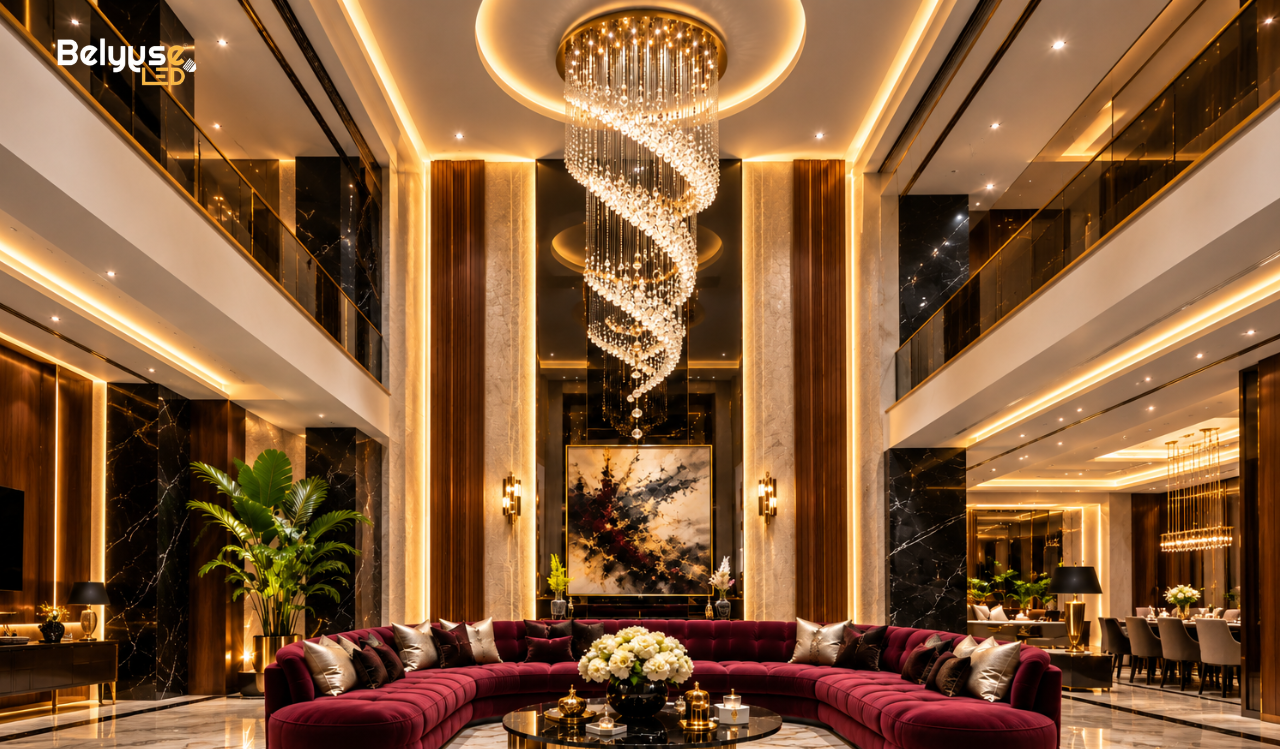
Modern commercial LED lighting can create both functionality and visual impact.
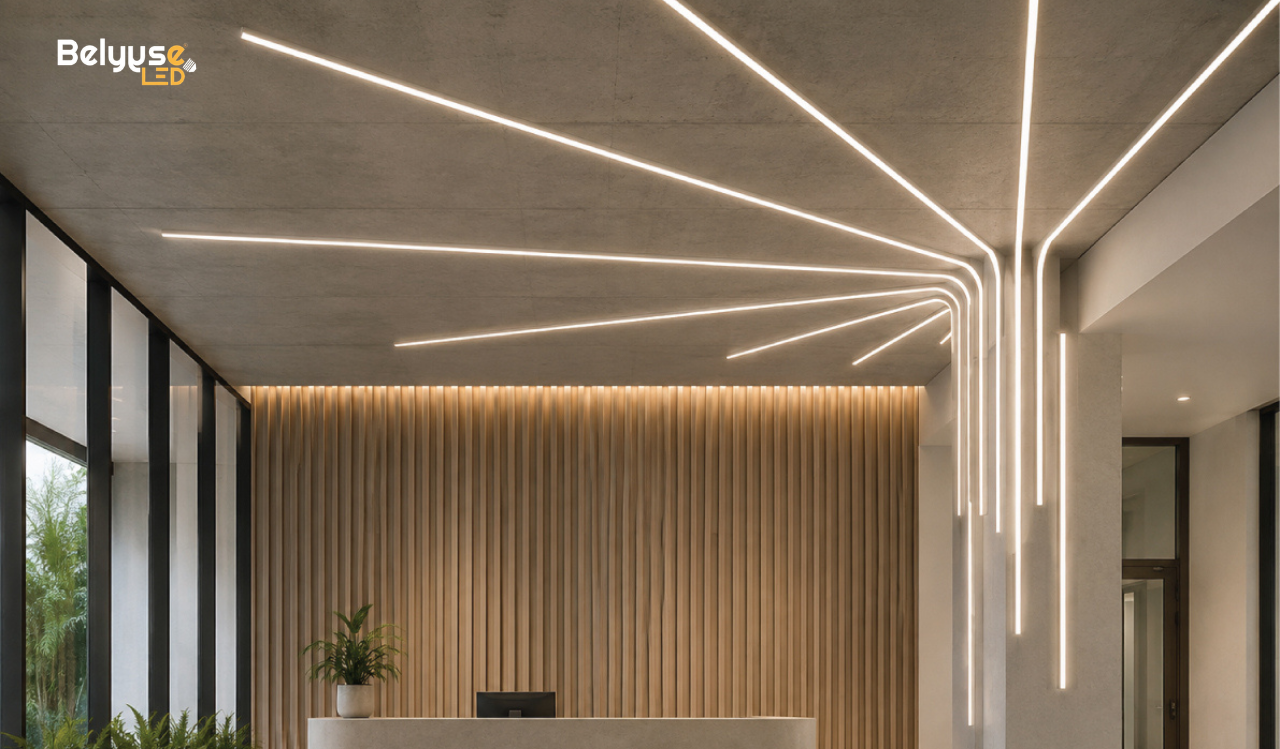
Linear lighting can highlight architectural elements.
Spotlights can focus attention on important features.
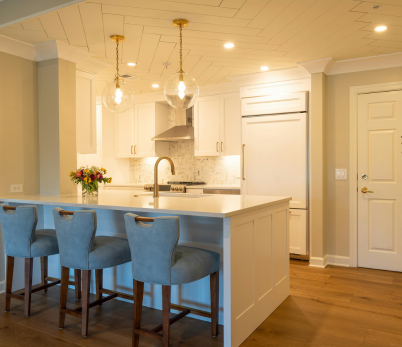
Downlights can provide comfortable general illumination.
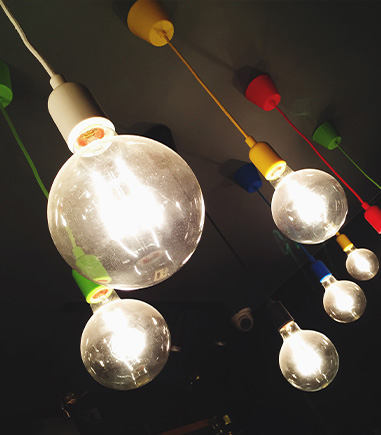
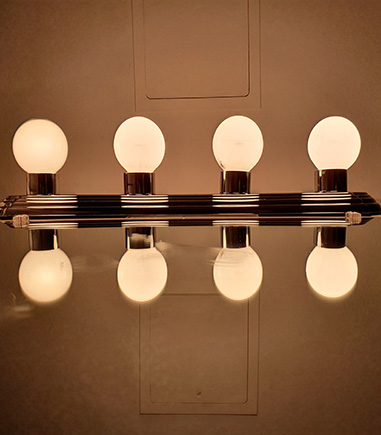
Decorative lighting can create a premium atmosphere.
When these elements are planned properly, a commercial space can look attractive while still being energy efficient.
Why Professional Commercial Lighting Design Matters
Lighting is often treated as the final stage of a construction project. However, planning lighting from the design stage can deliver better results.
Professional commercial lighting design can help with:
- Energy savings
- Better illumination
- Reduced glare
- Lower maintenance
- Better aesthetics
- Improved visual comfort
- Efficient fixture selection
- Long-term operating savings
This is why BelyyseLED follows a design-first approach rather than simply supplying lights.
BelyyseLED: Complete Lighting Solutions
BelyyseLED provides complete lighting solutions for commercial spaces, from lighting design and 3D visualization to fixture selection and project execution.
Our approach focuses on understanding the project before recommending the lighting.
We work with architects, interior designers, builders, contractors, and commercial property owners to develop lighting solutions based on the project's requirements.
Whether it is office lighting, retail lighting, hospitality lighting, architectural lighting, facade lighting, or customized commercial lighting, the objective remains the same:
Better lighting. Smarter design. Lower energy consumption.
Conclusion
The 40% reduction in energy costs shows that energy-efficient lighting is not only about replacing old lights with LEDs.
Real energy savings come from proper lighting design, accurate calculations, efficient LED technology, optimized layouts, and choosing the right fixture for every application.
At BelyyseLED, we believe commercial lighting should be designed around performance, aesthetics, efficiency, and long-term value.
Illuminate Smarter. Design Better.
If you are planning a new commercial project or want to improve the energy efficiency of an existing space, a professional lighting design can be the first step toward reducing unnecessary energy consumption.
BelyyseLED — Complete Lighting Solutions for Modern Commercial Spaces.