

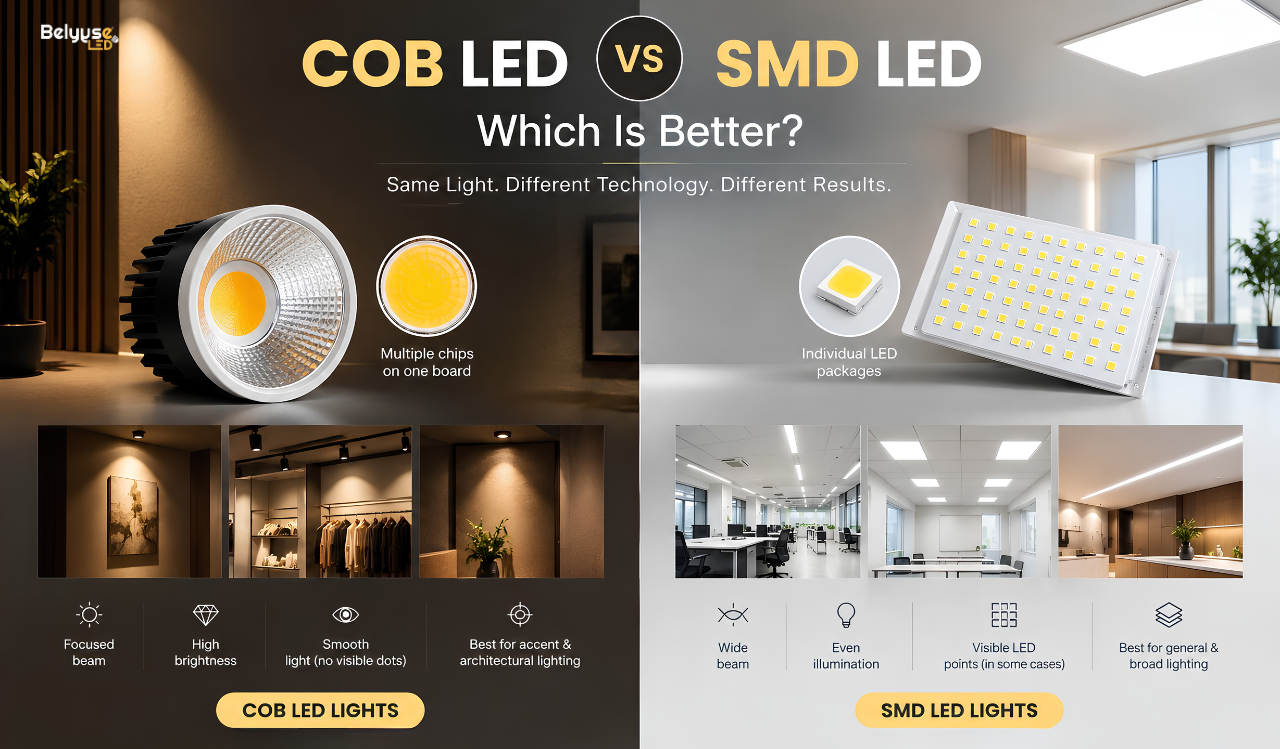
COB vs SMD LED Lights: Which Is Better?
Choosing the right LED light can make a big difference in how a space looks and feels. With so many LED lighting options available today, two common technologies are COB LED and SMD LED.
But what is the difference between COB and SMD LED lights? Which one gives better light? Which is more suitable for homes, offices, shops, hotels, and commercial spaces?
In this guide, we will explain COB vs SMD LED lights in simple words so you can choose the right lighting for your project.
What Is a COB LED Light?
COB stands for Chip on Board. In a COB LED, many small LED chips are placed closely together on a single board.
This creates a concentrated and powerful light source. Because the chips are packed closely, COB LED lights can produce a smooth and bright beam with fewer visible points of light.
COB LED technology is commonly used in:
- LED spotlights
- Downlights
- Track lights
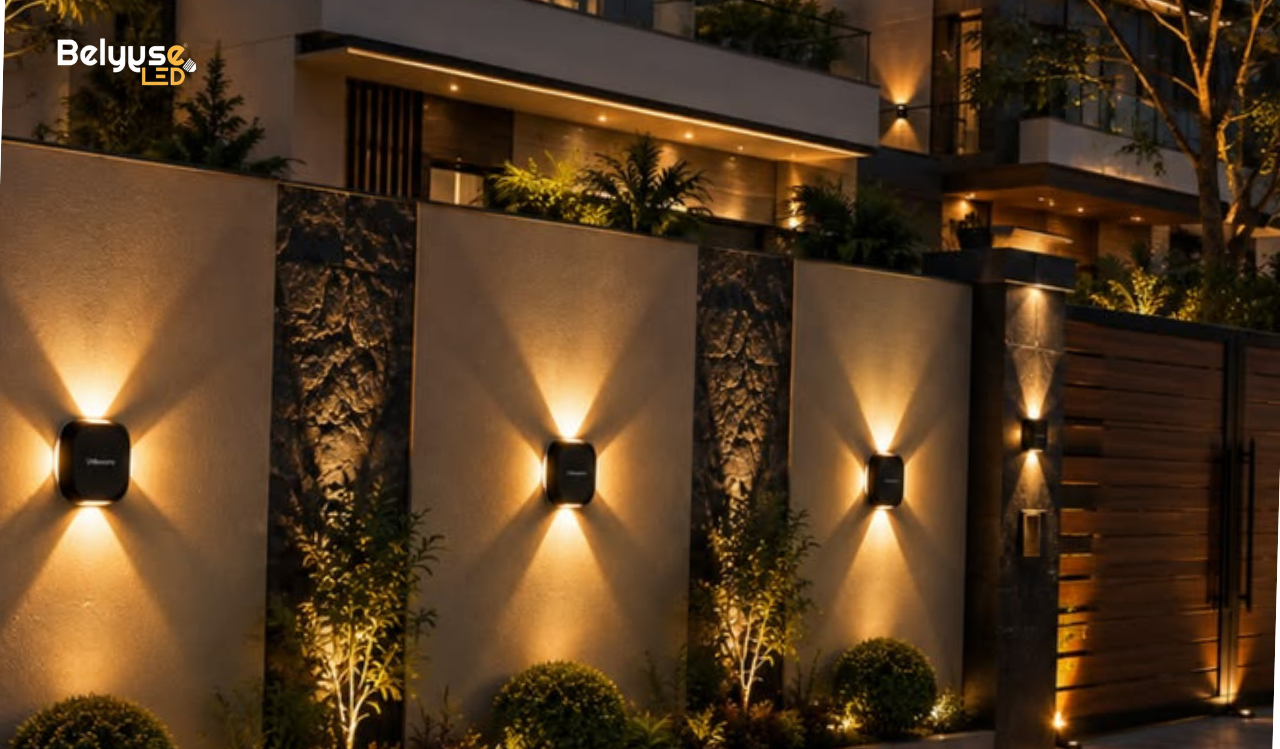
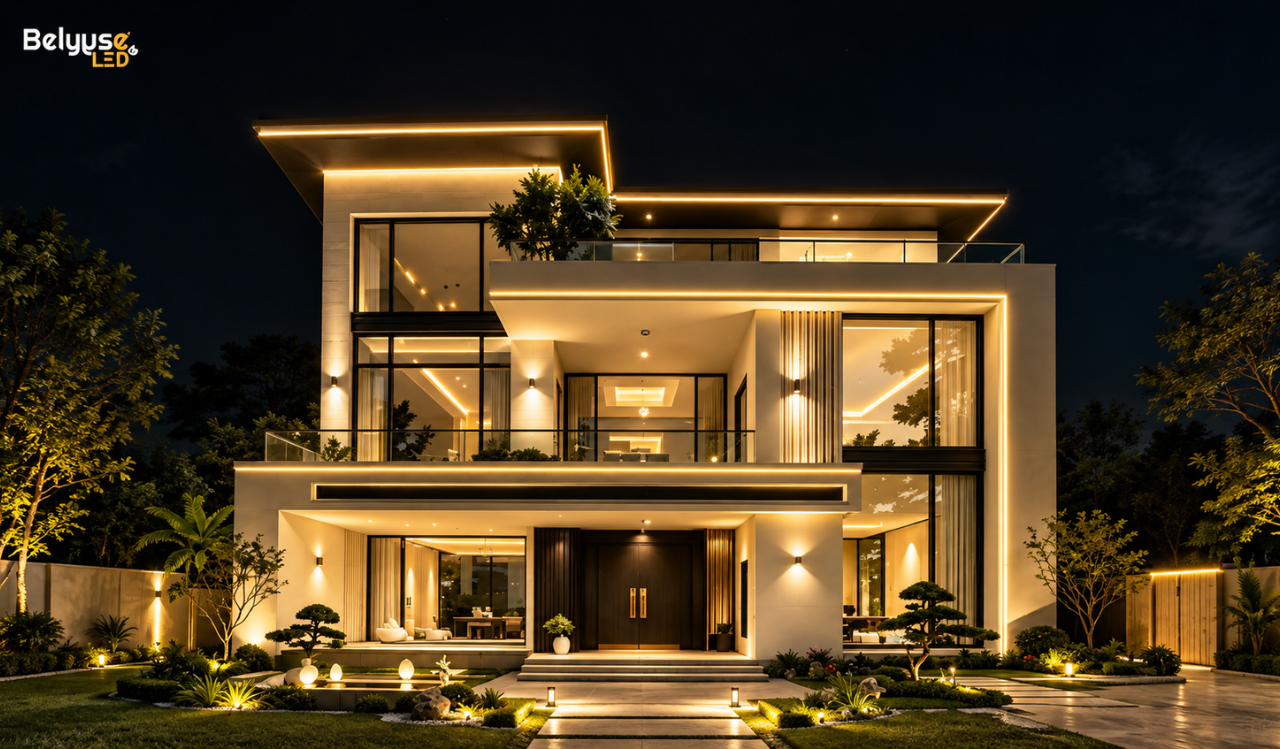
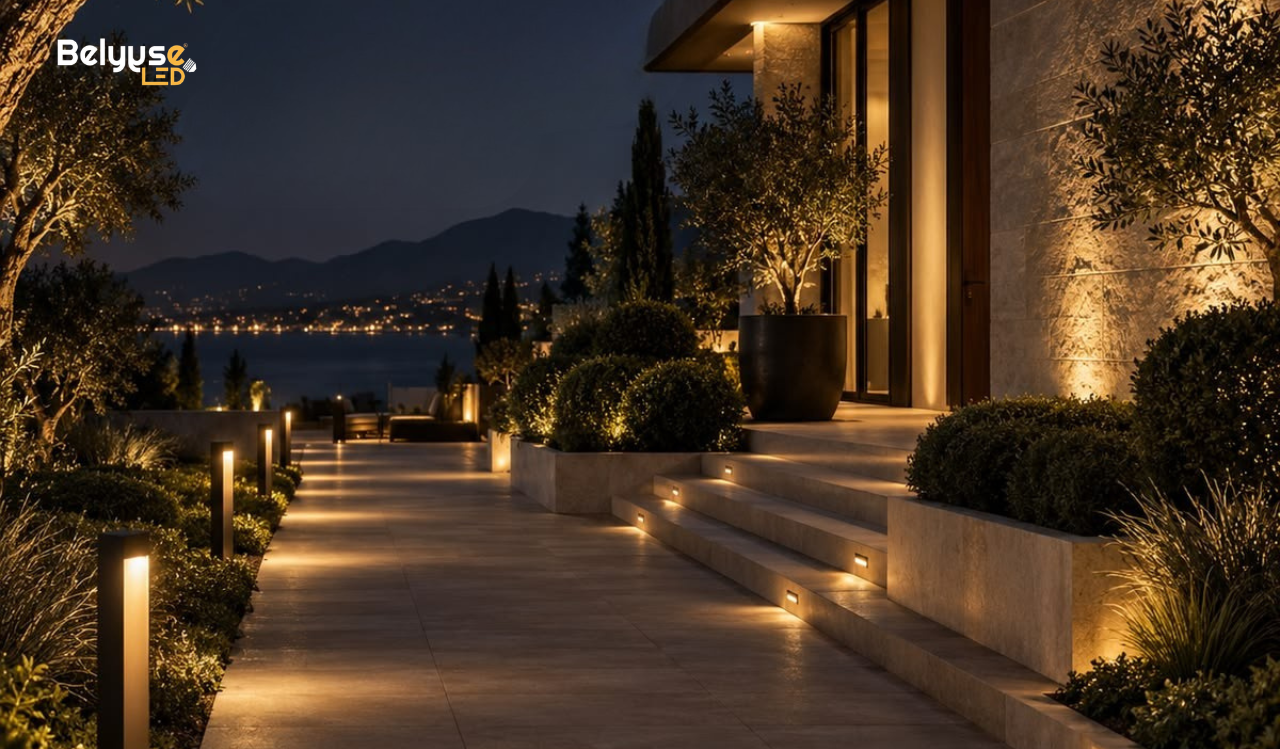
- Architectural lighting
- Display lighting
- Retail lighting
- Hotel lighting
- Accent lighting
- Commercial lighting
COB lights are especially useful when you want to highlight a wall, artwork, product, furniture, or architectural feature.
What Is an SMD LED Light?
SMD stands for Surface Mounted Device. SMD LEDs are individual LED chips mounted directly onto a circuit board.
They are widely used because they can be made in different sizes, shapes, and power levels.
SMD LED lights are commonly found in:
- LED panels
- LED bulbs
- LED strips
- Tube lights
- Ceiling lights
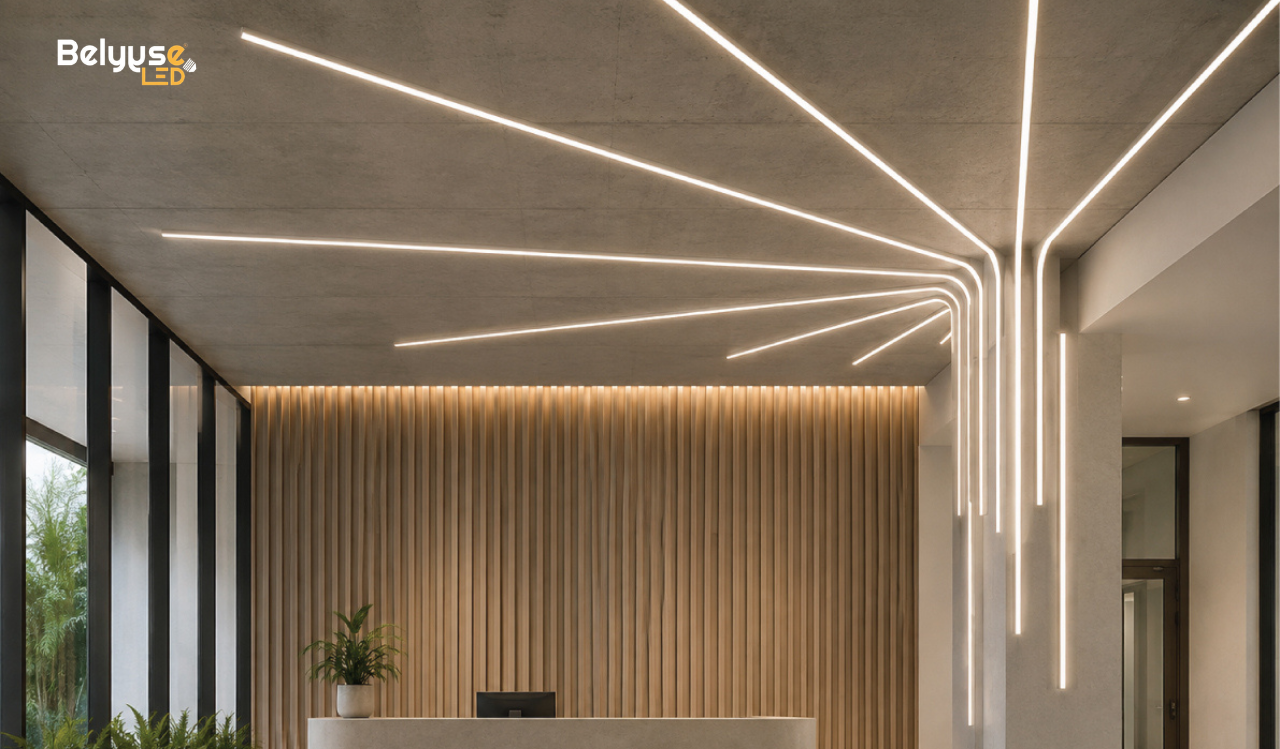
- Linear lights
- Outdoor LED lights
- General-purpose lighting
SMD technology is suitable for applications where you need broad and even illumination.
COB vs SMD LED: What Is the Difference?
The main difference between COB and SMD LED lights is the way the LED chips are arranged.
A COB LED combines multiple chips into one compact light source. An SMD LED normally uses individual LED packages mounted on a circuit board.
COB LED vs SMD LED: Which Gives Better Light?
There is no single answer for every project.
COB LED lights are often preferred when the goal is a strong, focused, and visually controlled beam. They are useful for accent lighting and architectural applications.
SMD LED lights are useful when the goal is wider and more general illumination.
The right choice depends on the room size, ceiling height, lighting design, beam angle, brightness requirement, and the purpose of the space.
COB LED Lights for Architectural Lighting
Architectural lighting is not only about making a space bright. It is also about creating depth, focus, and visual comfort.
COB LED spotlights and downlights can help highlight:
- Feature walls
- Paintings
- Decorative objects
- Furniture
- Textured surfaces
- Retail products
- Architectural details
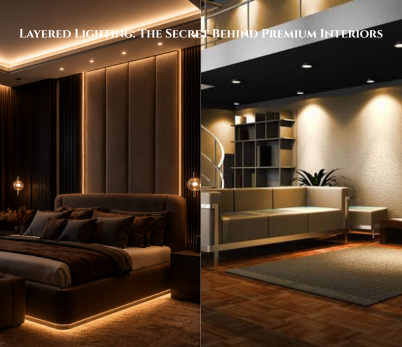
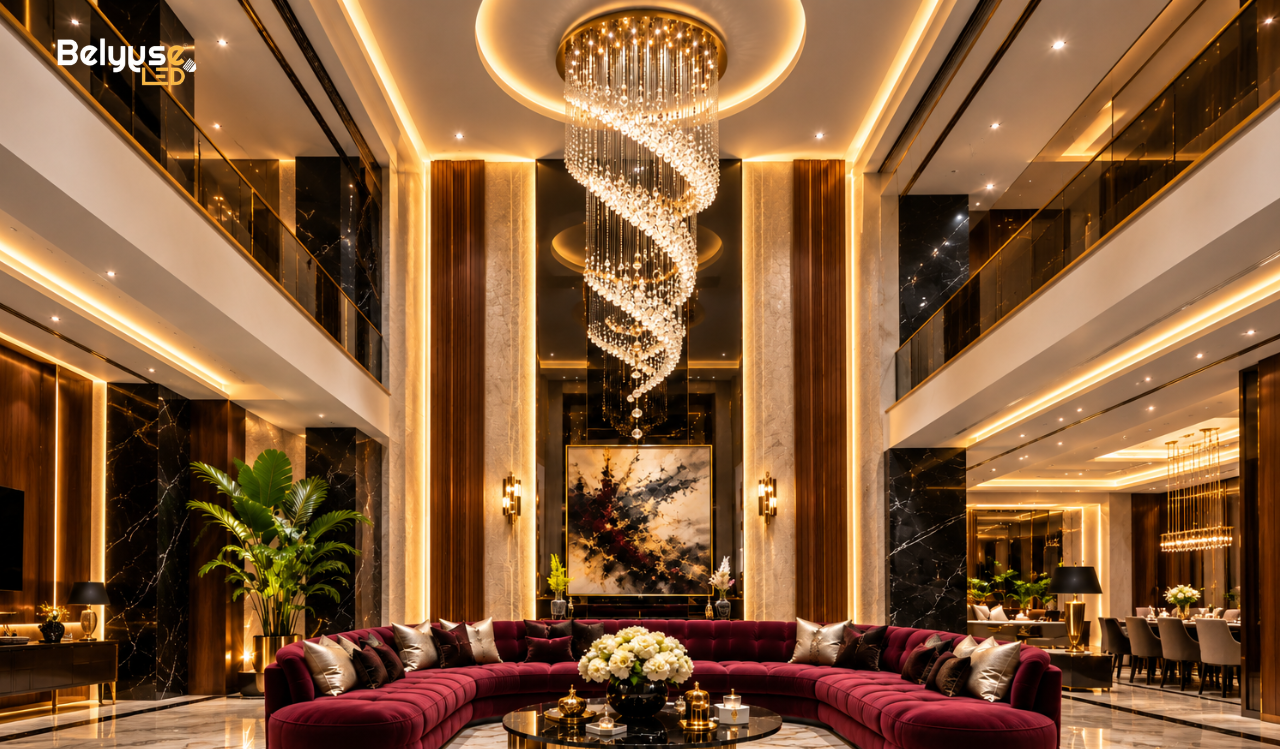
For modern homes, hotels, restaurants, showrooms, and offices, COB LED lighting can be used as part of a layered lighting design.
SMD LED Lights for General Illumination
SMD LED lights are a practical choice when you need light to cover a larger area.
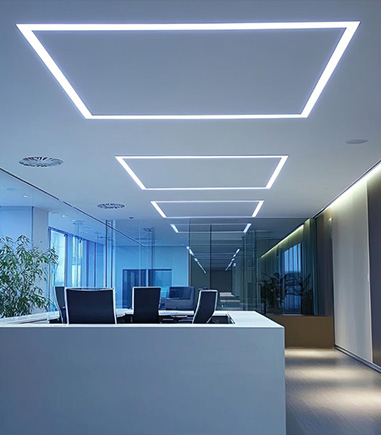
For example, LED panels and linear lights using SMD technology can provide broad illumination across:
- Offices
- Classrooms
- Warehouses
- Workspaces
- Kitchens
- Corridors
- Commercial areas
This makes SMD LED technology useful for projects where uniform lighting is more important than creating a focused lighting effect.
COB vs SMD: Which Is More Energy Efficient?
Both COB and SMD LED lights can be energy efficient when they are properly designed and paired with a good-quality driver.
Energy consumption does not depend only on whether a light uses COB or SMD technology.
Other factors are also important, including:
- LED efficiency
- Driver efficiency
- Power consumption
- Light output
- Heat management
- Product design
- Lighting control
Instead of choosing a light only by wattage, look at lumens per watt and the actual lighting requirement of the space.
COB vs SMD: Which Has Better Heat Management?
Heat management is important for LED lighting because excessive heat can affect performance and lifespan.
COB LED designs often use a dedicated heat sink to move heat away from the LED chips. SMD LED products can also have effective thermal management depending on their design.
A good LED light should have:
- Proper heat dissipation
- Quality materials
- A reliable LED driver
- Correct installation
- Suitable operating conditions
So, the quality of the complete lighting product matters more than simply choosing COB or SMD.
Which LED Light Is Better for Home Lighting?
For home lighting, both technologies can be useful.
COB LED lights work well for:
- Living room spotlights
- Bedroom accent lighting
- Artwork lighting
- Kitchen task lighting
- Decorative lighting
- Cove and architectural applications
SMD LED lights can work well for:
- LED panels
- Ceiling lights
- Linear lighting
- LED strips
- General room illumination
A well-designed home often uses both technologies together to create layered lighting.
Which Is Better for Commercial Lighting?
For commercial projects, the choice depends on the purpose of the space.
Retail stores and showrooms may benefit from COB spotlights because products and displays often need focused lighting.
Offices may use SMD-based panels or linear lights for wider and more uniform illumination.
Hotels, restaurants, and premium commercial spaces may combine COB and SMD lighting with other lighting systems to create different layers and moods.
COB vs SMD LED: What Should You Choose?
Instead of asking which technology is always better, ask:
“What type of lighting does my space need?”
Choose COB LED lighting when you need:
- Focused light
- Strong accent lighting
- Architectural highlighting
- Controlled beam angles
- Premium spotlight applications
Choose SMD LED lighting when you need:
- Wider light distribution
- General illumination
- Linear lighting
- LED panels
- Flexible product designs
For many modern lighting projects, the best solution may be a combination of both.
Why Lighting Design Matters
The best LED light cannot fix a poor lighting plan.
Before selecting COB or SMD LED lights, consider the complete design. Ceiling height, room size, furniture placement, wall finishes, activity, brightness, colour temperature, beam angle, and glare all affect the final result.
A professional lighting design can help decide:
- Where lights should be placed
- How many lights are required
- Which beam angle is suitable
- Which colour temperature should be used
- Where accent lighting is needed
- How to reduce glare
- How to create visual balance
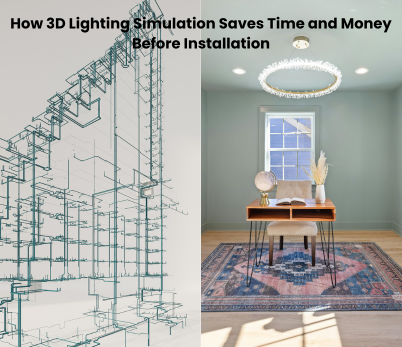
This is why modern lighting projects often start with a proper lighting design and 3D lighting simulation before installation.
Final Thoughts
COB vs SMD LED lights is not about finding one technology that is better for every situation.
COB LED lights are well suited for focused, accent, and architectural lighting. SMD LED lights are highly useful for broad, general, and linear lighting applications.
The right choice depends on your project, lighting goal, space, and design requirements.
For a successful lighting project, focus on more than just wattage or LED type. Look at light quality, efficiency, beam angle, glare, colour temperature, CRI, driver quality, heat management, and overall lighting design.
The goal is not simply to add more lights.
The goal is to create better light.