
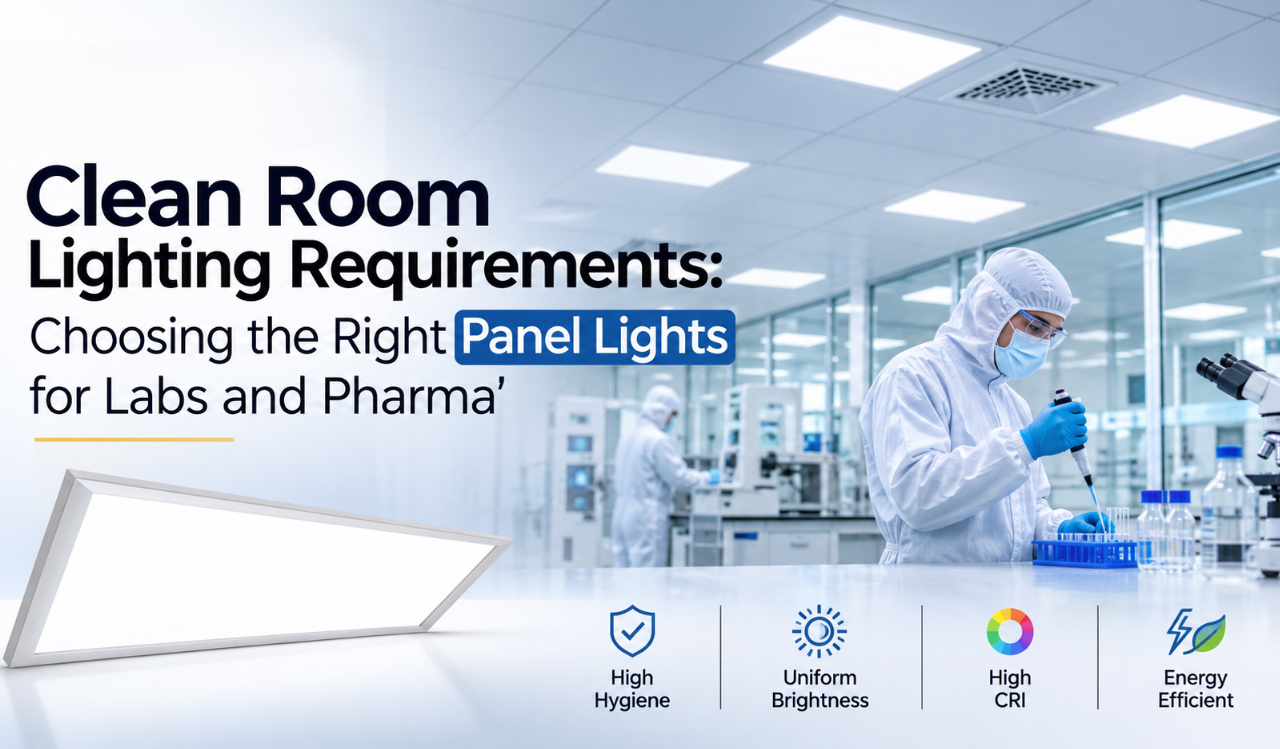
Clean Room Lighting Requirements Choosing the Right Panel Lights for Labs and Pharma
Lighting is one of the most underrated parts of a controlled environment. In a pharmaceutical plant or research lab, a poorly chosen fixture can shed particles, trap dust, or flicker enough to cause eye strain and inspection errors. The right cleanroom LED panel lights support your ISO classification, protect product quality, and keep operators comfortable through long shifts.
This guide covers the main clean room lighting requirements and how to select panel lights for labs and pharma facilities.
Why Cleanroom Lighting Is Different
Standard office lights are built for brightness and cost. Cleanroom fixtures are built for containment. Every seam, screw, and vent on a luminaire is a potential place for particles to collect or escape.
Cleanroom lighting must:
- Avoid shedding particles into the controlled air
- Seal tightly against the ceiling grid so contaminants can’t pass above or below it
- Withstand frequent cleaning and disinfection
- Stay stable for years without generating excess heat
Getting any of these wrong can push particle counts out of range and trigger costly requalification.
Key Standards and Compliance
Several frameworks shape pharmaceutical cleanroom lighting:
- ISO 14644 classifies cleanrooms by airborne particle concentration. It does not prescribe fixtures, but your lights must not compromise the class you’re targeting.
- EU GMP Annex 1 and cGMP guidelines call for smooth, cleanable surfaces and minimal particle generation in sterile manufacturing areas.
- IP ratings (ingress protection) show how well a fixture resists dust and moisture. IP65 or higher is common for wet-cleaned rooms.
- Electrical safety marks such as CE and UL/ETL confirm the product meets baseline safety requirements.
Always check your local regulations and your facility’s validation plan before finalizing a specification.
Lighting Levels: How Many Lux Do You Need?
Brightness requirements depend on the task. As general working ranges:
- General cleanroom and corridor areas often sit around 300 to 500 lux
- Laboratory benches and filling or packing lines commonly target 500 lux or more
- Visual inspection and quality control stations may need 750 to 1,000 lux
Treat these as starting points. Your design team or lighting consultant should confirm the figures against your process and applicable guidance. Remember that lux is measured at the working surface, not at the fixture, so ceiling height and room reflectance affect the result.
Features to Look for in Cleanroom Panel Lights
Sealed, Flush-Mounted Design
Look for flush-mounted or recessed LED panel lights with a gasketed, sealed frame. When the panel sits level with the ceiling, there are no ledges where dust can settle, and wiping down is quick. Many cleanroom luminaires are also serviceable from inside the room, so technicians never have to open the ceiling plenum above a classified space.
Smooth, Non-Porous Materials
Powder-coated steel or aluminum frames with a seamless, anti-static diffuser resist chipping and flaking. Avoid exposed fasteners, textured surfaces, or materials that degrade under repeated disinfection.
Chemical Resistance
Pharma teams regularly use hydrogen peroxide, isopropyl alcohol, and quaternary ammonium cleaners. Fixtures should tolerate these agents without yellowing, cracking, or corroding.
High CRI and Appropriate Color Temperature
A high CRI LED panel (typically 80 or above, with 90+ for color-critical work) helps staff read labels, spot discoloration, and assess samples accurately. Neutral to cool white (4000K to 5000K) is a popular choice for labs and inspection areas.
Flicker-Free, Low-Glare Output
Flicker causes headaches and can interfere with high-speed cameras and automated vision systems. Choose flicker-free LED drivers and low-glare optics, with a low UGR (Unified Glare Rating) so reflections off glassware, stainless steel, and screens stay manageable.
Low Heat and Long Lifespan
LEDs run cooler than fluorescent lighting, which eases the load on HVAC systems that already work hard to hold temperature and pressure. A rated life of 50,000 hours or more reduces replacement frequency, and every ceiling intervention in a cleanroom carries contamination risk.
Matching Fixtures to the Application
Pharmaceutical Manufacturing
Sterile filling, compounding, and packaging zones demand fully sealed, easy-to-sanitize luminaires with strong IP ratings. Prioritize particle-free construction, consistent illumination across the grid, and fixtures that integrate cleanly with HEPA ceiling modules.
Research and Testing Laboratories
Labs benefit from bright, uniform, glare-controlled light over benches and fume hoods. Dimmable panels are useful where microscopy or light-sensitive reagents are used.
Biotech and Medical Device Production
These facilities often combine assembly with inspection, so tunable or dual-zone lighting lets you raise lux at inspection tables without over-lighting the whole room.
Energy Efficiency and Lifecycle Cost
Cleanrooms run around the clock in many facilities, so energy-efficient cleanroom lighting has an outsized effect on operating costs. A good LED panel delivers high lumens per watt, and dimming controls or occupancy-linked scheduling can trim consumption further. When comparing quotes, weigh purchase price against energy use, maintenance access, and expected service life.
Installation and Maintenance Tips
- Plan the layout early. Coordinate fixture positions with HEPA filters, sprinklers, and return grilles.
- Verify the seal. Confirm gaskets are seated correctly during installation, then inspect them periodically.
- Document everything. Keep datasheets, test reports, and installation records ready for audits.
- Clean on a schedule. Include luminaires in routine disinfection to prevent buildup.
- Choose a dependable supplier. Look for manufacturers experienced in controlled environments who can supply test data and warranties.
Common Mistakes to Avoid
- Using standard commercial panels in a classified room
- Ignoring IP rating and chemical compatibility
- Specifying light levels without checking task requirements
- Overlooking driver quality, which leads to flicker and early failure
- Forgetting maintenance access, forcing risky ceiling work later
Final Thoughts
The best LED panel lights for cleanrooms combine sealed construction, stable and glare-free illumination, chemical resistance, and long service life. Start with your ISO class and GMP obligations, set lux targets by task, and then choose fixtures that stay clean, quiet, and reliable under daily use. A careful lighting specification protects your product, your people, and your compliance record.
Planning a new cleanroom or upgrading your existing laboratory? Choose BelyyseLED for expert lighting design, customized panel light solutions, and professional lighting planning. We help you create clean, uniform, and efficient lighting environments tailored to your project requirements. Invest in smarter lighting today for better performance tomorrow.