


Best Lighting Company in India: What to Look For
Choosing the right lighting company is an important step in creating a beautiful, comfortable, and functional space. Whether you are planning a new home, office, hotel, showroom, commercial building, or architectural project, the right lighting can improve the appearance and usability of the entire space.
However, finding the best lighting company in India involves more than comparing lights and prices. A successful lighting project requires careful planning, technical knowledge, suitable product selection, and professional execution.
A reliable lighting solutions provider in India understands how lighting interacts with architecture, interiors, furniture, and outdoor surroundings. From residential lighting solutions to commercial and facade lighting design, every project needs an approach that matches its purpose.
This guide explains the essential factors to consider before choosing a lighting company and how a complete lighting solution can help bring your vision to life.
1. Understand Your Lighting Requirements
Before selecting a lighting company, identify the purpose of your project. Different spaces have different lighting requirements, and using the same lighting approach everywhere may not deliver the desired results.
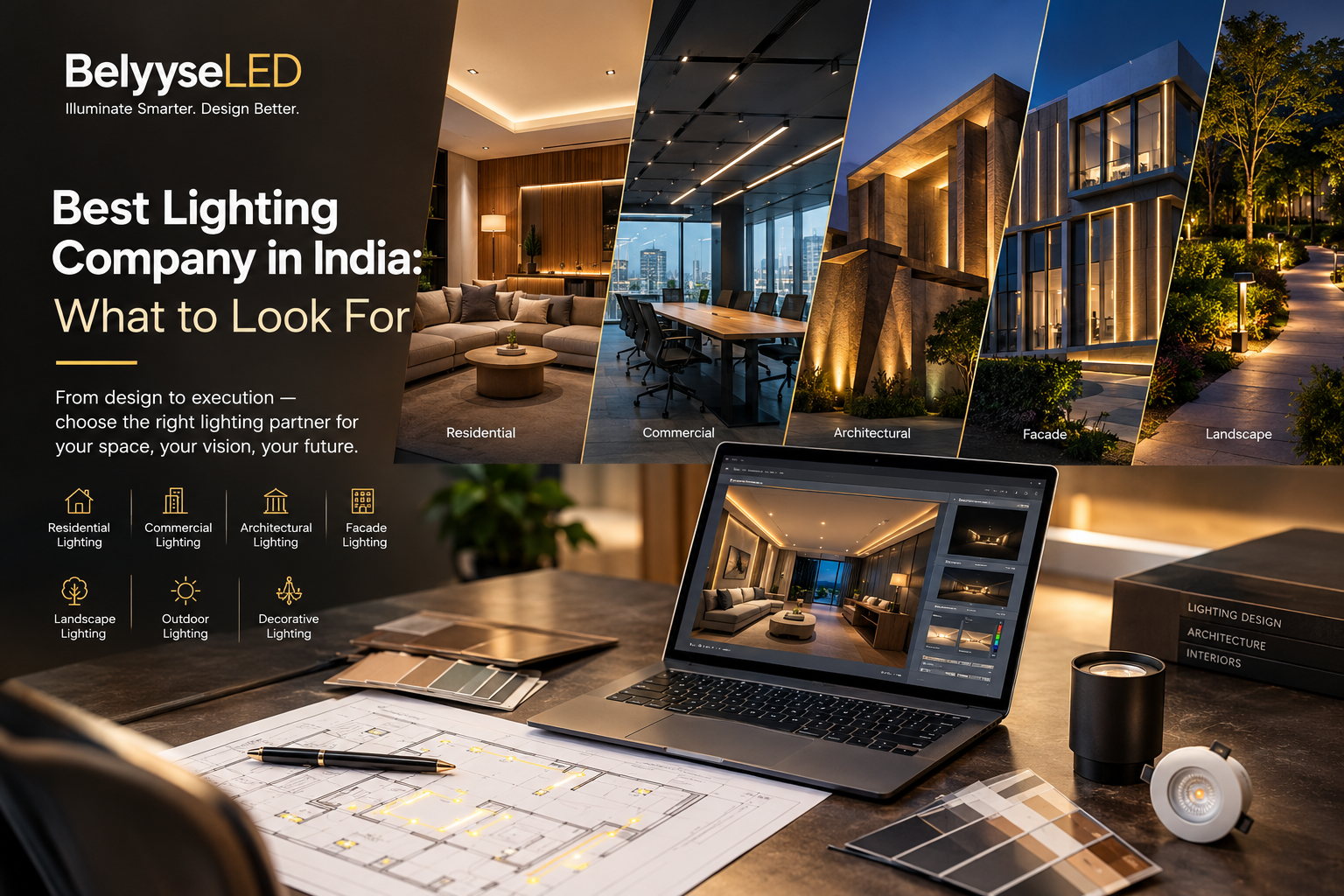
Here are some important lighting categories to consider:
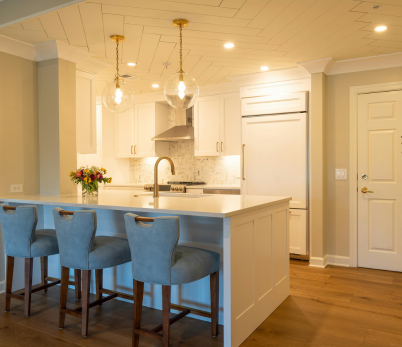
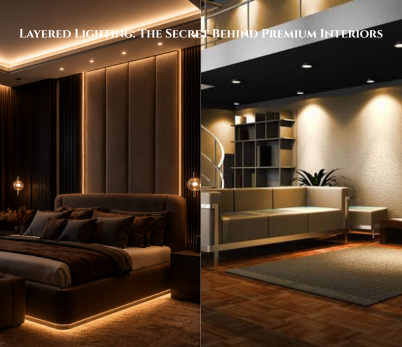
Residential lighting solutions: Combine ambient, task, and accent lighting to create comfortable and practical living spaces. Bedrooms, kitchens, staircases, and living rooms each need a different lighting approach.
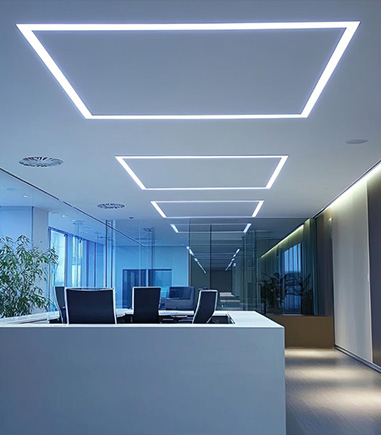
Commercial lighting solutions: Offices, retail stores, showrooms, and hospitality spaces require appropriate illumination for productivity, visibility, customer experience, and visual comfort.
Architectural lighting solutions: Highlight building features, wall textures, columns, ceilings, and structural details without overpowering the architecture.
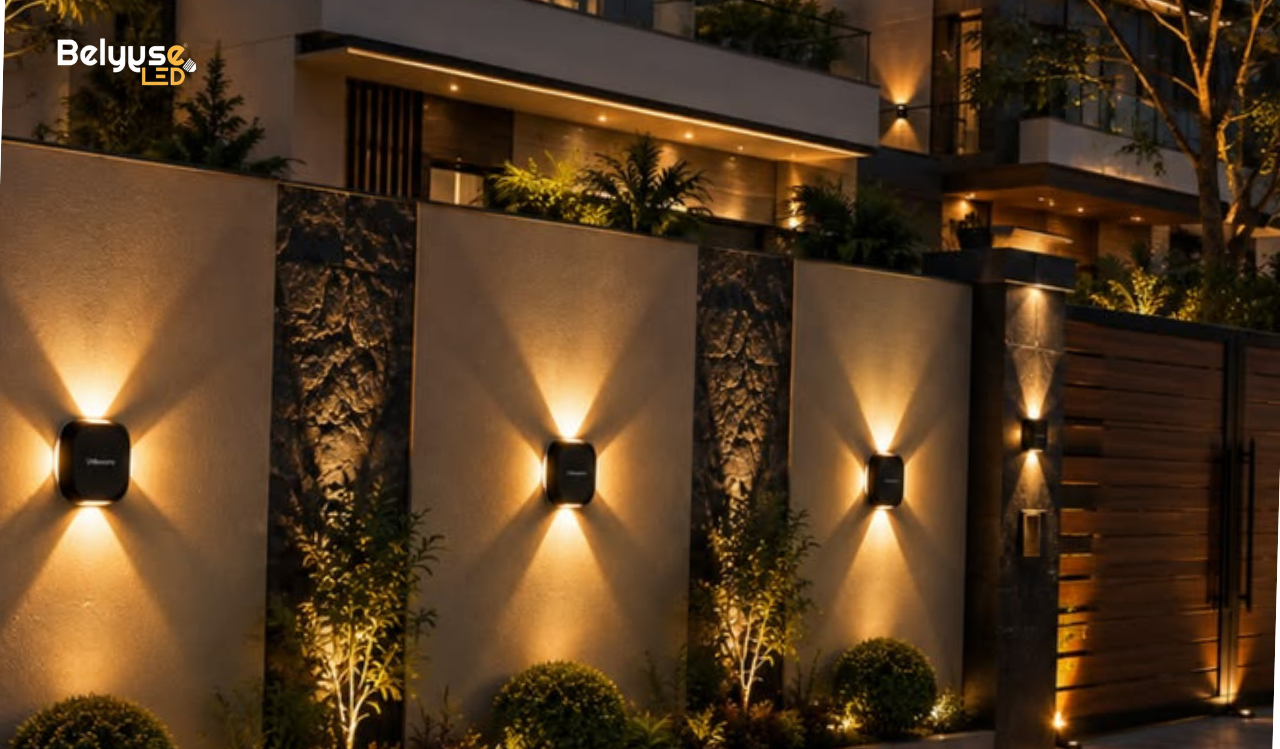
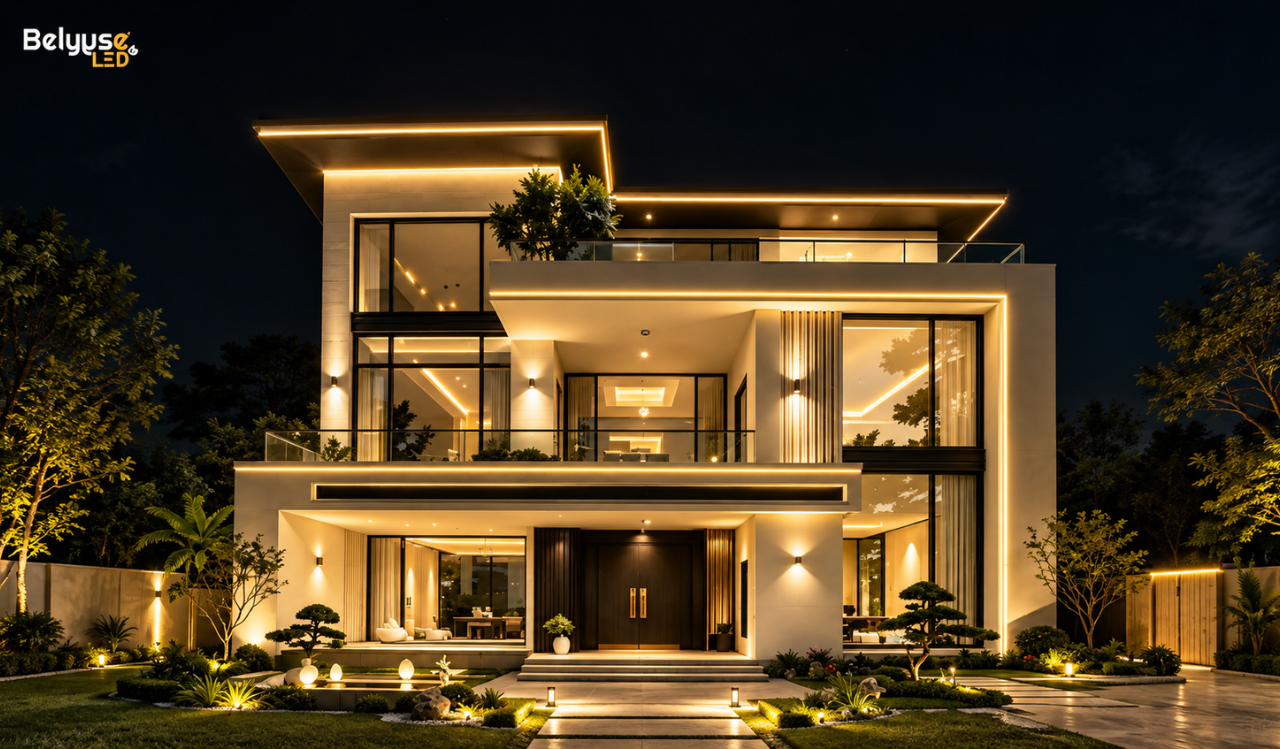
Facade lighting design: Enhances a building's exterior through carefully positioned wall washers, linear lights, pixel lights, and other suitable lighting systems.
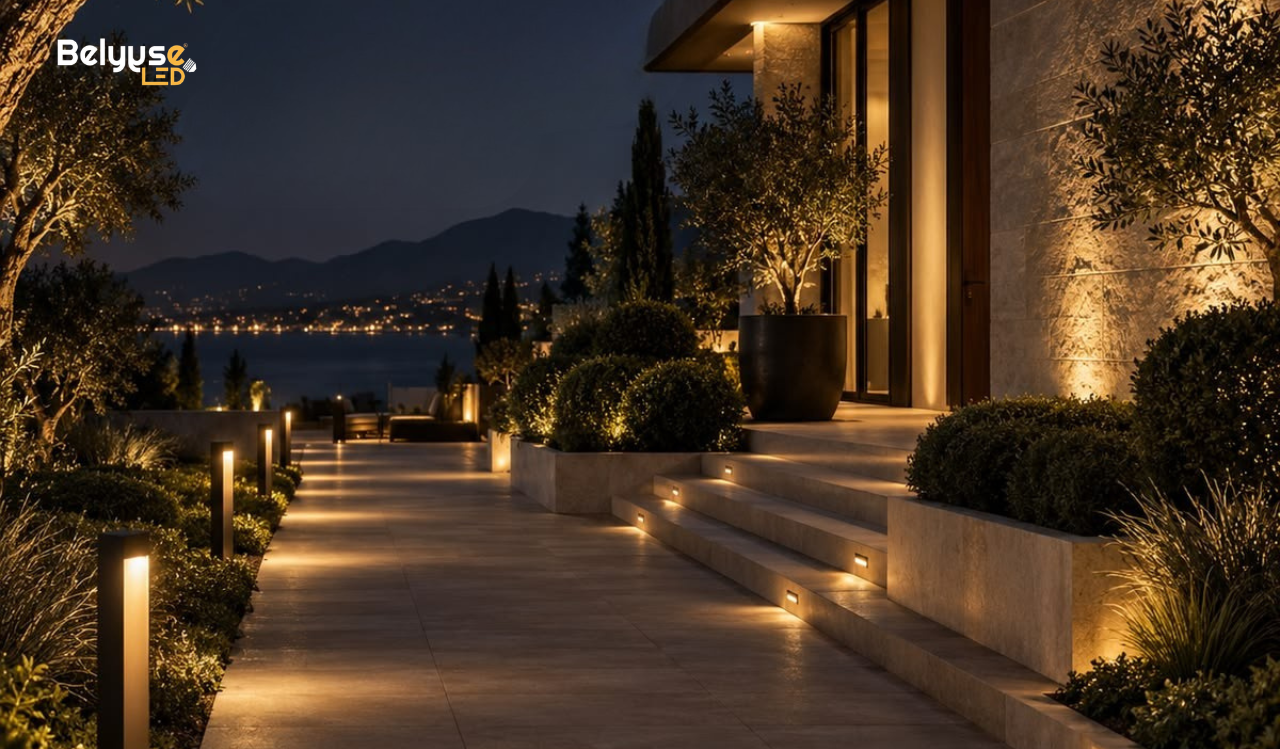
Landscape and outdoor lighting solutions: Illuminate gardens, pathways, entrances, trees, terraces, and outdoor seating areas while considering weather exposure and safety.
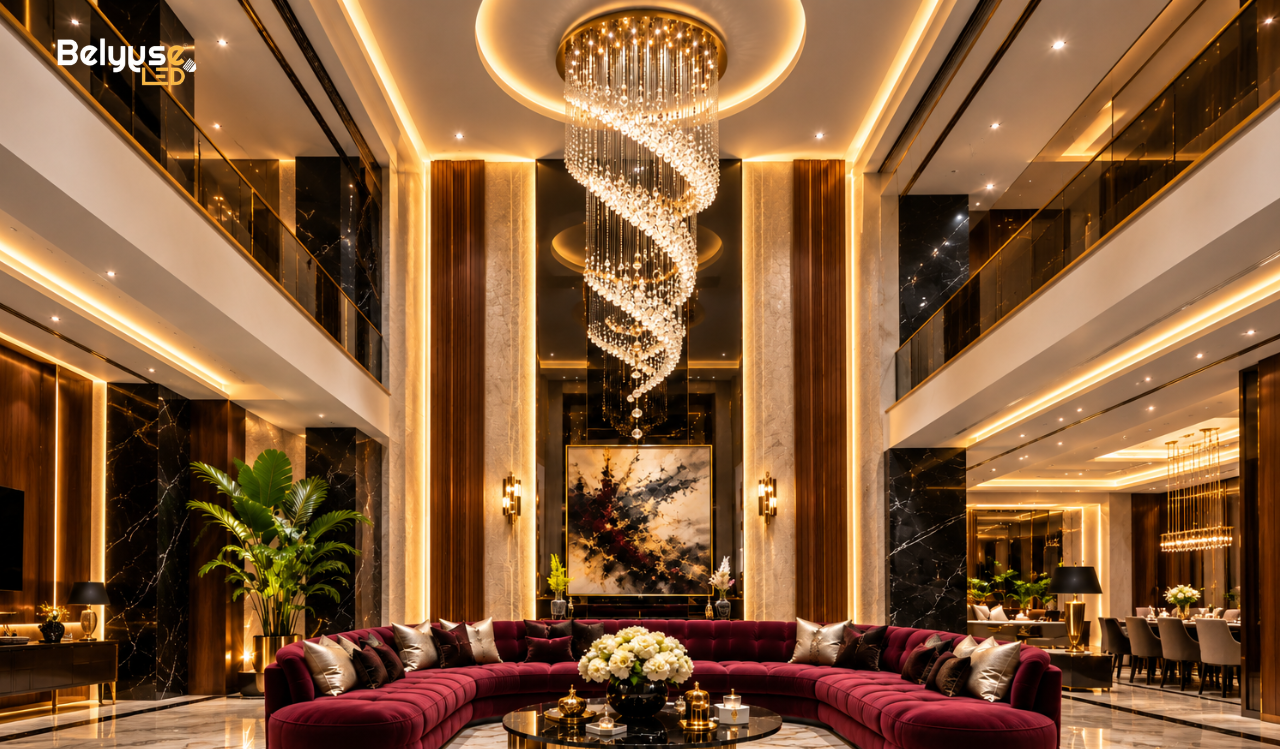
Decorative lighting: Adds character through chandeliers, pendant lights, feature fixtures, and customized decorative installations.
The best lighting company for your project should understand these requirements before recommending products. This helps ensure that the final lighting design supports both the appearance and functionality of the space.
2. Look for Lighting Design and 3D Visualization Expertise
One of the most important qualities of a professional lighting company is its ability to plan the lighting before installation begins.
Simply selecting fixtures from a catalogue does not guarantee a successful result. Light placement, beam angles, ceiling heights, surface finishes, and colour temperatures all influence how a space looks and feels.
A professional lighting design company in India should consider these factors when preparing a lighting plan.
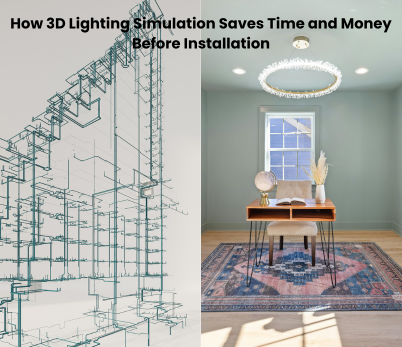
Why is 3D lighting visualization important?
3D lighting visualization allows clients to understand the proposed lighting effect before the actual installation. It can help architects, interior designers, builders, and homeowners evaluate the planned appearance of a space.
For example, in a modern living room, a lighting plan might combine concealed linear lights, recessed COB spotlights, and decorative lighting. A 3D model helps the client understand how these elements work together.
Similarly, a facade lighting project can be visualized to assess how different building features may appear under illumination.
Proper lighting planning and design can help identify potential issues early, improve coordination, and support more informed decisions before work begins.
3. Check Product Quality and Energy Efficiency
Product quality plays a major role in lighting performance, maintenance, and long-term operating costs. When comparing LED lighting solutions in India, avoid making decisions based on price alone.
Consider these important technical factors:
Energy efficiency: Compare light output with power consumption. Lumens indicate the amount of visible light produced, while watts measure electrical power consumption.
Colour Rendering Index (CRI): CRI indicates how accurately a light source reveals colours. Good colour rendering is particularly important in homes, clothing showrooms, art displays, and healthcare environments.
Colour temperature: Measured in Kelvin, colour temperature affects the appearance of light. Warm white often suits bedrooms and hospitality spaces, while neutral or cooler white may suit work areas, depending on their requirements.
Driver quality: A reliable LED driver helps regulate power supplied to the LED system. Driver performance can influence stability, flicker, and product life.
Heat management: Effective thermal design helps maintain LED performance and supports a longer service life.
Durability and protection: Outdoor and facade installations may require appropriate ingress protection against dust and moisture.
Warranty support: Review the warranty terms, exclusions, and availability of technical assistance.
For example, a low-cost LED fixture may initially appear economical but could require earlier replacement or deliver unsuitable light quality. Choosing products according to performance, application, and maintenance requirements can offer better long-term value.
4. Choose a Company That Offers Customized Lighting Solutions
Every building has different dimensions, design features, materials, and functional requirements. Therefore, customized lighting solutions are often more suitable than a one-size-fits-all approach.
A lighting plan for a compact apartment will differ considerably from one for a luxury villa, corporate office, resort, or large commercial facade.
A professional lighting solutions provider should consider:
Ceiling height and false ceiling design.
Furniture placement and work surfaces.
Wall colours, textures, and reflective finishes.
Building architecture and facade materials.
Indoor and outdoor environmental conditions.
Client preferences, budget, and project priorities.
Future maintenance and accessibility.
For instance, a staircase may require concealed step lighting to improve visibility without creating glare. A commercial showroom may need adjustable spotlights to highlight products while maintaining balanced general illumination.
Likewise, a building facade may benefit from carefully positioned linear lights or wall washers that reveal architectural textures rather than creating excessive brightness.
Customized planning helps create lighting that complements the space instead of forcing the space to accommodate unsuitable fixtures.
5. Evaluate Project Execution and Technical Support
Even an excellent lighting design can produce disappointing results if the installation is poorly coordinated.
Before selecting a lighting company, understand how it manages the transition from design to execution. This is especially important for projects involving multiple lighting types, customized fixtures, ceiling work, electrical installations, and outdoor systems.
Look for a process that includes:
Site assessment and understanding of project requirements.
Lighting layouts and technical drawings where required.
Coordination with architects, interior designers, contractors, and electricians.
Verification of fixture dimensions, mounting methods, and electrical compatibility.
Guidance on driver placement, maintenance access, and installation details.
Product documentation and clearly defined after-sales support.
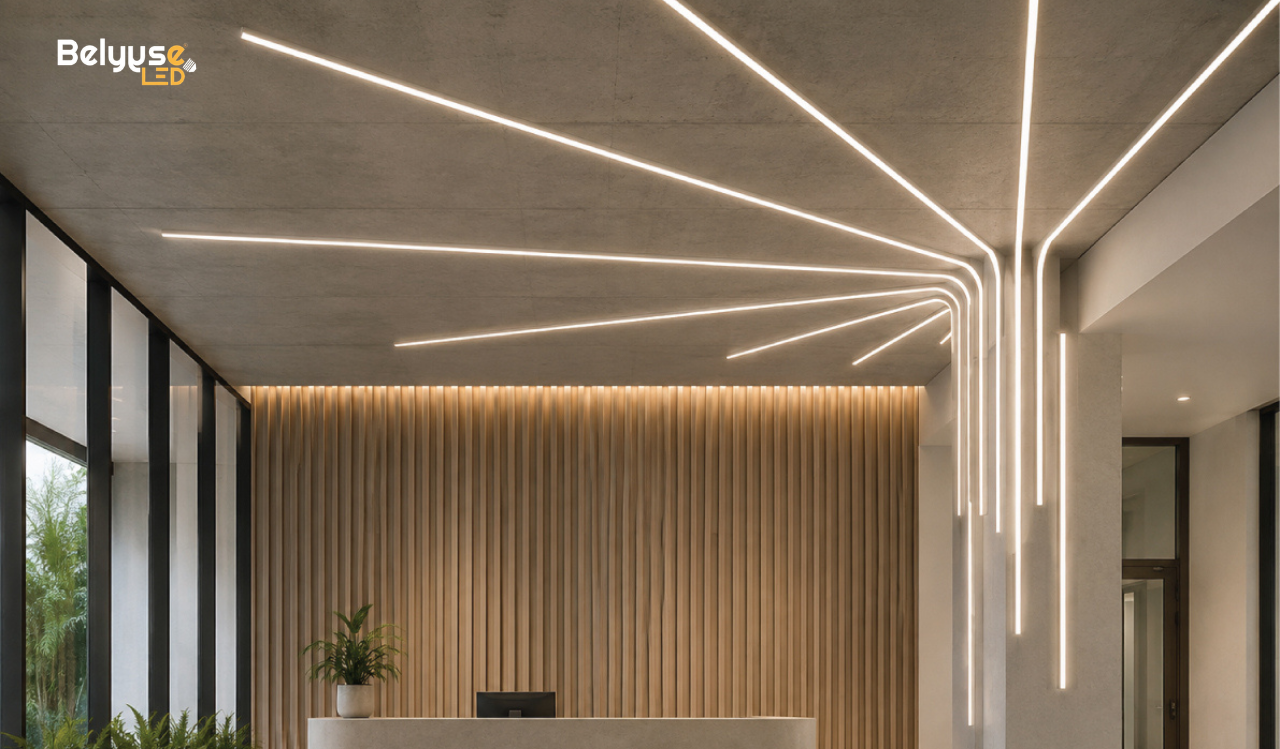
For example, a concealed linear lighting system needs accurate measurements and suitable installation details to achieve a clean, continuous appearance. Similarly, facade lighting requires attention to mounting positions, wiring routes, weather exposure, and access for maintenance.
A company that coordinates these details can help reduce avoidable installation issues and keep the project aligned with its intended design.
6. Compare Value, Not Just Price
When evaluating professional lighting solutions, the lowest quotation is not always the most economical choice.
The overall value of a lighting project depends on more than the initial cost of fixtures. Energy consumption, maintenance, product quality, installation requirements, and design accuracy can all affect the total cost over time.
Before making a decision, compare:
Initial project and installation costs.
Expected energy consumption.
Product specifications and warranty coverage.
Maintenance requirements and replacement accessibility.
Compatibility with dimming or smart lighting controls.
Quality of lighting design and project coordination.
For example, an office with an efficient, well-planned lighting layout may reduce unnecessary illumination and improve visual comfort. A residential project with accessible drivers and suitable fixtures may also be easier to maintain.
The goal is to achieve the right balance between budget, performance, appearance, and reliability. A detailed proposal that explains product choices and design decisions is often more useful than a quotation based only on fixture quantities.
7. Why Consider BelyyseLED for Lighting Solutions?
BelyyseLED is a lighting solutions provider focused on planning and delivering lighting solutions according to the requirements of each project. Its approach goes beyond simply supplying lighting products by considering the space, design intent, and practical needs of the client.
BelyyseLED works across several lighting categories, including:
Residential lighting solutions.
Commercial lighting solutions.
Architectural lighting solutions.
Facade lighting design.
Landscape and outdoor lighting.
Decorative lighting solutions.
The process begins with understanding the client's vision, project requirements, and site conditions. Based on these needs, lighting planning and 3D visualization can help communicate the proposed design and allow important decisions to be considered before installation.
Suitable lighting products and configurations can then be selected according to the project's aesthetic, technical, and functional requirements.
For architects and interior designers, this approach supports coordination between lighting and the overall design concept. For builders and contractors, planned layouts and technical considerations can help align lighting requirements with construction activities. Homeowners can better understand how different lighting elements may contribute to the atmosphere and usability of their spaces.
Whether the project involves a modern residence, a commercial interior, or an illuminated building facade, the objective is to develop a lighting solution that balances design, functionality, energy efficiency, and practical execution.
If you are comparing lighting companies in India, consider how each provider approaches design, visualization, customization, and project coordination. These factors can make a meaningful difference to the finished result.
Conclusion: Make the Right Lighting Choice
Finding the best lighting company in India starts with understanding your project requirements and evaluating the complete service offered.
Look for a company that understands different lighting applications, provides thoughtful lighting planning, considers product quality and energy efficiency, offers customized solutions, and coordinates technical execution.
The right lighting partner should help you make informed decisions at every stage, from the initial concept to the final installation.
BelyyseLED brings a design-led approach to residential, commercial, architectural, facade, landscape, outdoor, and decorative lighting projects.
Planning a new lighting project? Explore BelyyseLED's lighting solutions and discuss your requirements to find an approach that suits your space, design vision, and budget.