



Best Chandelier Placement Tips for Living Rooms
A chandelier can do more than brighten a living room. It can become the main design feature, add elegance, and bring the entire interior together. But even a beautiful chandelier can look out of place if it is installed at the wrong height or position.
The secret is not only choosing the right chandelier. Its size, location, height, brightness, and relationship with the furniture all matter.
If you are planning a new home, villa, apartment, or luxury living room, these chandelier placement ideas can help you create a balanced and attractive lighting design.
1. Start With the Furniture Layout
Do not decide the chandelier position by looking only at the ceiling.
First, understand how the living room will be used. Look at the sofa, centre table, chairs, and main seating area. The chandelier should visually connect with this arrangement.
In many living rooms, positioning the chandelier above the main seating zone creates a stronger sense of balance.
For an open-plan home, you may not want the chandelier exactly in the centre of the entire room. Instead, place it according to the area you want to highlight.
2. Select a Chandelier That Fits the Room
Proportion is one of the most important parts of living room interior design.
A tiny chandelier can disappear in a large room, while a very large fixture can overpower a smaller space.
As a basic starting point, add the room's length and width in feet. The resulting number can be used as an approximate chandelier diameter in inches.
For example:
12 ft + 15 ft = 27
A chandelier around 27 inches wide could be considered as a starting point.
This is not a fixed rule. Furniture dimensions, ceiling height, chandelier design, and the visual style of the room should also influence the final choice.
3. Check the Ceiling Height
The same chandelier can look completely different depending on the ceiling.
A standard-height ceiling usually works better with a compact fixture that does not take up too much vertical space.
A high ceiling gives you more room to experiment with:
- Large chandeliers
- Hanging clusters
- Multi-level designs
- Long decorative fixtures
- Custom lighting installations
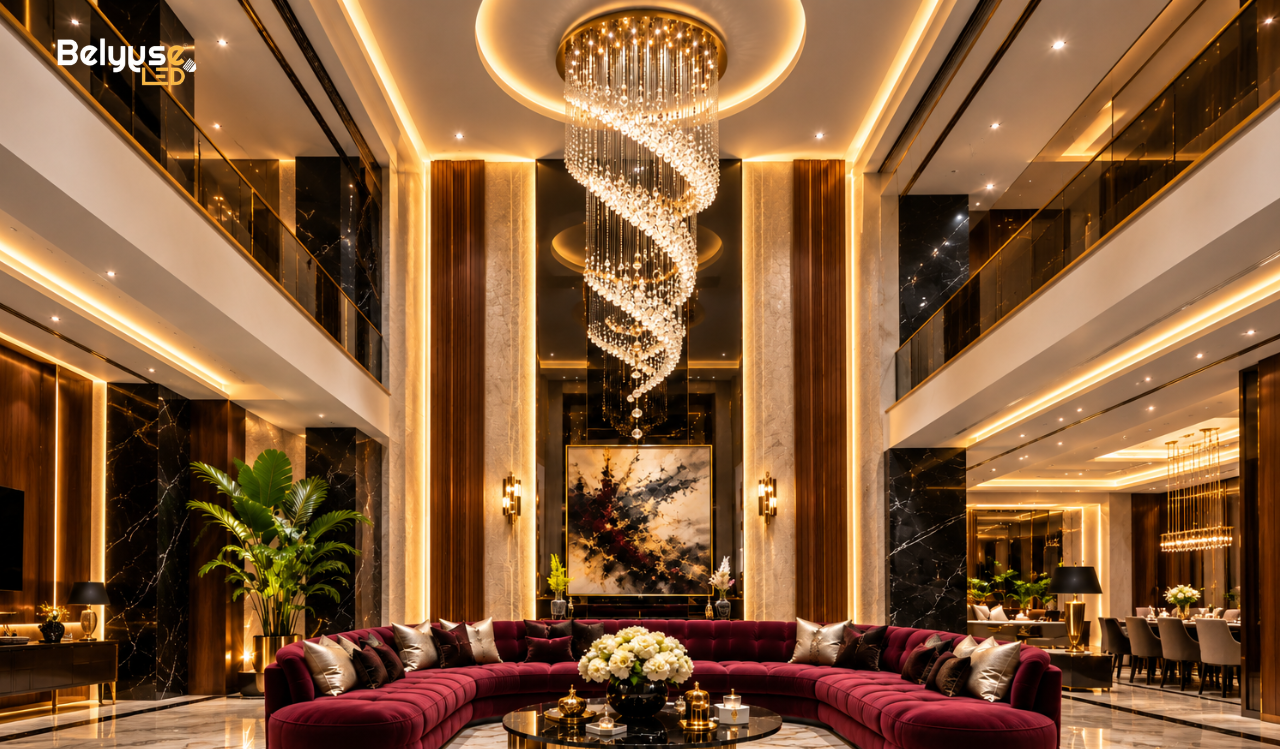
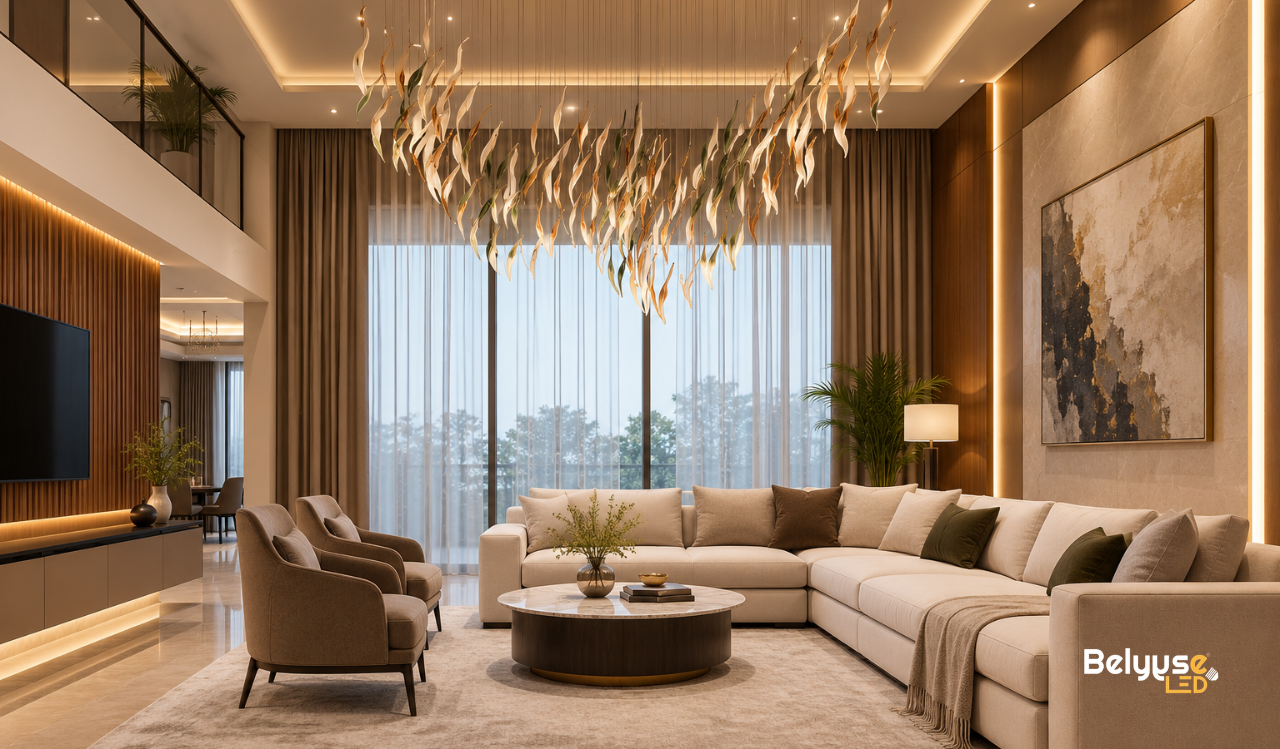
For a double-height living room, a vertically extended chandelier can fill the empty space and create a dramatic centrepiece.
4. Maintain Comfortable Head Clearance
Chandelier height is especially important when the fixture is positioned above an area where people walk.
As a general residential guideline, maintain approximately 7 feet or more of clearance from the floor to the lowest part of the fixture when it is placed in an open walking area.
The exact height can change depending on the room layout and chandelier design.
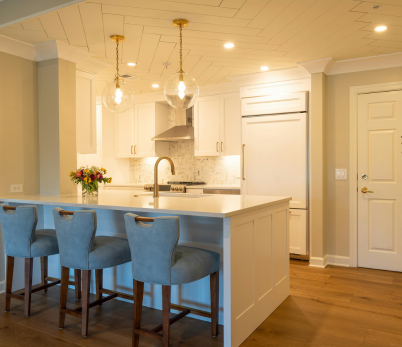
For fixtures positioned over furniture, such as a coffee table or seating arrangement, the installation height can be planned differently.
Always consider how the chandelier will look from the normal eye level of people sitting in the room.
5. Think About the Chandelier's Visual Weight
Two chandeliers with the same dimensions can look very different.
A solid metal fixture may feel heavier than a slim glass or open-frame design. Similarly, a chandelier with many hanging elements can visually occupy more space than a simple circular fixture.
When choosing a modern chandelier for a living room, consider:
- Shape
- Material
- Number of light sources
- Overall diameter
- Hanging length
- Ceiling height
- Furniture scale
The goal is to create proportion rather than simply fill an empty ceiling.
6. Make the Chandelier the Right Focal Point
A statement chandelier can become the first thing people notice when they enter the room.
If you are using an eye-catching fixture, allow it to have enough visual space around it.
You do not need several decorative fixtures competing for attention.
Instead, use other lighting sources to support it:
Chandelier → visual focus
Downlights → general illumination
Spotlights → artwork and décor
Wall lighting → soft atmosphere
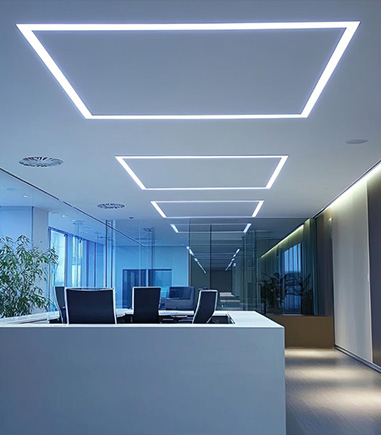
LED profiles → architectural details
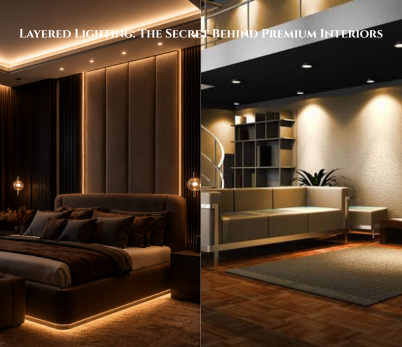
This layered approach creates a more complete home lighting design.
7. Choose the Light Colour Carefully
The appearance of a chandelier depends not only on its design but also on the colour of its light.
For many residential living spaces, warm white lighting around 2700K–3000K can create a comfortable and welcoming atmosphere.
It can work particularly well with:
- Wooden interiors
- Marble surfaces
- Fabric furniture
- Decorative wall panels
- Luxury interiors
- Neutral colour schemes
The chandelier should also work with the colour temperature of the other lights in the room. Mixing unrelated light colours can make the interior look visually inconsistent.
8. Control Glare Before Installation
A chandelier should look attractive without becoming uncomfortable to view.
Think about where people will sit and what they will see from those positions. If bright LED sources are directly visible, they can cause unwanted glare.
Depending on the fixture, glare can be controlled through:
- Diffusers
- Shades
- Proper beam angles
- Suitable LED sources
- Correct mounting height
- Thoughtful positioning
Good living room lighting design should provide both visual beauty and comfort.
9. Match the Chandelier With the Interior Theme
The chandelier should feel like part of the interior rather than an unrelated addition.
Contemporary Interiors
Geometric forms, ring chandeliers, linear designs, and minimal LED fixtures can complement modern spaces.
Luxury Interiors
Crystal, glass, brass, and custom decorative chandeliers can add a premium character.
Minimal Interiors
Simple shapes with clean lines can maintain the uncluttered appearance of the room.
Classic Interiors
Traditional decorative chandeliers can work well with detailed furniture, wood finishes, and classic architectural elements.
Double-Height Interiors
Large cascading or custom chandeliers can take advantage of the extra vertical space.
10. Consider the Shape of the Living Room
The room's geometry can help determine the ideal chandelier design.
For a square living room, a round or symmetrical chandelier can maintain visual balance.
For a long rectangular room, consider whether one large fixture or a longer lighting composition better suits the furniture arrangement.
For an open-plan living area, use the seating zone as your reference point rather than automatically selecting the centre of the entire floor area.
11. Add Dimming for More Flexibility
Your living room does not need the same brightness throughout the day.
A dimmable chandelier allows the lighting atmosphere to change according to the activity.
For example:
Daytime: Brighter general lighting
Evening: Comfortable medium brightness
Movie time: Low ambient lighting
Dimming also helps decorative chandeliers become part of the mood rather than functioning only as a bright ceiling fixture.
12. Combine Decorative Lighting With Architectural Lighting
A chandelier alone may not provide the right lighting for every activity.
A professional lighting plan can combine decorative and architectural fixtures to create different layers.
Depending on the interior, you can consider:
- Trimless downlights
- COB spotlights
- Recessed lights
- Wall washers
- Cove lighting
- Linear LED profiles
- Floor lamps
- Decorative wall lights
- Chandelier lighting
This gives you greater control over brightness, shadows, highlights, and ambience.
13. Avoid Common Chandelier Placement Problems
Before installation, check for these common issues:
Wrong proportion: The chandelier does not match the room or furniture scale.
Poor positioning: The fixture is centred on the ceiling but not aligned with the main seating area.
Incorrect height: The fixture hangs too low or looks lost near a high ceiling.
Too much decoration: Multiple statement lights compete with each other.
Excessive brightness: The chandelier creates glare instead of comfortable illumination.
No supporting lighting: The room depends entirely on one decorative fixture.
Planning these details before installation can prevent expensive changes later.
14. Plan the Lighting Before Finalising the Ceiling
The best time to plan chandelier placement is before the ceiling and electrical work are completed.
The lighting design should consider:
- Furniture layout
- Ceiling design
- Electrical points
- Chandelier dimensions
- Suspension height
- Other light locations
- Switching and dimming
- Required illumination
- Interior materials
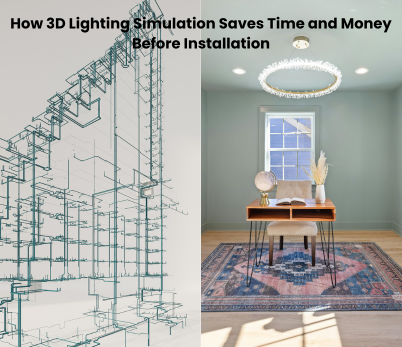
For new residential projects, creating a lighting plan or 3D lighting simulation before installation can help you understand how the chandelier and other fixtures will work together.
Conclusion
A chandelier can transform a living room when it is selected and positioned correctly.
Instead of choosing a fixture based only on its appearance, look at the room dimensions, furniture arrangement, ceiling height, mounting position, light colour, glare, and supporting lights.
The right chandelier placement should make the room feel connected and balanced.
A well-planned combination of decorative and architectural lighting can turn an ordinary living room into a comfortable, elegant, and visually impressive space.